
There are more good PVP games available right now than at any point in gaming history. The problem isn’t finding something to play — it’s choosing where to invest your time. Every competitive game demands hundreds of hours to reach a level where the depth reveals itself. Picking the wrong one means weeks of learning before you realize the game doesn’t click.
This list is opinionated. It’s ordered by how much I think each game rewards competitive investment in 2026 — not by player count, production value, or hype. A game can have a million players and still be a mediocre competitive experience. A game can have 5,000 players and be the best PVP you’ve ever touched.
Tier 1: The Best Competitive Experiences Right Now
Counter-Strike 2
Genre: Tactical Shooter | Team Size: 5v5 | Price: Free-to-play
There’s a reason Counter-Strike has been the gold standard for competitive PVP for over two decades. The gunplay is the tightest in any shooter. The economy system adds genuine strategy beyond just aiming well. The maps are so refined that professionals are still finding new angles after thousands of hours.
CS2’s Premier mode is the best ranked system in competitive gaming. Your rating is a visible number. You see it go up and down after every match. There’s no rank obfuscation, no hidden MMR — just a transparent system that tells you exactly where you stand. This transparency builds trust in a way that hidden ranking systems never can.

The Source 2 rebuild improved visuals and responsiveness, though the transition wasn’t without controversy. Some longtime players preferred the feel of CS:GO. But the competitive fundamentals — the spray patterns, the movement, the economy — are intact and better than ever.
Play this if: You want the purest competitive shooting experience. You’re willing to learn spray patterns, economy management, and map rotations. You appreciate that dying in 0.3 seconds is your fault, not the game’s.
Guilty Gear Strive
Genre: Fighting Game | Team Size: 1v1 | Price: $40-60
Strive is the most beautiful fighting game ever made, and the beauty isn’t just visual — the Roman Cancel system creates a depth of decision-making that rewards creativity in a way no other fighter matches. Every match feels like an expression of personal style.
The rollback netcode is excellent. Cross-continent matches are playable. The competitive scene is active and growing. And the character variety means that even after hundreds of hours, switching to a new character feels like picking up an entirely different game.
Play this if: You want a fighting game with both a low entry barrier and a practically infinite skill ceiling. You want online play that actually works. You appreciate style as much as substance.
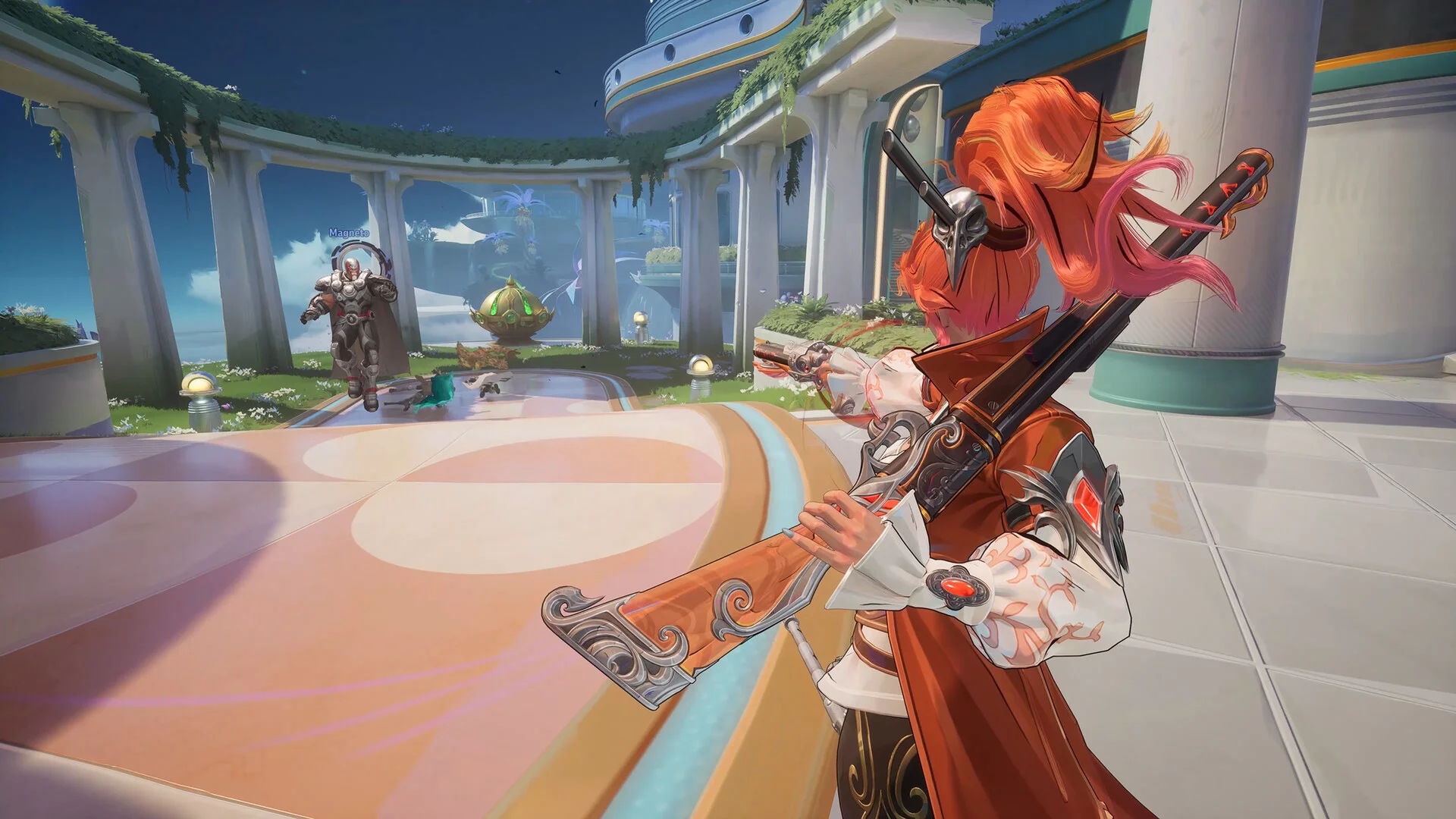
Marvel Rivals
Genre: Hero Shooter | Team Size: 6v6 | Price: Free-to-play
Season 2’s ranked rework elevated Marvel Rivals from “fun hero shooter” to “legitimate competitive game.” Separate solo and group queues, meaningful balance updates, and a curated map rotation show that NetEase is committed to the competitive experience.
The Marvel IP brings in players who wouldn’t normally try competitive PVP, and the gameplay is good enough to keep them. The hero kits are well-designed — high skill ceilings without being oppressive in average hands. The team-up system needs work, but the foundation is strong.
Play this if: You want a hero shooter that takes competitive play seriously. You want to play with Marvel characters without the game feeling like a gimmick. You’re coming from Overwatch and want something that learned from its mistakes.
Street Fighter 6
Genre: Fighting Game | Team Size: 1v1 | Price: $40-60
SF6’s Drive System is the best universal mechanic Capcom has ever designed. It creates resource management decisions every second of every round, rewards creative play, and punishes predictability. The Drive Rush into punish combo is one of the most satisfying plays in any fighting game.
Modern Controls genuinely solved the execution barrier problem. New players can execute specials and supers without quarter-circle inputs, which lets them focus on the actual game — spacing, reads, and resource management — from their very first match. And World Tour mode is the best fighting game tutorial ever made, disguised as a single-player RPG.
Play this if: You’ve never tried fighting games and want to start. You want a fighting game with the biggest active competitive community. You want Modern Controls to remove the execution barrier so you can focus on strategy.
Tier 2: Excellent Games With Caveats
Tekken 8
Genre: Fighting Game | Team Size: 1v1 | Price: $50-70
Tekken 8’s Heat System pushed the series toward offensive play, and the competitive meta is better for it. Movement is faster, pressure is more rewarding, and the roster is diverse enough that every character feels distinct.
The caveat is the DLC pricing model — balance-relevant characters locked behind paid DLC is a competitive integrity concern. And the online infrastructure, while improved from Tekken 7, still isn’t as smooth as SF6 or Strive. But the core 3D fighting gameplay is unmatched.
Play this if: You want the deepest 3D fighting game. You’re willing to invest time learning movement and frame data. You prefer the challenge of a legacy franchise over a more modern onboarding experience.
Deadlock
Genre: MOBA Shooter | Team Size: 6v6 | Price: Free-to-play
Deadlock is the most experimental PVP game from a major studio. Valve’s MOBA-shooter hybrid shouldn’t work on paper — third-person shooting, lane management, item builds, and team objectives all competing for your attention. But it does work, because Valve understood that the core of a MOBA isn’t the lanes — it’s the power curve and the decision-making.
The caveat: Deadlock is still in early access and changes dramatically between patches. If you want a stable competitive experience, wait. If you want to experience the most interesting PVP design experiment happening right now, play it now.
Play this if: You love both shooters and MOBAs and wish someone would combine them. You’re comfortable with an evolving early access game. You want to experience Valve’s latest multiplayer experiment.
Valorant
Genre: Tactical Shooter | Team Size: 5v5 | Price: Free-to-play
Valorant takes CS-style tactical shooting and adds hero abilities, and the combination works better than it has any right to. The agent designs are creative, the gunplay is precise, and the ranked system is solid.
The caveat: Valorant’s relationship with competitive purity is complicated. Some agents have abilities that feel more like “press button to win round” than genuine skill expression. The anti-cheat (Vanguard) runs at kernel level, which is a legitimate privacy concern. And the art style, while clean, lacks the personality that makes other games on this list feel distinctive.
Play this if: You want tactical shooting with more variety than CS2. You like the idea of combining aim skill with ability timing. You’re comfortable with aggressive anti-cheat.
For Honor
Genre: Melee Action | Team Size: 1v1/2v2/4v4 | Price: $15-30
For Honor’s directional combat is unlike anything else in gaming. The Art of War system creates a PVP experience built entirely around reading your opponent, and the 1v1 duels are as tense as any fighting game match.
The caveat: the 4v4 modes can be chaotic and frustrating, the population isn’t what it was, and the game’s reputation from its rocky launch still lingers. But if you’re willing to focus on duels and brawls, For Honor offers something no other game can.
Play this if: You want PVP that’s entirely about reading your opponent. You prefer melee combat over ranged. You’re patient enough to push through a steep learning curve.
Tier 3: Worth Watching
Rivals of Aether II
Genre: Platform Fighter | Team Size: 1v1/2v2 | Price: $25
The best indie fighting game. Rollback netcode that works, a dedicated competitive community, and developers who actively balance around tournament play. If you like Smash but want a game built for competition, this is it.
League of Legends
Genre: MOBA | Team Size: 5v5 | Price: Free-to-play
Still the most-played competitive game in the world. The depth is enormous, the champion roster is unmatched, and the esports ecosystem is the biggest in gaming. The caveat is the time commitment: a single match takes 30-45 minutes, and the game requires hundreds of hours before you’re remotely competent.
Omega Strikers
Genre: Arena Striker | Team Size: 3v3 | Price: Free-to-play
A clever mix of sports and PVP from ex-Riot developers. Easier to pick up than most games on this list, with enough depth to sustain competitive play. The population fluctuates, but the core design is strong.
The Indie Arena Brawler Space
There’s no active arena brawler with a significant player count in 2026 — the genre has been in hibernation since Battlerite died. But several indie projects are in development that could change that. Alea has a playable demo and launches Q2 2026. Nebulagon is in development. The demand for skillshot-based team PVP hasn’t gone anywhere — the communities from BLC and Battlerite are still active and waiting.
If arena brawlers are your thing, the best move right now is to wishlist the games that interest you and join their Discord communities. The genre needs players on day one more than any other genre in gaming.
How to Choose
If you’ve never played competitive PVP: Street Fighter 6 (Modern Controls) or Marvel Rivals (free, accessible).
If you want pure mechanical skill expression: Counter-Strike 2 or Guilty Gear Strive.
If you want team strategy: Deadlock or Valorant.
If you want something nobody else is playing: For Honor duels or Rivals of Aether II.
If you want to support indie PVP: Rivals of Aether II, Omega Strikers, or wishlist Alea.
Whatever you choose, commit to it. Every game on this list rewards investment. The depth is there. You just have to push past the first 50 hours to find it.


Discussion