
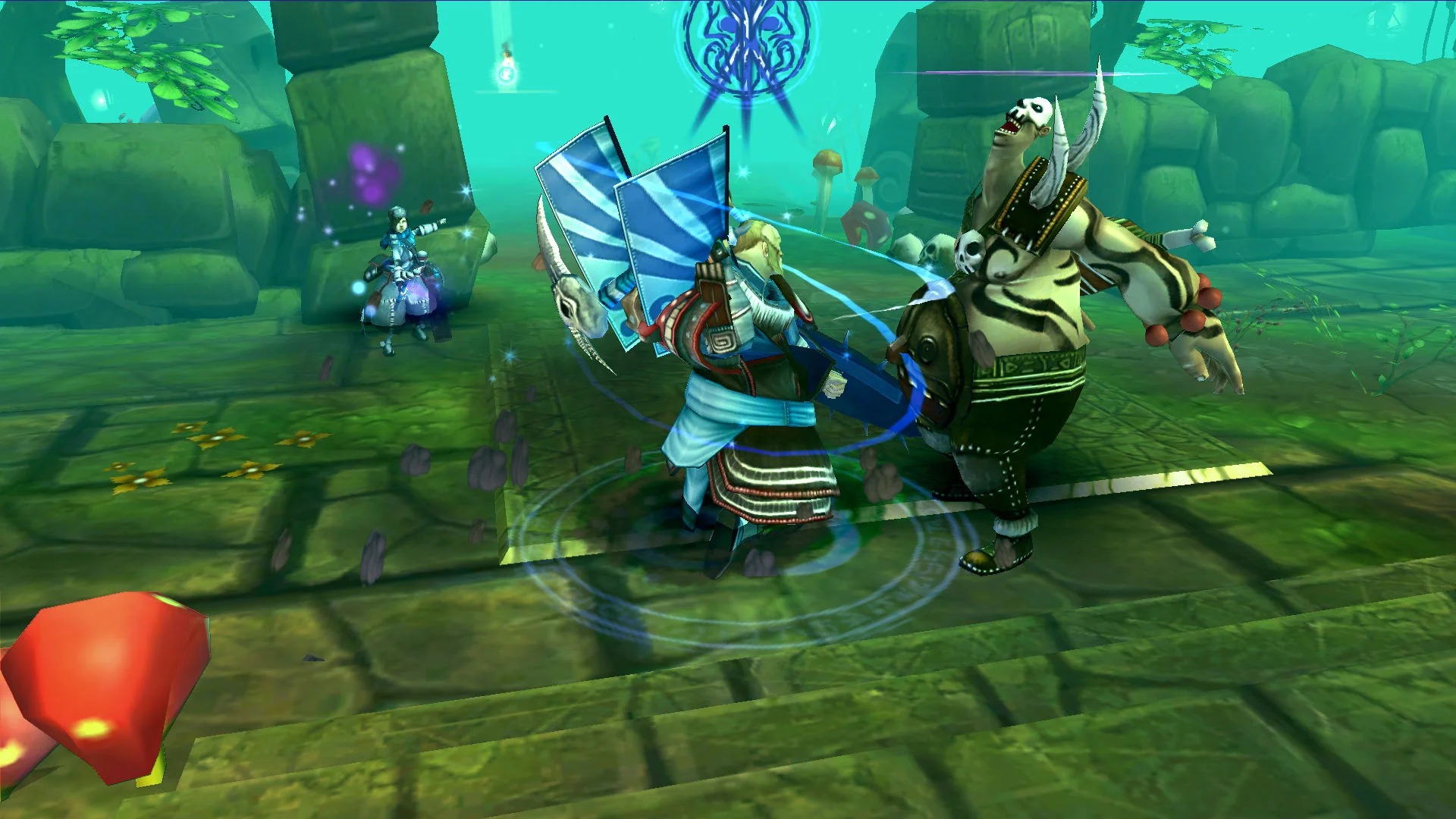
If you’ve played Battlerite and wondered where it came from, or if you’ve seen people in PVP communities talk about “BLC” with a reverence that borders on religious — this is the game they’re talking about. Bloodline Champions launched in 2011, created the arena brawler genre, and built one of the most passionate competitive communities in PC gaming history. Then it died. And nothing has fully replaced it.
With the shutdown of community resources like Bakko’s Grave, a lot of the detailed information about BLC has been scattered or lost. This article is an attempt to preserve what made the game special — not just nostalgia, but the specific design decisions that made BLC’s combat feel like nothing else.
What Was Bloodline Champions?
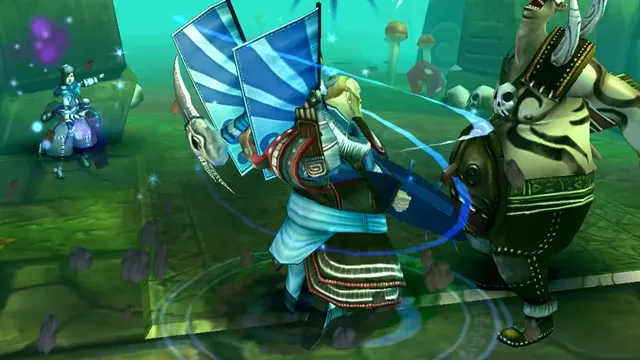
BLC was a 3v3 (and 2v2) top-down arena PVP game developed by Stunlock Studios, a small Swedish indie team. It launched on Steam in January 2011 after an open beta period that had already attracted a dedicated competitive playerbase.
The core concept was radical for its time: take the team fights from a MOBA, strip out everything else — lanes, creeps, items, leveling — and make every single ability a skillshot. No tab-targeting. No auto-attacks that track enemies. You aimed every heal, every projectile, every movement ability manually.
This sounds like a simple design choice. It was the design choice that created a genre. When every ability requires manual aim, the entire combat dynamic changes. Healing isn’t guaranteed — your support has to hit you with it while you’re both dodging enemy attacks. Escape abilities can miss if you don’t aim them correctly under pressure. Every interaction between two players becomes a genuine skill check.
The Bloodline System
BLC had 28 playable characters called “bloodlines,” organized into four archetypes:
Melee
Melee bloodlines were close-range fighters with gap-closers, crowd control, and burst damage. They needed to get in, deal their damage, and get out before being kited. Key bloodlines included:
Ravener — The quintessential aggressive melee. Had a lunging attack, a self-heal on hit, and an incapacitate that set up kills. Ravener punished passive play hard — if you let one get on top of you without an escape ready, you were dead.
Glutton — A grappler-style bloodline with a hook ability (before Overwatch made hooks famous) and a devour mechanic that healed based on damage dealt. Glutton was the ultimate punish character — if you made a positioning mistake near one, the hook into combo would delete you.
Guardian — The defensive melee. Had a shield bash that interrupted casts, a peeling ability that pushed enemies away from allies, and a counter that reflected projectiles. Guardian didn’t kill people — Guardian made sure nobody killed their teammates.
Ranged
Ranged bloodlines dealt damage from a distance and controlled space. They were the primary damage dealers in most team compositions.
Igniter — A fire mage with a kit built entirely around area denial. Igniter placed fire walls, threw AoE projectiles, and had a detonation mechanic where abilities left fire patches that could be triggered for bonus damage. In competitive play, a good Igniter controlled where the enemy team could stand.
Gunner — Exactly what it sounds like. High single-target damage, a snipe ability with a charge-up, and a movement ability that doubled as a damage dodge. Gunner was the purest expression of “aim well, get rewarded” in the game.
Astronomer — One of BLC’s most unique designs. A ranged bloodline that manipulated gravity — abilities that pulled enemies together, pushed them apart, or created zones of altered movement speed. Astronomer was weak in raw damage but devastating in enabling teammates.
Healers
Healers in BLC were not the passive backline supports you know from other games. They aimed every heal as a skillshot, they dealt meaningful damage, and they had to position aggressively to be effective.
Alchemist — The iconic BLC healer. Had a direct-aim heal projectile, a shield that absorbed a set amount of damage, and a potion throw that could either heal allies or damage enemies depending on what it hit. Great Alchemist play meant weaving damage and healing in the same fight, never standing still.
Psychopomp — A healer with a resurrect mechanic. Could place a soul link on an ally that, if they died, would bring them back with partial health after a channel. This single ability defined entire competitive strategies — teams had to decide whether to kill the Psychopomp first to prevent the res, or burst through it.
Tanks
Tanks in BLC absorbed damage, disrupted enemy positioning, and created space for their team.
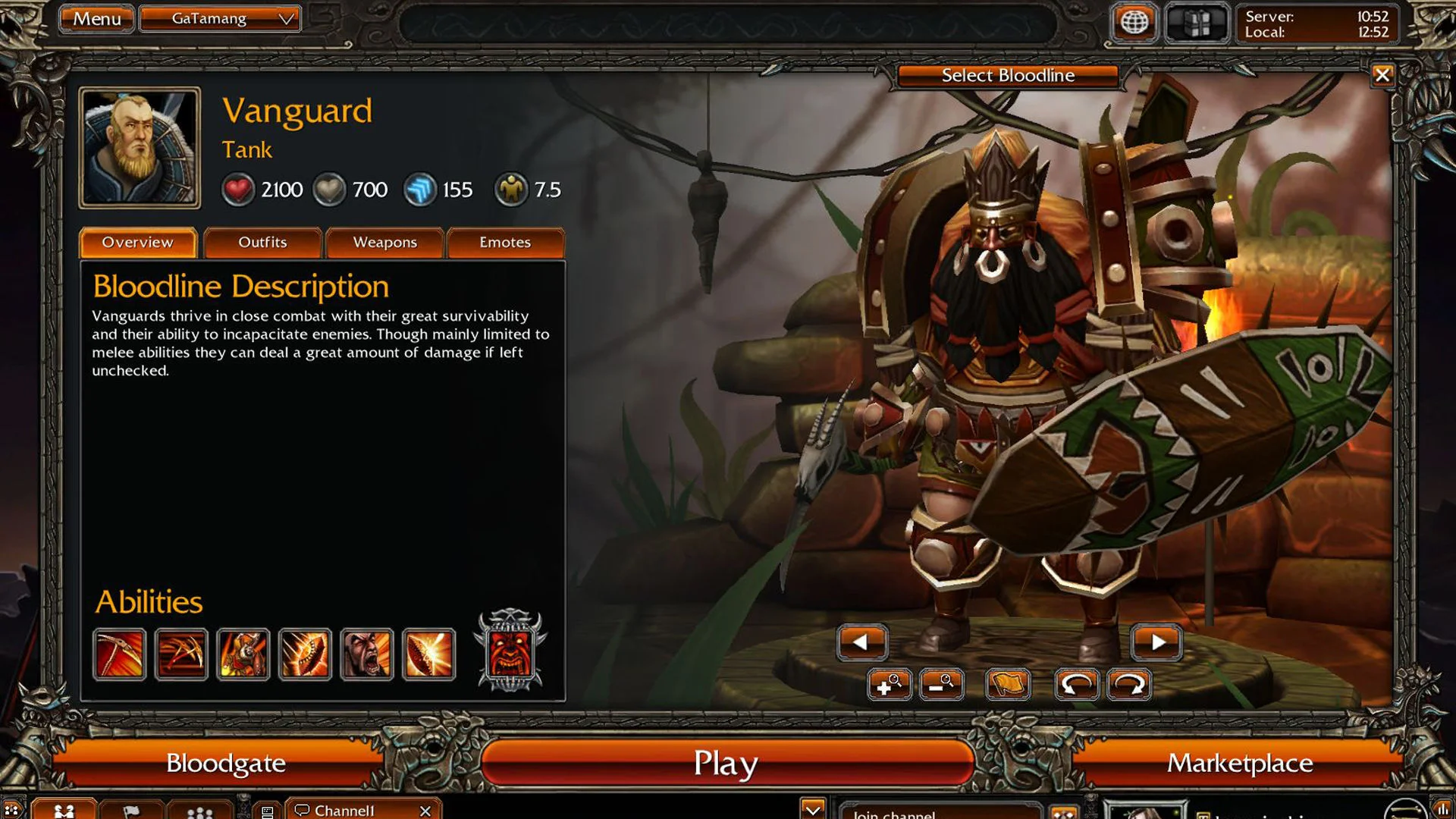
Vanguard — The straightforward tank. A charge that knocked enemies back, a shout that feared nearby enemies, and an absorb shield that converted incoming damage into a heal. Vanguard was the training wheels tank, but in expert hands the charge angles and fear timing were devastating.
Metal Warden — A tank that created literal walls of metal that blocked projectiles and movement. Metal Warden was the most disruptive bloodline in the game — a well-placed wall could split an enemy team in half and turn a 3v3 into a 3v1 plus a 2v0. The wall placement skill ceiling was enormous.
Core Mechanics That Defined the Genre
The Counter System
BLC introduced the counter mechanic that would become the genre’s signature. Most bloodlines had an ability that, when activated, put them in a brief counter-stance. If an enemy attacked into the counter during that window, the attacker was punished (stunned, damaged, or debuffed) and the counter user was rewarded.
This created the deepest mind-game layer in BLC’s combat. Throwing abilities at someone with counter ready was punished. But holding back and not attacking gave them free time to reposition or heal. The correct play was to bait the counter — fake an attack, cancel an animation, or target their teammate instead — and then punish the window after their counter expired.
At high levels, counter-baiting became an art form. Players would start casting an ability just to see if the opponent countered, then cancel and go in during the vulnerability window. The counter-bait into punish combo was BLC’s equivalent of a fighting game mix-up, and it separated beginners from veterans instantly.
Orb Control
A neutral objective (the middle orb) spawned at regular intervals in the center of every arena. Destroying it gave the team that last-hit it a significant heal and energy refill. This objective did several things:
It forced engagement. Without the orb, a losing team could theoretically run away and avoid fighting. The orb gave them a reason to contest the center — surrendering it meant giving the winning team even more of a resource advantage.
It created burst-or-save dilemmas. Do you use your high-damage ability on the enemy, or save it to secure the orb? Using everything on the opponent might get a kill, but if they survive and your cooldowns are down, the enemy team gets the orb for free.
It rewarded map awareness. The orb spawned on a timer. Good players tracked the timer and positioned for orb control before it spawned. Great players manipulated the enemy’s positioning to ensure they had orb control before the fight started.
The Energy System
BLC used an energy system (called “bloodline energy”) that built through combat. Energy was spent on EX abilities — enhanced versions of your base kit. An EX ability might add a stun to a basic attack, or increase the heal amount on a support ability, or give a movement skill an additional effect.
The strategic layer was about efficiency. Spending energy on an EX ability that didn’t result in a kill or significant advantage was wasteful. Saving energy too long meant you were fighting with a weaker kit than necessary. The best players had an intuitive sense of when their energy investment would pay off.
Crowd Control and Diminishing Returns
BLC implemented diminishing returns on crowd control before most games even considered the concept. The first stun on a target lasted full duration. The second lasted half. The third lasted a quarter. This prevented chain-CC from being a viable strategy and ensured that fights were decided by damage and positioning, not by who stunned first.
This system is now standard in PVP games, but BLC was one of the first to implement it in an action game context. It solved a fundamental problem: without diminishing returns, the optimal strategy is “stun someone and hit them until they die,” which reduces combat to whoever gets the first CC wins.
The Competitive Scene
BLC’s competitive community was small but intense. The game had an official ranked ladder and the community organized tournaments through sites like ESL and local community hubs. Prize pools were modest — this was indie esports before indie esports was a concept — but the competition was fierce.
The meta evolved constantly. Early BLC favored aggressive compositions with two melee and a healer. As players improved, ranged-heavy comps with better zone control became dominant. By the game’s competitive peak, the meta was diverse enough that most bloodlines saw tournament play, though certain compositions (the classic Alchemist + Ranged + Melee triangle) remained staples.
What made BLC’s competitive scene special was the mechanical ceiling. Because every ability was aimed manually, the skill gap between a good player and a great player was visible and enormous. Watching a top-level BLC player dodge, counter-bait, and land every ability in a tight 2v2 was genuinely impressive — it looked different from average play in a way that was immediately obvious.
Why It Died
BLC’s death wasn’t dramatic. It was a slow fade caused by several factors:
The business model was punishing. BLC launched as free-to-play with a rotating free bloodline roster. Unlocking bloodlines permanently required either significant grind or real money. The unlock prices were high enough that new players felt locked out of experimentation, which is deadly for a game with 28 characters where finding your main is part of the appeal.
Server problems plagued the launch. EU and NA servers had reliability issues that caused frustrating disconnects, especially during ranked matches. For a game where every match was competitive and every round mattered, server instability was a dealbreaker.
The learning curve was brutal with no help. BLC’s tutorial taught you the controls and nothing else. The concepts that actually mattered — counter-baiting, orb control timing, energy management, positional play — were never communicated by the game. New players got destroyed, didn’t understand why, and left.
Streaming barely existed. BLC launched in 2011. Twitch launched in 2011. The ecosystem of streamers, YouTube guides, and content creators that sustains competitive games today simply didn’t exist yet. BLC relied on word of mouth and community forums, which limited its reach enormously.
The player count never hit critical mass. BLC needed maybe 5,000-10,000 concurrent players to have healthy matchmaking across all skill levels. It peaked around 3,000-4,000 and declined from there. Matchmaking suffered, which drove away more players, which made matchmaking worse. The classic PVP death spiral.
The Legacy
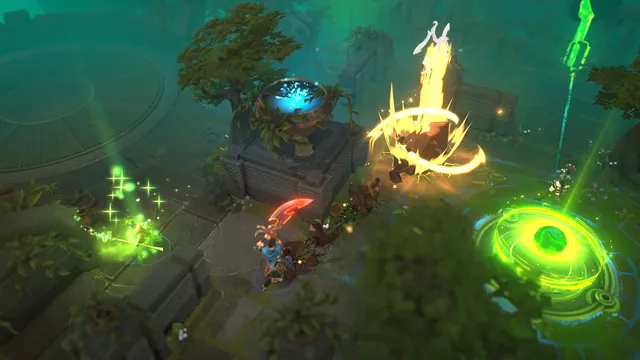
BLC’s direct successor, Battlerite, took the core formula and refined it — better graphics, smoother controls, improved UI, and a modern free-to-play model. Battlerite’s own failure doesn’t diminish BLC’s contribution. The arena brawler genre exists because Stunlock proved with BLC that skillshot-only team PVP combat works.
More broadly, BLC influenced how other games think about skillshot design. The idea that healing should require aim, that crowd control should have diminishing returns, that neutral objectives force engagement — these concepts have spread far beyond the arena brawler genre.
The BLC community sites — Bakko’s Grave, the official forums, various fan wikis — have mostly gone dark. But the players are still around. They show up in arena brawler Discord servers. They test every new PVP game that launches, looking for something that captures what BLC had. Several indie projects, including Nebulagon, are being built by people who played BLC and want to see the genre return.
If you never played BLC, you missed something special. It was rough around the edges, underfunded, and ahead of its time. But the combat — the actual moment-to-moment experience of reading your opponent, baiting their counter, landing your combo, securing the orb — that was the real thing. No other game has quite matched it.
Discussion