
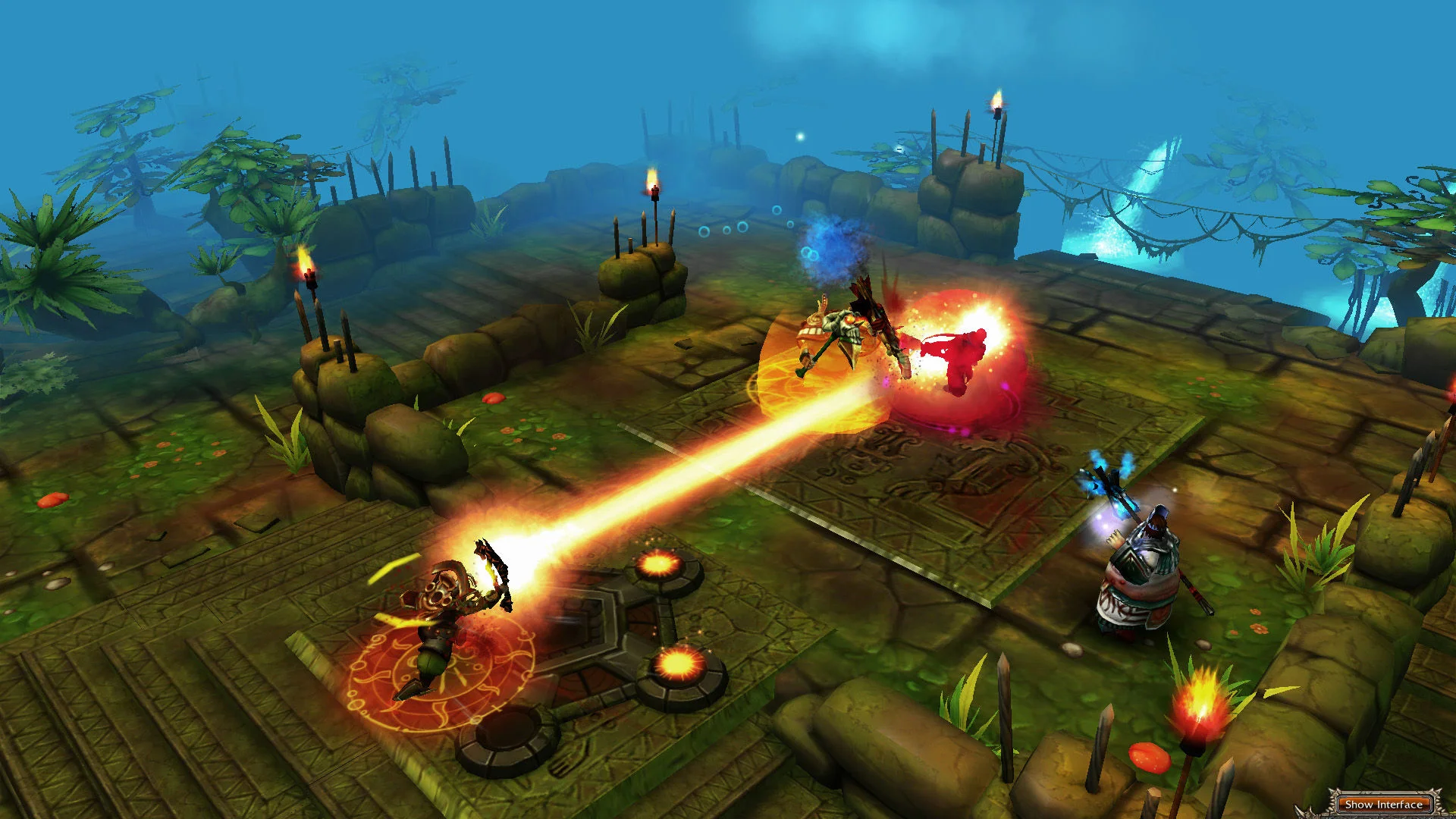
Before Battlerite. Before the MOBA boom devoured the entire industry. Before every competitive game felt obligated to bolt on hero abilities and ultimate meters — there was Bloodline Champions. A game so mechanically pure, so aggressively skill-dependent, that it terrified the mainstream audience and inspired an entire generation of PVP designers who played it.
If you were there, you already know. If you weren’t, let me explain why a dead game from 2011 still matters more to competitive PVP design than half the titles sitting in your Steam library right now.
The Elevator Pitch That Scared Publishers
Imagine a top-down arena game where every single ability is a skill shot. No lock-on. No auto-attacks. No items to buy between rounds. No levels to grind during a match. No stat advantages. Nothing between your intention and the game’s response except your own hands.
That was Bloodline Champions.
Developed by Stunlock Studios — a small Swedish team that would later go on to make Battlerite and V Rising — BLC launched into open beta in 2010 and went free-to-play in 2011. It played like someone took the team-fight phase of a MOBA, stripped out every layer of abstraction, and said “okay, now fight.”
2v2. 3v3. Pure arena combat. You picked a Bloodline (the game’s term for a character), you loaded into a tight arena, and you lived or died based on whether you could land your shots and dodge theirs. That’s it. That was the whole game.
And it was magnificent.
Why BLC’s Design Was Revolutionary
To understand why Bloodline Champions mattered, you have to understand what PVP gaming looked like in 2010-2011.
World of Warcraft arenas were the gold standard for small-team competitive PVP, but they were buried under layers of gear progression, class imbalance, and cooldown trading. League of Legends was exploding, but matches lasted 40+ minutes and featured 20 minutes of farming before the real game started. DotA was even more extreme. The competitive PVP space was defined by time investment, knowledge checks, and systemic advantages.
BLC rejected all of it.
No Auto-Attacks, Period
This was the big one. In BLC, your left click wasn’t a free attack — it was a aimed projectile or melee swing with a hitbox you had to manually connect. Every Bloodline had a basic M1 ability, but it still required aim. Miss your swings, deal zero damage. There was no “right-click the enemy and watch your character do the work.”
This single decision changed everything about how fights played out. There was no downtime. No passive damage ticking away while you planned your next move. If you weren’t actively aiming and firing, you weren’t contributing. Every fraction of a second mattered.
Every Ability Was a Skill Shot
Not most abilities. Not “the important ones.” Every. Single. One.
Heals were skill shots. You had to aim your healing projectile at your teammate. Shields required precise placement. Crowd control had travel time and could be dodged. Even defensive abilities like counters and escapes required precise timing.
This created a depth of mechanical interaction that most games still can’t match. A healer in BLC wasn’t just watching health bars and pressing buttons — they were threading healing bolts through chaotic team fights while dodging enemy projectiles. Support players in this game needed the same mechanical skill as damage dealers. Nobody got to relax.
No Items, No Levels, No Stat Advantages
When you loaded into a BLC match, you had exactly the same tools as your opponent. Same health pool relative to your Bloodline, same ability damage, same cooldowns. There was nothing to farm, nothing to buy, no scaling advantage for playing safe early.
Round one, you were at full power. So were they.
This meant the entire strategic layer of the game was about ability usage, positioning, cooldown management, and team coordination — not about who got ahead in gold or who grinded better gear that week. It was the competitive purist’s dream.
The EX Ability System
BLC had a resource bar that filled as you dealt and took damage. You could spend it on EX abilities — enhanced versions of your base skills — or save it for your ultimate. This created a constant economic tension: do you burn resources now for a stronger version of your heal, or do you bank for the fight-ending ultimate?
It was a brilliantly simple system that added strategic depth without adding complexity. You didn’t need a spreadsheet. You needed game sense.
The Bloodlines Themselves
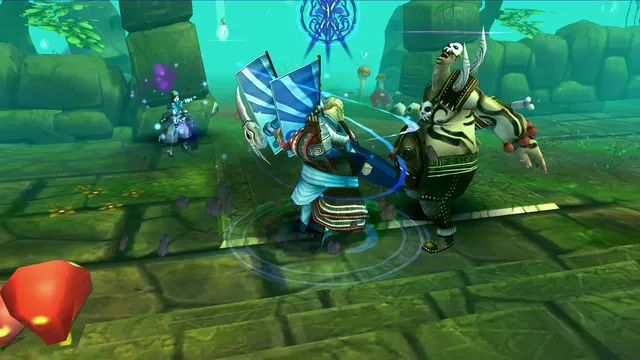
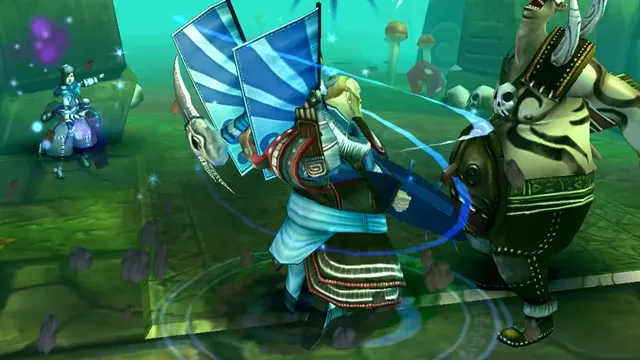
BLC had roughly 28 Bloodlines across four archetypes: Melee, Ranged, Healer, and Tank. Each one played fundamentally differently, but they all shared that same DNA of pure aim-based combat.
Some standouts:
- Astronomer — A ranged DPS whose abilities revolved around positioning celestial objects. Absurdly high skill ceiling.
- Glutton — A melee bruiser who could literally eat enemy projectiles and spit them back. One of the most creative defensive mechanics in any PVP game.
- Inhibitor — A healer who placed stationary totems, turning positioning into a mini-game within the fight.
- Harbinger — A ranged caster who manipulated space itself, creating zones that punished poor positioning brutally.
Every Bloodline had a counter ability (or iframe, or parry equivalent) — a defensive tool that punished predictable aggression. The interplay between baiting counters and punishing them created a mind-game layer that felt closer to fighting games than anything else in the genre.
And that’s really what BLC was, when you stripped it down: a team fighting game with WASD movement and projectile aim. It occupied a design space that almost nothing else has successfully claimed.
The Competitive Scene That Almost Was
BLC had a small but ferocious competitive community. Tournaments ran through ESL and DreamHack. The 3v3 format produced incredibly tight, readable matches. Because games were short — usually 5-10 minutes — tournament sets were fast-paced and exciting to watch.
The skill gap between good players and great players was massive and immediately visible. You could watch a top-level BLC player and see the difference in how they moved, how they threaded abilities through gaps, how they tracked cooldowns and punished recovery frames. It was legible competition in a way that MOBAs, with their macro complexity, often aren’t.
The problem was that this legibility went both ways. When you got outplayed in BLC, you knew it. There was no blaming items, no blaming matchups, no blaming your jungler. You got outaimed, outmaneuvered, outplayed. For a lot of players, that was too honest.
Why It Died
Let’s be real about this, because BLC deserves honesty more than mythology.
The Skill Floor Was Brutal
BLC did almost nothing to ease new players in. You loaded into an arena, got demolished by someone who could land 90% of their M1s while dodge-canceling your every attack, and you had to decide if you wanted to do that 500 more times before you started winning.
Most people didn’t. The initial player experience was punishing in a way that modern game designers would call “hostile.” There was no meaningful tutorial. No gradual difficulty curve. No comeback mechanics to keep bad games interesting. You either committed to the grind or you bounced.
Free-to-Play Monetization Was All Wrong
When BLC went F2P, the monetization model locked Bloodlines behind a currency grind or real money purchases. In a game where counter-picking and team composition mattered, locking characters behind a paywall was a devastating design decision. It undercut the very purity that made the game special.
This was 2011. Free-to-play models were still the wild west. But it hurt the game badly.
Funcom
BLC was published by Funcom, a company whose track record with live-service games is… let’s say inconsistent. Marketing was minimal. Server infrastructure was rough. The game never got the promotional push it needed to break through during a period when League of Legends was vacuuming up every competitive player on the planet.
BLC needed a publisher that understood grassroots competitive games. It got a publisher that was still trying to figure out how to monetize Age of Conan.
Timing
This might be the biggest factor. BLC arrived in the shadow of League of Legends’ explosive growth. The entire industry was pivoting toward MOBAs. Every publisher wanted the next League. An arena brawler with no items, no progression, and 10-minute matches didn’t fit the meta of what investors and publishers thought competitive gaming should look like.
BLC was a fighting game in a MOBA market. It was speaking a language that most of the audience hadn’t learned yet.
The Fingerprints It Left Everywhere
Here’s where BLC’s legacy gets interesting. Because even though the game died, its ideas infected everything.
Battlerite was the most direct descendant — made by the same studio, using largely the same design philosophy but with modernized graphics, better onboarding, and a more aggressive marketing push. Battlerite had its own struggles (that’s a whole other story), but it proved the core design wasn’t a fluke.
Beyond Stunlock’s own catalog, BLC’s DNA shows up everywhere:
- VALORANT’s ability design philosophy — abilities as utility, not passive stat boosts — echoes BLC’s commitment to active, skill-based tools.
- Overwatch popularized hero-based team combat, but BLC was doing hero-based arena combat years earlier with more mechanical depth per character.
- Omega Strikers, Alea, Nubs! — the entire modern arena brawler micro-genre traces its lineage directly back to BLC.
- The entire concept of skill-shot-only combat in team games is something BLC proved was viable before anyone else had the nerve to try it.
Even League of Legends gradually moved toward more skill-shot-based champion designs over the years. The direction the entire industry drifted — toward more active, mechanically demanding ability usage — is a direction BLC was already standing in, alone, in 2011.
The Ghost in the Machine
Bloodline Champions was a game built on a radical thesis: that PVP games don’t need anything except the fight itself. No progression treadmills. No knowledge checks that take 200 hours to learn. No systemic advantages for players who play more or pay more. Just an arena, your abilities, and someone trying to kill you.
That thesis was right. The execution was right. The timing was wrong, the business model was wrong, and the support structure was wrong.
Every few years, a new arena brawler launches, and the comments fill up with people saying “this reminds me of BLC.” It’s the highest compliment the PVP community knows how to give. Not because BLC was perfect — it wasn’t. The onboarding was bad. The monetization was worse. The competitive scene never scaled.
But the game itself — the moment-to-moment experience of playing Bloodline Champions at a high level — was something that no PVP game has fully replicated in the 15 years since. It was pure. It was honest. It respected the player enough to say: here are your tools, now prove you deserve to win.
The next game that successfully captures what BLC had — the mechanical purity, the competitive clarity, the raw skill expression — won’t just be a good PVP game. It’ll be the one that finally finishes what Stunlock started in a small Swedish studio in 2010.
Someone just has to be brave enough to ship it.

Discussion