
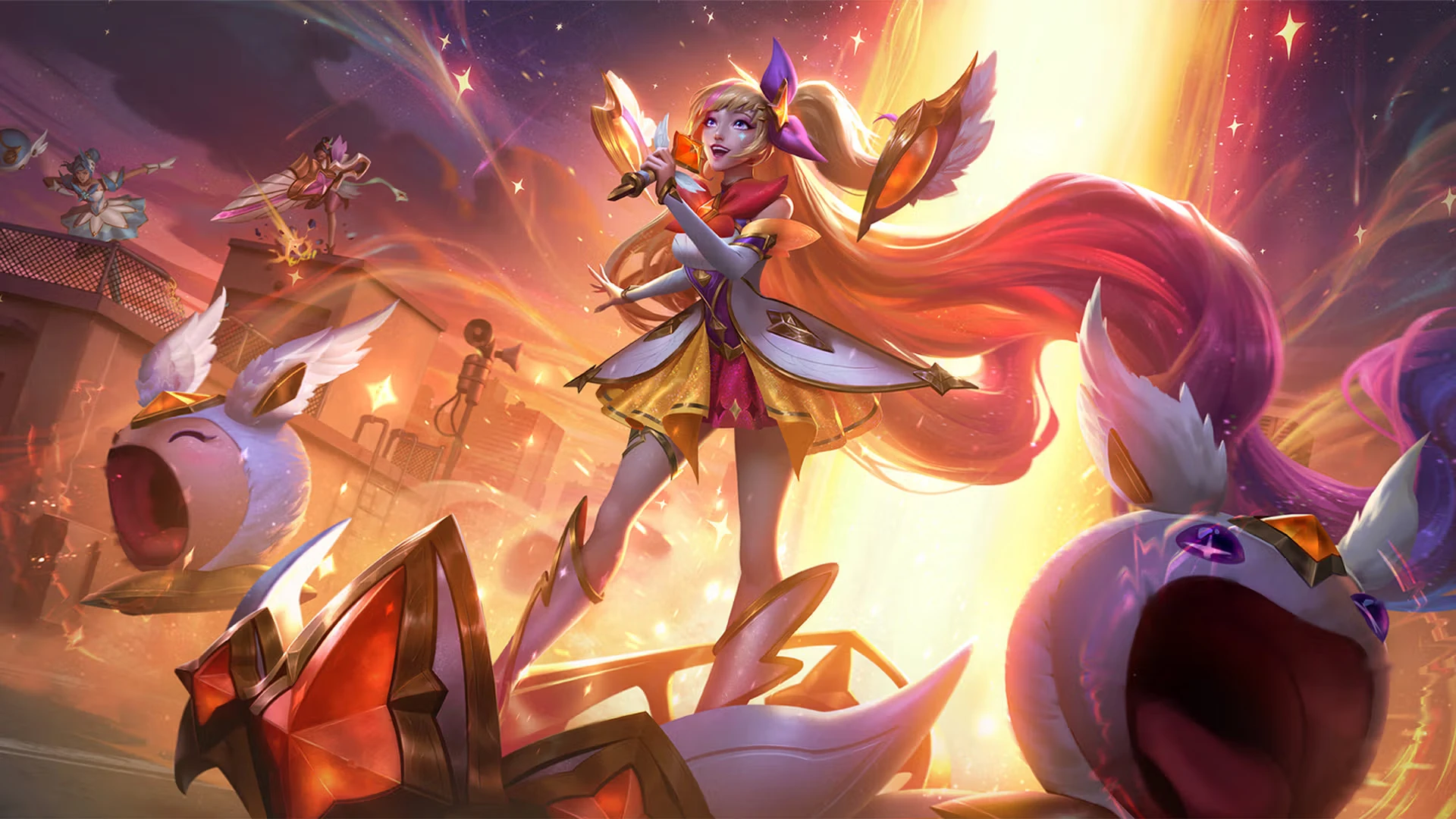
It’s minute six on Summoner’s Rift. I’m playing Orianna into a Syndra, and we’ve been doing this quiet, lethal dance for two full waves. She used Scatter the Weak to shove wave three, which meant she had no disengage for twelve seconds. I walked up, threaded Q through the minion line, and zoned her off three melee creeps. She lost twelve CS and a Corrupting Potion charge trying to trade back. No kills. No jungle intervention. Just two players reading cooldowns, spacing, and wave state for a gold advantage that would compound across the next twenty minutes.
That micro-interaction — invisible to spectators, impossible to appreciate on a highlight reel — is what makes League of Legends the deepest PVP game most people will ever play. It’s also what makes it one of the most punishing, because that depth is buried under fifteen years of additions, reworks, and systems that have turned the new player experience into something resembling a graduate-level entrance exam.
The Laning Phase Is PVP Distilled
The first fifteen minutes of a League match are the purest expression of competitive PVP in any team game. Two players in a lane, contesting resources, with a fog of war that hides the threat of a third party arriving at any moment.
What makes it work is layering. On the surface, you’re last-hitting minions for gold. One layer deeper, you’re managing the wave — freezing it near your tower to deny your opponent safe farm, slow-pushing to build a cannon wave that crashes and gives you a window to roam, or fast-shoving to create tempo for an objective play. Another layer deeper, you’re trading cooldowns. Every ability your opponent uses to farm is an ability they can’t use to fight. Every summoner spell they burn is a five-minute window of vulnerability that your jungler should be tracking.
Then there’s jungle pressure — the invisible threat that warps every lane interaction. You might have a winning trade available, but if you don’t know where the enemy jungler is, taking it could mean walking into a 1v2. Ward placement, jungle tracking, and pathing timers transform laning from a 1v1 into a shifting information game where the most dangerous enemy is the one you can’t see.
League’s laning phase has no real equivalent. Fighting games have the 1v1 intensity but not the macro layer. Hero shooters have team coordination but not the strategic buildup. Deadlock is the closest anyone has come to replicating this in a different genre, and it’s telling that Valve’s approach was to bolt MOBA laning directly onto a shooter rather than reinvent it.
Team Fights Are Still Unmatched
If laning is chess, a late-game League team fight is a five-second explosion where a dozen things happen simultaneously and any one of them can decide the match.
The reason League team fights hit differently is ability interaction density. In a five-on-five engagement, fifty abilities are in play, plus summoner spells, plus item actives. The Orianna ball that zones three people. The Thresh lantern that saves a carry who overstepped. The flash-Malphite ult that catches four. The Zhonya’s stasis that wastes a full assassin rotation. Every one of these is a decision made in a two-to-four-second window.
Dragon soul, Baron Nashor, and Elder Drake give these fights stakes beyond kills. Baron buff transforms minion waves into siege engines. Dragon soul provides a permanent combat advantage that can swing an even game. Elder Drake’s execute burn is a forty-five-second win condition. These objectives force fights at predictable intervals, giving both teams time to set up vision, position for flanks, and plan engagement angles — turning random skirmishes into deliberate confrontations.
No other PVP game produces moments with this combination of mechanical execution, strategic setup, and match-deciding weight.
The Champion Design Problem
Here’s where the cracks start showing. League has over 170 champions, and somewhere around champion 120, the design team ran into a wall that every long-running PVP game eventually hits: how do you make the new thing feel exciting without making the old thing feel obsolete?
The answer, increasingly, has been to give new champions more. More dashes. More passives. More conditional mechanics. More tooltip text. The “200 years of collective game design experience” meme — born from a Riot developer’s response to criticism of Aphelios — captures a real tension. Champions released in recent years routinely have more mechanics than champions from the first four years. Yone has two dashes, a cleanse, a mixed-damage passive, and a teamfight ultimate. K’Sante had a kit so overloaded that Riot has reworked him multiple times and he’s still a balance headache.
Mobility creep is the most visible symptom. Early League had clear tradeoffs: mobile champions were fragile, immobile ones were durable or high-damage. Modern League has champions who are mobile AND durable AND high-damage, with counterplay buried in conditional kit windows. Why play Garen when Yone exists? Why play Annie when every mid laner released since 2020 has a dash?
This is the same tension Overwatch faces with its hero roster — every new addition must justify itself against 30+ alternatives, pushing design toward complexity over elegance. The difference is League has 170 champions instead of 40, and the problem scales.
What Riot Gets Right
For all the valid complaints, Riot does things that most PVP developers refuse to even attempt.
The patch cadence is relentless. Every two weeks, the balance team ships changes. Not all of them are good, but the commitment to active, continuous balance work means that genuinely broken states rarely survive longer than a patch cycle. Compare this to games that let metas stagnate for months — Riot’s willingness to iterate fast, break things, and fix them again is a competitive advantage that money can’t buy.
The skin pipeline funds balance work. This sounds cynical, but it’s structurally important. League generates enough cosmetic revenue to maintain a large balance team, a playtest team, and a champion update team simultaneously. Games that can’t generate that revenue — the Battlerites and Bloodline Champions of the world — die because they can’t fund ongoing development. Riot solved the economics of live-service PVP better than almost anyone.
Esports investment maintains a competitive ecosystem that gives ranked play meaning. When there’s a clear path from solo queue to pro play, the ladder feels like it matters. Good matchmaking needs a reason to climb, and pro play provides that aspirational pull.
And the seasonal overhauls — dragon reworks, map changes, item redesigns — keep the game from calcifying. League is willing to reinvent entire systems on a game with 100+ million monthly players. Not every reinvention lands, but the willingness to take big swings is genuinely impressive.
What Riot Gets Wrong
The new player experience is one of the worst in competitive gaming. A new player in 2026 faces 170+ champions they don’t recognize, a map with untutorialized mechanics, an impenetrable meta, and a community that flames them for not knowing things that haven’t been explained. The recommended item system helps. The tutorial is better than it used to be. But that’s a low bar when the starting point was essentially nothing.
Surrender vote culture poisons the mid-game. Someone dies twice in lane and the /ff vote appears at fifteen minutes. League is a game of comebacks — gold leads can be erased by a single team fight, and scaling compositions are designed to lose early. But a player base conditioned by years of “ff15” culture means games are mentally over before they’re actually over. The gap between a player who’s behind and trying to win and a player who’s soft-inting until the surrender timer is the gap between competition and a hostage situation.
Toxicity remains League’s defining negative trait. Riot has invested in behavioral systems — chat restrictions, honor levels, automated detection. Some of it works. But thirty-to-forty-minute matches where one player’s poor performance directly hurts four strangers creates friction that no behavioral system can fully solve. When your ADC goes 0/5 and you’re locked in for another twenty minutes, the emotional math favors frustration over patience.
The Design Lesson
League of Legends proved that MOBA PVP could be mainstream. Not niche, not hardcore-only, not a genre for Dota veterans. Mainstream, globally, at a scale that no competitive game before it had achieved. That’s a permanent contribution to PVP game design, and nothing that follows can undo it.
But fifteen years of live service have demonstrated the cost of success. Every champion added makes the game harder to learn. Every system layered on top of another raises the floor for new players. Every season of power creep makes older designs feel inadequate. League in 2026 is simultaneously the most strategic and most frustrating PVP experience available — a game where the highs are unmatched and the lows make you alt-F4 and question why you play competitive games at all.
That tension — between depth and accessibility, between legacy and evolution — is the central design challenge of every long-running PVP game. Riot hasn’t solved it. Nobody has. But they’ve been wrestling with it longer and at greater scale than anyone else, and the lessons are worth studying whether you’re building the next MOBA or the next arena brawler.
League ate the world. The world is still digesting.
Discussion