
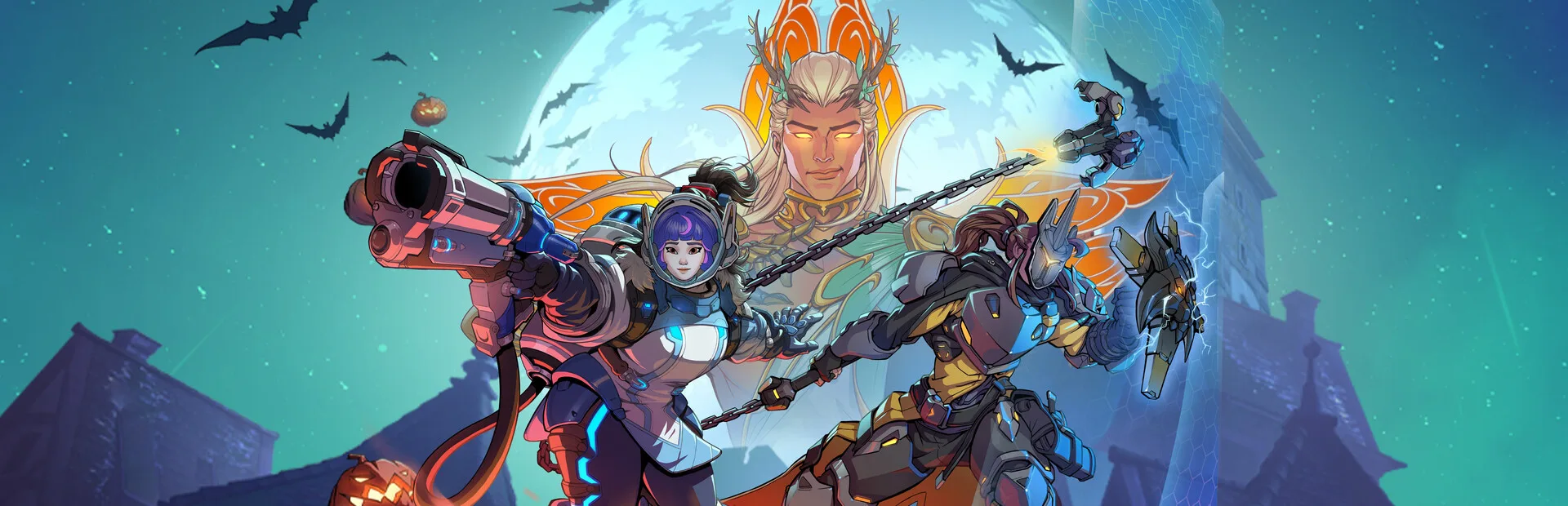
I remember the exact moment Overwatch clicked for me. It was 2016, Hanamura defense, and I was playing Reinhardt for the third time that night because nobody else would tank. The enemy Zarya called her Graviton Surge, I watched four teammates get pulled into a cluster, and without thinking I dropped my shield, charged the Zarya into a wall, and pinned her before the follow-up Pharah Barrage could wipe us. We held the point. I’d been playing shooters for a decade and nothing had ever felt quite like that — a moment that rewarded game sense, positioning, and split-second decision-making more than raw aim.
That was Overwatch at its best. A game that made team play feel as mechanically satisfying as headshots. And for a few years, nothing else in the genre came close.
What Overwatch 1 Got Right
Overwatch didn’t invent hero shooters. Team Fortress 2 existed. But Overwatch codified the modern version of the genre in a way that everything after it — Valorant, Apex Legends, Marvel Rivals, Deadlock — has been responding to.
Three things made it work.
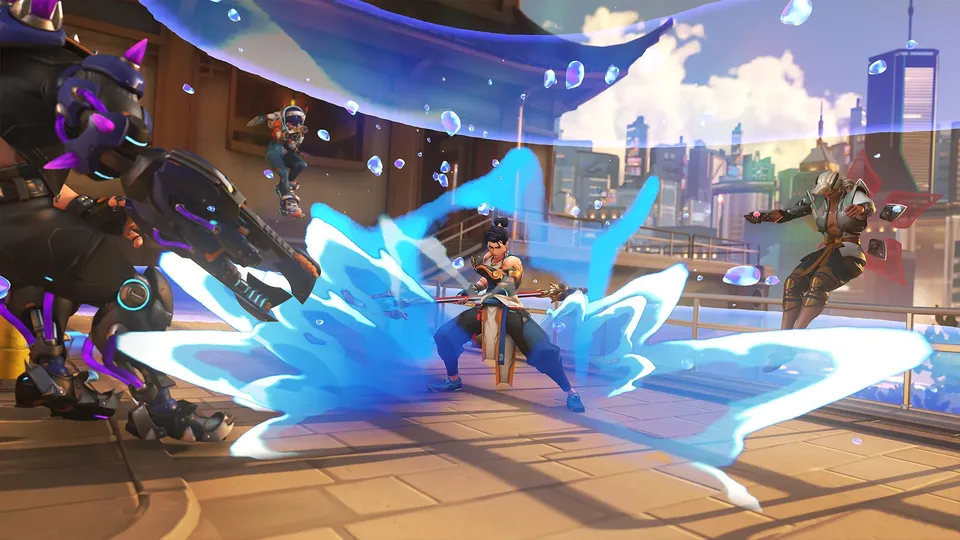
Hero design that communicated through gameplay. You could watch Reinhardt swing his hammer for five seconds and understand what he did. Tracer blinked, recalled, and dual-wielded — the kit told you she was fast, fragile, and annoying before you read a single tooltip. Most games before Overwatch treated character design and gameplay design as separate problems. Blizzard fused them, and every hero shooter since has followed that template.
Role clarity without rigidity. The tank/damage/support triangle gave teams natural structure while allowing creative compositions. The difference between a Reinhardt comp and a Winston comp was enormous. The roles provided a shared language for team coordination without forcing a single correct answer.
Ultimate economy as macro strategy. This is the one that still doesn’t get enough credit. Overwatch’s ultimate system created a layer of strategic depth that turned casual teamfights into calculated resource exchanges. When to use ults, when to save them, when to trade two for one, when to dry-push to bait out enemy resources — this was cooldown trading at the team level, and it gave Overwatch a strategic ceiling that pure shooters couldn’t match. The callout “they have Grav-Dragon” changed how an entire team played for the next ninety seconds. That kind of macro thinking was borrowed from MOBAs, and Overwatch was the first shooter to make it feel natural.
The 5v5 Shift
When Overwatch 2 dropped 6v6 to 5v5 and removed a tank slot, it was the most consequential design decision in the game’s history. The reasoning was sound: double-shield metas had made the game miserable, queue times for DPS were obscene, and two tanks created a frontline so dense that individual plays got swallowed by barriers.
What 5v5 gained was clarity. Fights became more readable. Individual performance mattered more. DPS players could actually flank without hitting two layers of shield and a Zarya bubble. Support players had more agency because their healing wasn’t just being poured into an infinite tank health pool. The pace of the game increased, and at its best, 5v5 Overwatch feels faster, more decisive, and more skill-expressive than 6v6 ever did.
What it lost was depth. The off-tank role — Zarya peeling for her Ana, D.Va eating a Graviton, Roadhog creating a secondary threat axis — was one of the most skill-intensive positions in competitive Overwatch. The interplay between main tank and off-tank was where some of the game’s richest strategic decisions lived. Choosing between dive and deathball wasn’t just about the main tank pick; it was about the tank duo’s synergy. Removing that eliminated an entire dimension of team composition theory.

The Tank Problem
The single-tank format created a role that’s simultaneously the most impactful and least enjoyable position in competitive Overwatch 2. When there’s one tank, every team fight revolves around them. If your tank is outperforming the enemy tank, you probably win. If they’re not, you probably lose. That pressure is brutal.
Tanks got buffed to compensate — more health, more damage, more sustain — because a lone tank needs to survive longer without an off-tank covering them. But this created the “raid boss” problem: tanks became so individually powerful that they felt oppressive to fight against while still feeling fragile to play because the entire enemy team is focusing you. It’s a design tension that Blizzard has been trying to balance for three years without a clean answer.
The role queue system, which was brilliant in 6v6 for solving the “five DPS instalock” problem, became a different kind of constraint in 5v5. Good matchmaking requires enough players in every role, and tank is perpetually the least popular queue. The result is that tank players get fast queues but often face the same small pool of tank mains, while DPS players still wait. The structural incentive to play tank — faster queues, more game impact — isn’t enough to offset the stress of the role.
What Went Wrong
The 5v5 transition wasn’t the problem. The problem was everything around it.
Overwatch 2 launched with the promise of a PvE campaign that would justify the sequel numbering, the engine upgrade, and the two years of reduced content updates to the original game. That campaign was canceled after one paid mission pack that felt like a proof of concept. Players who’d been patient through a content drought got nothing for their patience, and the goodwill Blizzard had spent a decade building evaporated in a quarter.
The free-to-play transition brought a battle pass that replaced the loot box system. Loot boxes had problems — gambling mechanics aimed at cosmetic whales. But they also meant every player earned cosmetics through play. The battle pass and premium shop shifted to direct purchase with aggressive pricing. Twenty-dollar skins for a game that previously let you earn everything through gameplay created a perception of greed that Blizzard has never fully shaken.
Content pacing became the deeper wound. New heroes arrived slower than expected. Balance patches sometimes took months to address metas the community had identified as broken within days. For a live-service game competing against titles like Marvel Rivals — which ships new heroes and balance changes on an aggressive cadence — Overwatch 2’s update cycle felt glacial.
The Overwatch League folded too. Whether that was the game’s fault, the league’s business model, or the broader esports correction is debatable. But losing a structured competitive ecosystem removed a north star that had given ranked play meaning for the most dedicated players.
What It Still Does Better
Here’s the thing — and this is what makes Overwatch 2 frustrating rather than dismissible. The core gameplay is still exceptional.
No other hero shooter has hero-swapping mid-match. You can read the enemy composition, switch to a counter, and adapt in real time. Marvel Rivals has a roster. Deadlock has an item shop. But Overwatch lets you rebuild your team’s identity between fights without returning to a menu. That fluidity creates a strategic layer that locked-pick games can’t replicate.
The map design remains the best in the genre. Overwatch maps are built around sightlines, off-angles, high ground, and choke points that interact with hero kits in specific ways. King’s Row is still one of the greatest competitive maps in FPS history because every section asks different things from your team composition. The geometry matters — not in a “memorize pixel-perfect angles” way like tactical shooters, but in a “understand how space works for your hero” way.
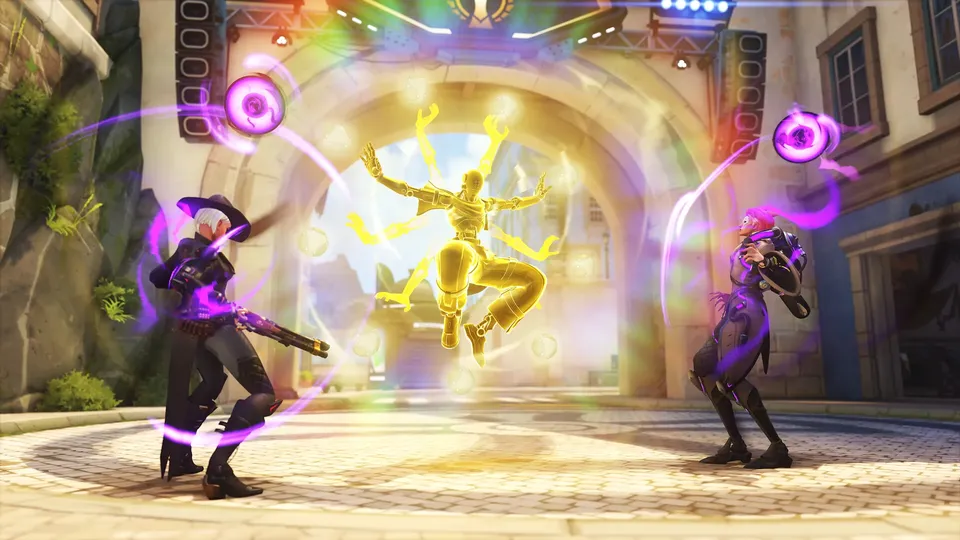
And the moment-to-moment feel of ability interactions is unmatched. Sleeping a Genji mid-Dragonblade. Eating a Graviton with D.Va’s Defense Matrix. Landing a Lucio boop that sends three players off the map. These moments are possible because the abilities are designed to interact with each other, not just with enemy health bars. The game has an internal logic to its ability ecosystem that rewards deep knowledge in ways that newer competitors haven’t matched yet.
The Design Lesson
Overwatch’s arc tells a story that matters for everyone who cares about PVP game design. You can create a genre-defining game and still lose your audience if you can’t maintain the content pipeline and community trust that live-service demands.
The 5v5 change was a legitimate design evolution — an attempt to solve real problems with the game’s competitive health. But design changes don’t exist in a vacuum. Players evaluate them in the context of everything else: the canceled PvE, the monetization shift, the content drought, the league collapse. A 5v5 transition alongside a thriving PvE campaign and generous content schedule would have been received completely differently than a 5v5 transition that felt like the only thing they shipped.
Overwatch changed hero shooters forever. Every hero shooter released in the last six years is building on the foundation Blizzard laid — hero identity through gameplay, role-based team composition, ultimate economy as strategic depth. Those ideas are permanently embedded in competitive game design.
But inventing a genre doesn’t entitle you to own it. The games learning from Overwatch — shipping faster, communicating better, respecting their players’ time and money — are the ones setting the pace now. Overwatch 2 is still worth playing. The core is too good not to be. Whether Blizzard can match the ambition of the games it inspired will define whether Overwatch’s legacy is “the game that created modern hero shooters” or “the game that created modern hero shooters and then became one of many.”
I’m rooting for the former. But I’m watching the latter happen in real time.


Discussion