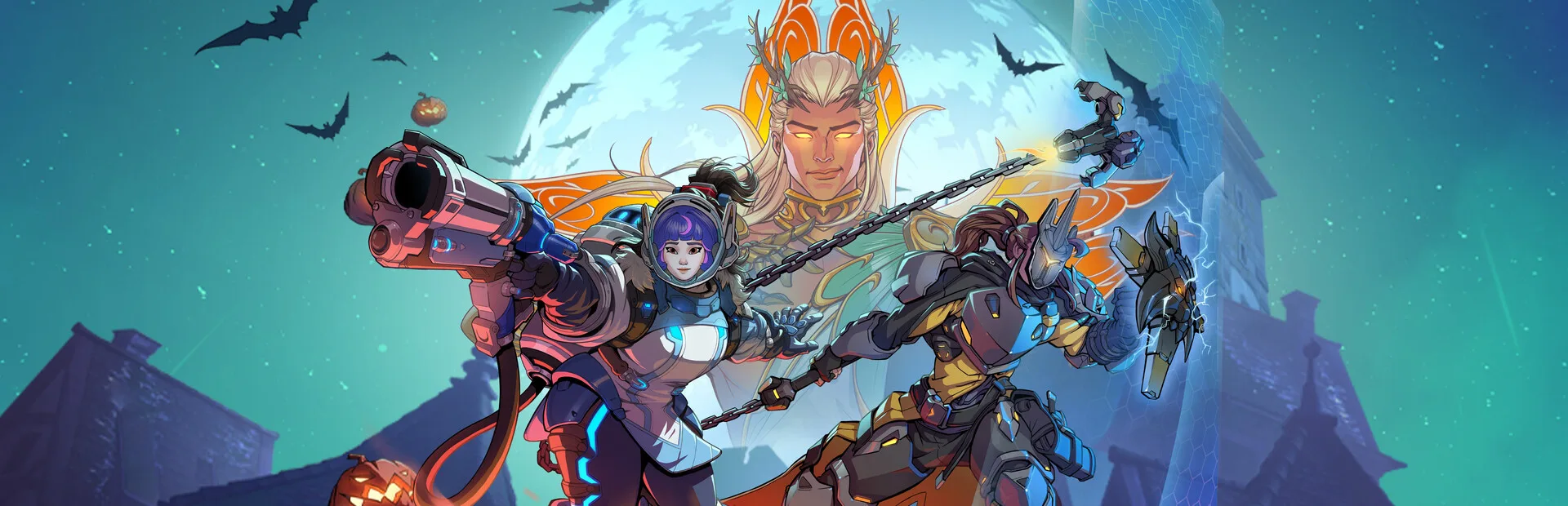
No genre in gaming has a higher body count than the hero shooter. For every game that survives, three more launched with ambition, burned through their marketing budget, and shut down within eighteen months. The graveyard is enormous and it keeps growing. Concord lasted eleven days. LawBreakers lasted three months. Crucible was mercy-killed before it ever left beta. Gigantic came back from the dead only to die again. And behind every one of those failures is Overwatch, the game that defined the genre so completely that it crushed everything that came after it — including, arguably, itself.
This list ranks every hero shooter that matters in 2026. Not just the ones you can play right now, but the dead ones too, because the history of this genre is the history of catastrophic failure punctuated by a handful of massive successes. Some of these games are thriving with millions of players. Some are remembered fondly by a few thousand. Some are cautionary tales that should be studied by every studio considering a hero-shooter pitch. All of them tried to answer the same question: what happens when you give players unique characters with unique abilities and ask them to shoot each other?
The ranking considers competitive depth, community health, design innovation, and lasting impact. A dead game that introduced a brilliant idea ranks higher than a living game that copied someone else’s homework.
The Living
1. Marvel Rivals
Developer: NetEase | Team Size: 6v6 | Price: Free-to-play | Status: Active, growing
Marvel Rivals earned its spot. Not because of the IP — though having Spider-Man web-swing into a teamfight certainly helps with first impressions — but because NetEase studied every mistake the genre made over the past eight years and built a game that sidesteps most of them. The team-up system, where specific hero pairs unlock synergy abilities, is the single most interesting design innovation the hero shooter genre has seen since Overwatch introduced ultimate economy. It creates draft considerations that go beyond “we need a healer.” It rewards duo-queue coordination without punishing solo players. And it gives the roster a combinatorial depth that keeps the meta from crystallizing too quickly.
The Season 2 ranked rework separated solo and group queues with independent MMR — something Overwatch spent years failing to do. The balance cadence is aggressive but thoughtful. New heroes arrive tuned rather than deliberately broken. The matchmaking actually works because the player base is large enough to support healthy queues across multiple modes.
The criticism: The team-up system can feel like a trap when your duo partner doesn’t know the synergy exists. Some heroes lean too heavily on the IP for their identity and don’t have kits that feel as distinct as their visual design promises. The competitive scene is still young, and it’s unclear whether Marvel Rivals has the mechanical depth to sustain a serious esports ecosystem or whether it’ll settle into a “content game” that cycles new heroes and events without building toward anything deeper.
For you if: You want the most polished hero shooter experience available right now. You want 6v6 that feels like the sequel Overwatch never delivered. You’re willing to learn team-up synergies because the payoff when they work is genuinely thrilling.
2. Overwatch 2
Developer: Blizzard Entertainment | Team Size: 5v5 | Price: Free-to-play | Status: Active, complicated
Overwatch changed everything. It codified the modern hero shooter so definitively that every game on this list exists in its shadow. The role queue. The ultimate economy. The idea that a tank, a damage dealer, and a support each have a distinct job and the interplay between those jobs is where the depth lives. Blizzard didn’t just popularize these concepts — they polished them until they felt inevitable, like the genre had always been heading there.
The problem is that Overwatch 2 is a game at war with its own legacy. The 5v5 transition removed the off-tank role, which eliminated one of the most skill-intensive positions in the original game. The PvE mode was promised, developed for years, and then cancelled. The monetization shifted from loot boxes to a battle pass, and the cosmetic prices are genuinely insulting. Every decision since launch has felt like a company trying to extract maximum revenue from a player base that remembers when the game respected their time.
And yet — the core gameplay is still remarkable. When a Genji blade connects through a Zarya bubble into a Graviton Surge, when an Ana anti-nade lands on three people and your Roadhog hook lands on the healer, when a Lucio boops two people off the map on Ilios — that combination of timing, teamwork, and mechanical execution is something only Overwatch delivers. The hero design is still the best in the genre. The abilities are readable, the silhouettes are distinct, and the kits are expressive enough that two people playing the same hero look completely different at high ranks.
The criticism: The live service model has eroded trust. Content droughts are real. The competitive ladder feels stagnant. Blizzard’s balance philosophy swings between “let the meta cook” and “emergency nerf this character into the ground” with no middle ground. And losing the second tank fundamentally changed the game’s identity in a way that many long-time players never accepted.
For you if: You want the deepest hero design in the genre. You have a tolerance for Blizzard’s management decisions because the moment-to-moment gameplay still hasn’t been matched.
3. Valorant
Developer: Riot Games | Team Size: 5v5 | Price: Free-to-play | Status: Active, dominant
Calling Valorant a hero shooter is technically correct and spiritually misleading. The guns kill in the same number of bullets regardless of who’s holding them. The headshot multiplier doesn’t change based on your agent pick. The fundamental rhythm of the game — buy phase, execute, post-plant — comes from Counter-Strike, not Overwatch. But the agents have unique abilities, those abilities define the meta, and team composition matters enough that Valorant belongs on this list whether the tactical shooter purists like it or not.
What Valorant proved is that hero abilities and high-stakes shooting aren’t mutually exclusive. Riot threaded the needle: the abilities are powerful enough to justify agent diversity but constrained enough that a great aimer on any agent can outperform a mediocre player on the “meta” pick. A Sova recon dart gives information. A Viper wall reshapes sightlines. A Killjoy lockdown forces rotations. These are tactical tools, not damage buttons, and the distinction matters. Valorant’s agents create variety without undermining the gunplay that holds the competitive integrity together.
The criticism: Some duelist kits are too self-sufficient at low ranks — Jett dashing out of every mistake or Reyna dismissing after every kill can feel like the game is rewarding selfish play. The kernel-level anti-cheat remains a real concern. And the map design, while improved since launch, still occasionally produces maps that feel like they were designed for ability usage first and gunplay second.
For you if: You want a hero shooter where the shooting comes first. You think abilities should be utility, not crutches. You’re willing to let Riot run Vanguard on your machine because clean lobbies are worth the trade.
4. Apex Legends
Developer: Respawn Entertainment | Team Size: 3-player squads | Price: Free-to-play | Status: Active, stabilized
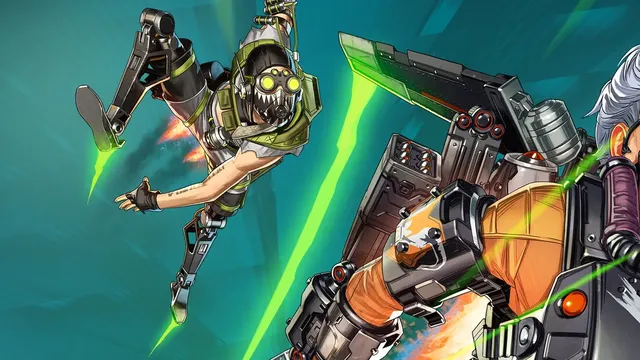
The movement is the message. Apex Legends took the hero shooter concept, dropped it into a battle royale, and proved that the combination works because the legends aren’t just ability kits — they’re movement profiles. Octane’s stim pad creates rotational speed. Pathfinder’s grapple creates vertical options. Valkyrie’s jets create repositioning on a macro scale. Every legend changes how you move through the map, and in a BR where positioning is the primary skill expression, that’s the most meaningful form of hero differentiation possible.
Seven years in, Apex has settled into a groove. The competitive scene is healthy. The gunplay — inherited from Titanfall 2, one of the best-feeling shooters ever made — remains unmatched in the BR space. The ping system, which Apex pioneered, has been copied by every team-based game since. The legend roster is deep enough for meaningful meta variation without being so bloated that new players can’t learn the matchups.
The criticism: The content cadence has slowed. Map rotation can feel stale. The ranked system has been reworked multiple times and still doesn’t satisfy everyone. Respawn’s output has thinned as the studio navigates post-layoff recovery. And the battle royale format means that even perfect play can end in a third-party ambush that invalidates everything you did in the previous fifteen minutes.
For you if: You want the best gunfeel in any hero-based game. You like battle royale but want your character pick to actually matter. You appreciate movement mechanics deep enough to study for hundreds of hours.
5. Team Fortress 2
Developer: Valve | Team Size: Variable (typically 12v12) | Price: Free-to-play | Status: Active, community-driven
TF2 is the proto-hero shooter. Nine classes, each with a completely distinct playstyle, weapon loadout, movement speed, and health pool. It launched in 2007. It’s still being played in 2026. Not as a nostalgia curiosity — as an actively populated game with community servers, competitive leagues, and a trading economy that has outlived several actual currencies.
What TF2 understood before anyone else is that hero shooters need visual personality. The Spy doesn’t just turn invisible — he’s a character you remember. The Heavy isn’t just a tank class — he’s a person with a minigun and a sandvich. The aesthetic clarity that Overwatch would later refine to perfection started here, in a game that used cartoon silhouettes and distinct color language to solve the readability problem that plagues every hero shooter with a large roster.
The criticism: Valve has effectively abandoned active development. The bot crisis — automated aimbotters flooding casual servers — was a genuine plague for years and is only partially resolved through community effort. The competitive format (6v6 or Highlander) lives entirely on community infrastructure. And the spaghetti code powering an 18-year-old game means certain bugs will simply never be fixed.
For you if: You want to understand where the entire genre came from. You appreciate that a game doesn’t need seasonal battle passes to be worth your time. You find it charming that the community has kept this alive longer than most studios keep their servers running.
6. The Finals
Developer: Embark Studios | Team Size: 3v3v3 | Price: Free-to-play | Status: Active
The Finals isn’t a traditional hero shooter — its three classes (Light, Medium, Heavy) are broader archetypes than individual heroes. But the loadout system within each class creates build diversity comparable to a full hero roster, and the destruction system adds a variable that no hero shooter has ever attempted: the map is temporary. You can C4 the floor under an objective and drop the entire fight down a level. You can collapse buildings onto enemy teams. The geometry of the arena changes minute-to-minute based on player actions.
That destruction is the reason The Finals exists on this list at six rather than fifteen. No other game in the genre makes the environment an active participant in the fight. The class differences interact with destruction in meaningful ways — Heavies create chaos, Mediums adapt to the wreckage, Lights exploit new angles that didn’t exist thirty seconds ago. When it works, The Finals produces emergent moments that scripted hero abilities simply cannot replicate.
The criticism: The three-team format is inherently chaotic and sometimes frustrating. The ranked mode has never quite landed. Balance swings between classes are dramatic between seasons. And the game-show aesthetic, while distinctive, pushes away players looking for something that takes itself seriously.
For you if: You want a hero shooter where the environment matters as much as the abilities. You’re tired of fighting on the same static maps. You find it funny when the building you’re defending suddenly isn’t there anymore.
7. Paladins
Developer: Evil Mojo (Hi-Rez) | Team Size: 5v5 | Price: Free-to-play | Status: Active, niche
Paladins survived the “Overwatch clone” accusations. That alone is an achievement in a genre where the accusation was usually a death sentence. The card system — where you build a loadout of passive modifiers for each champion — creates more build variety than Overwatch ever offered. You can play Androxus as a dive assassin or a mid-range poker depending on your card choices, and that customization gives the game a layer of pregame strategy that rewards investment.
The talent system on top of the card system means that champion picks have internal variety that most hero shooters lack. Two players picking the same champion can be running fundamentally different builds. In a genre where mirror matches are common, that’s a meaningful differentiator. The roster is massive — over 50 champions — and while not every one is balanced, the diversity is impressive.
The criticism: Hi-Rez’s track record inspires caution. The studio has a pattern of building promising games, supporting them unevenly, and eventually shifting resources to the next project. The visual polish is a tier below the top entries on this list. The competitive scene is small. And the “is it an Overwatch clone?” conversation, while unfair, has permanently shaped public perception in a way the game has never fully escaped.
For you if: You want an Overwatch-style hero shooter with deeper build customization. You don’t mind a smaller community if the gameplay loop is satisfying. You appreciate a developer that’s kept a game alive for nearly a decade despite constant competition.
8. Spectre Divide
Developer: Mountaintop Studios | Team Size: 3v3 | Price: Free-to-play | Status: Active, early
Spectre Divide’s defining mechanic is the duality system — you control two bodies simultaneously, one active and one spectral, and can swap between them at will. It’s the most genuinely novel idea in the hero shooter space since Apex introduced the ping system. The tactical implications are significant: you can hold two angles at once, create crossfires with yourself, bait opponents into one body while flanking with the other.
The 3v3 format keeps engagements readable and every player’s contribution visible. There’s no hiding in a 3v3 — your performance matters every round. The gunplay is clean, drawing from the tactical shooter lineage, and the maps are designed around the dual-body mechanic in ways that create unique sightline puzzles.
The criticism: The player base is small and it’s unclear whether the duality mechanic is deep enough to sustain long-term competitive interest or whether it’s a gimmick that flattens after a few hundred hours. Content updates have been slow. And launching a hero shooter in 2024-2025, when the genre has already swallowed and discarded half a dozen competitors, takes either confidence or naivety — time will tell which this is.
For you if: You want something genuinely new in the tactical shooter space. You enjoy games where a single clever mechanic creates emergent depth. You’re willing to invest in a smaller community because the concept is worth exploring.
The Fallen
This is where the list gets grim. The hero shooter genre has killed more games than any other category in competitive gaming, and most of them didn’t deserve to die. They launched into a market where Overwatch had consumed all the oxygen, where player attention was finite and switching costs were enormous, and where being “pretty good” wasn’t enough to survive because players already had a “great” option installed.

9. XDefiant
Developer: Ubisoft | Team Size: 6v6 | Price: Free-to-play | Status: Shut down
XDefiant’s pitch was simple: Call of Duty gunplay with hero abilities pulled from Ubisoft’s IP catalog. Factions from Splinter Cell, The Division, Far Cry, and Watch Dogs each brought unique abilities to a fast-paced arcade shooter. On paper, it was Ubisoft’s answer to the hero shooter question — what if we made one that felt like CoD?
The gunplay was genuinely solid. The time-to-kill was fast enough to satisfy the CoD audience while the abilities added enough variety to justify the hero framing. The faction system was interesting — pulling from established Ubisoft universes gave each group an immediate identity. And the free-to-play model was fair.
Why it died: Ubisoft pulled the plug less than a year after launch. The player base dropped fast, unable to compete with the established giants. The content pipeline couldn’t keep up with player expectations. And Ubisoft’s broader corporate challenges meant the game never got the sustained investment it needed to find its audience. XDefiant wasn’t bad — it was fine, and in this genre, fine is fatal.
Its legacy: A reminder that even a massive publisher can’t buy their way into a saturated genre. The hero shooter audience is not infinitely expandable.
10. Dirty Bomb
Developer: Splash Damage | Team Size: 5v5 to 8v8 | Price: Free-to-play | Status: Servers still up, no development
Dirty Bomb might be the most underrated game on this list. It launched in 2015 — a year before Overwatch — and it had hero design, objective-based gameplay, and class synergy that was genuinely ahead of its time. The mercenary system gave each character a distinct role with specific weapons and abilities, and the objective modes required coordinated team play in ways that pure deathmatch hero shooters never do.
The gunplay was crisp. The movement had weight without feeling sluggish. The class variety was real — an Aura healing station created fundamentally different team dynamics than a Sparks revive rifle. The card loadout system added a layer of personalization that predated Paladins’ card system by years.
Why it died: It launched into a market that didn’t know it wanted hero shooters yet, and by the time the market did, Overwatch had arrived and consumed all available attention. Splash Damage shifted resources away. The free-to-play model struggled with monetization. And a game that needed a larger audience to thrive never got the critical mass required to sustain matchmaking.
Its legacy: Proof that being early is just as dangerous as being late. Dirty Bomb had the right ideas at the wrong time.
11. Gigantic
Developer: Motiga | Team Size: 5v5 | Price: Free-to-play | Status: Revived briefly (2023), shut down again
Gigantic was a hero shooter crossed with a MOBA, and the hybrid was beautiful. Each team fought to power up their guardian — a massive creature that would assault the enemy base when fully charged. The heroes played like MOBA characters with shooter mechanics: deliberate abilities, cooldown management, and a focus on objective control rather than pure elimination. The art style was gorgeous. The character designs were inventive. The gameplay loop was unlike anything else in the genre.
It died in 2018. Then Gearbox and a passionate community revived it in 2023 as Gigantic: Rampage Edition. And then it died again.
Why it died (twice): The first time, Motiga ran out of money and Microsoft’s support evaporated. The game was caught between platforms — Windows 10 exclusive initially, then Xbox, then Steam, never building a stable audience on any of them. The second time, the revival launched to genuine excitement but couldn’t sustain a player base in a market even more crowded than the one that killed it originally.
Its legacy: The most tragic entry on this list. Gigantic wasn’t killed by bad design — it was killed by bad timing, bad platform deals, and a market that didn’t have room for a brilliant hybrid.
12. Concord
Developer: Firewalk Studios (Sony) | Team Size: 5v5 | Price: $40 | Status: Shut down (11 days)
Concord is the fastest commercial failure in AAA gaming history. Eleven days. Sony launched it, nobody bought it, and they shut it down less than two weeks later. The refunds were issued before most people had finished the tutorial campaign.
On its merits, Concord was fine. The gunplay worked. The hero designs were competent. The abilities were functional. The modes were standard. Everything about it was competent and nothing about it was compelling. It launched at $40 in a genre where Marvel Rivals, Overwatch 2, Apex Legends, and Valorant were all free-to-play. It offered no hook — no unique mechanic, no distinctive art style, no IP that justified the price of entry. In a genre where players already had three or four excellent free options, “fine” at $40 was a non-starter.
Why it died: Arrogance. Sony spent eight years and reportedly hundreds of millions of dollars building a game that didn’t answer the most basic question in the genre: why would I play this instead of the free game I already have installed? The character designs were generic. The marketing was invisible. And the $40 price tag in a free-to-play genre was such an obvious miscalculation that it suggests nobody involved in the decision had actually looked at the competitive landscape.
Its legacy: The definitive cautionary tale. Concord will be studied in game design courses as the example of what happens when a studio builds in isolation without understanding the market they’re entering.
13. LawBreakers
Developer: Boss Key Productions | Team Size: 5v5 | Price: $30 | Status: Shut down (2018)
LawBreakers was Cliff Bleszinski’s post-Epic project, and it was genuinely ambitious. The zero-gravity combat zones created a verticality and movement freedom that no hero shooter before or since has replicated. Fighting in variable gravity — where some zones had full gravity and others had almost none — demanded spatial awareness in three dimensions. The skill ceiling was astronomical. The hero designs encouraged aggressive, mechanical play. The marketing positioned it as the “dark, edgy” alternative to Overwatch’s colorful accessibility.
That positioning killed it. “We’re the anti-Overwatch” was a marketing pitch aimed at an audience that didn’t exist in sufficient numbers. The people who wanted a hero shooter were playing Overwatch. The people who didn’t want a hero shooter weren’t going to buy LawBreakers. And the $30 price tag, like Concord’s $40, created a barrier that free-to-play competitors didn’t have.
Why it died: It launched the same month as Fortnite’s battle royale mode, which pulled the entire gaming audience in a different direction. The player count dropped to double digits within weeks. Boss Key shut down a few months later. Bleszinski later said the game was too proud to go free-to-play — a decision that, in hindsight, was the studio’s death sentence.
Its legacy: Ambition without market awareness. LawBreakers proved that a mechanically excellent game can still fail catastrophically if it doesn’t give players a reason to leave what they’re already playing.
14. Battleborn
Developer: Gearbox Software | Team Size: 5v5 | Price: $60 | Status: Shut down (2021)
Battleborn is the genre’s most tragic timing casualty. It was a hero shooter crossed with a MOBA, featuring Gearbox’s signature humor and a roster of weird, wonderful characters with deep ability trees. The PvP was genuinely fun — the Incursion mode combined lane pushing with hero combat in a way that felt distinct from both pure MOBAs and pure shooters. The co-op story missions gave players something to do when they didn’t want to compete.
It launched on May 3, 2016. Overwatch launched on May 24, 2016. Battleborn was dead within a month.
Why it died: It wasn’t just the timing — it was the comparison. Every review, every forum post, every conversation about Battleborn became a comparison to Overwatch, and Battleborn lost every time. Not because it was worse, but because it was different in ways that were hard to communicate when the only frame of reference was “that other hero game.” The MOBA elements confused players expecting a pure shooter. The $60 price tag was brutal. And Gearbox’s marketing couldn’t articulate the game’s identity quickly enough to survive the Overwatch wave.
Its legacy: The first major victim of the Overwatch effect. Battleborn didn’t fail because it was bad — it failed because it occupied adjacent space to the most hyped game of the year and couldn’t differentiate fast enough.
15. Gundam Evolution
Developer: Bandai Namco | Team Size: 6v6 | Price: Free-to-play | Status: Shut down (2023)
Gundam Evolution took the Overwatch formula and transplanted it into mobile suits, and the result was more fun than it had any right to be. Piloting a Gundam in a hero shooter context — where each suit had distinct abilities, roles, and movement profiles — combined the IP’s mech fantasy with genuinely solid team-based gameplay. The Exia played like a dive assassin. The GM Sniper played like Widowmaker in a giant robot. The synergies were there.
Why it died: Bandai Namco’s free-to-play monetization was atrocious. Heroes were locked behind a gacha-adjacent system that required either significant grinding or real money. In a genre where your competitors let you play every hero for free, locking mobile suits behind a paywall was suicide. The content pipeline was slow. The competitive infrastructure was minimal. And the Gundam IP, while beloved, doesn’t have the global mainstream pull of Marvel or Blizzard’s original characters.
Its legacy: Good gameplay isn’t enough if the business model actively punishes your players. Gundam Evolution is the clearest case of monetization killing an otherwise viable game.

16. Crucible
Developer: Relentless Studios (Amazon) | Team Size: Variable | Price: Free-to-play | Status: Shut down (2020, never left beta)
Crucible is Amazon’s first entry in the “big tech companies can make games” experiment, and it went about as well as you’d expect. The game launched, was immediately panned, was pulled back into closed beta, and was cancelled a few months later. The entire lifecycle — from launch to cancellation — took about six months. Amazon reportedly spent over $100 million on it.
The game couldn’t decide what it wanted to be. It launched with three modes that felt like they belonged in three different games. The hero designs were generic. The shooting felt floaty. The objectives were confusing. Everything about it felt like a committee had looked at Overwatch, Apex, and League of Legends, decided to combine all three, and produced something that captured the appeal of none.
Why it died: Design by market research rather than creative vision. Crucible tried to be everything to everyone and ended up being nothing to anyone. The lack of a clear identity made it impossible for players to articulate why they should play it, and in a saturated genre, “you should try it” isn’t enough — you need “you should try it because it does THIS.”
Its legacy: Money doesn’t buy game design taste. Amazon’s Crucible is the most expensive proof that you can’t reverse-engineer a game’s soul from a spreadsheet of competitor features.
17. Bleeding Edge
Developer: Ninja Theory | Team Size: 4v4 | Price: $30 (Game Pass) | Status: Shut down (2021)
Bleeding Edge was a melee-focused hero brawler from the studio that made Hellblade, and the character designs were outstanding. The cast had personality, the visual style was punk and aggressive, and the idea of a hero shooter where most combat was up close and personal was genuinely interesting. The 4v4 format kept fights intimate and made every character pick feel impactful.
Why it died: The melee combat didn’t have enough depth to sustain competitive interest. Fights devolved into team-balling — grouping up and running at the other team in a cluster — because the game lacked the mechanical depth to reward individual skill expression. The objective modes felt like afterthoughts. And Ninja Theory, a studio of around 100 people at the time, couldn’t produce content at the pace a live-service game demands. The player base evaporated within weeks, and Microsoft shifted the studio to Hellblade 2 development.
Its legacy: A melee hero shooter is a brilliant concept that nobody has executed well yet. Bleeding Edge proved the idea has potential while simultaneously demonstrating how hard the execution is.
18. Rocket Arena
Developer: Final Strike Games | Team Size: 3v3 | Price: $30 → Free-to-play | Status: Shut down (2022)
Rocket Arena was a hero shooter built around the Smash Bros. elimination mechanic — damage increased your knockback instead of depleting a health bar, and you died by being launched off the map. The hero designs were colorful and family-friendly. The 3v3 format was snappy. The idea of combining hero abilities with platform-fighter elimination logic was creative.
Why it died: EA launched it at $30 with minimal marketing, then dropped it to free-to-play a month later — a pivot that screamed panic and destroyed consumer confidence. The game needed a massive player base to sustain matchmaking in its multiple modes, and it never got one. The family-friendly aesthetic made it look like a kids’ game, which pushed away the competitive audience, while the competitive design pushed away the casual audience the aesthetic attracted. It fell into the gap between its two potential audiences and found neither.
Its legacy: An interesting idea buried by bad publishing decisions. The Smash-style elimination in a shooter context deserved a longer life.
19. RIGS: Mechanized Combat League
Developer: Guerrilla Cambridge | Team Size: 3v3 | Price: $50 (PSVR exclusive) | Status: Studio closed (2017)
RIGS was a PSVR-exclusive mech hero shooter that played like a futuristic sports league. You piloted mechs with distinct classes — damage, support, engineer — in arena objectives that combined shooting with basketball-style scoring. The VR integration was ambitious: head tracking controlled your aim, and the sense of piloting a mech in first-person VR was genuinely immersive.
Why it died: PSVR had an install base of a few million units at launch. Making a multiplayer-only game exclusive to a VR headset that most PlayStation owners didn’t own was a death sentence for matchmaking. The game was good — legitimately good — but you couldn’t play it if you didn’t own a $400 headset for a $400 console, and even if you did, there was nobody online to play against.
Its legacy: The most hardware-limited death on this list. RIGS proved that VR hero shooters can work. It also proved that multiplayer VR games need a user base that doesn’t exist yet.
20. Shadowgun Legends
Developer: Madfinger Games | Team Size: 4v4 | Price: Free-to-play (mobile) | Status: Active, minimal updates
Shadowgun Legends tried to bring the hero shooter to mobile, and it got closer than it should have. The gunplay was surprisingly solid for touchscreen controls. The hero classes had meaningful ability kits. The PvP modes worked. The production values were impressive for a mobile title. In a world where mobile gaming makes more money than PC and console combined, a competent mobile hero shooter should have been a massive success.
The criticism: Mobile PvP is fundamentally limited by the input method. Touchscreen aiming creates a skill floor that makes competitive differentiation muddy — fights are decided more by who has a better connection and device than who has better aim. The monetization is aggressive. The game requires a significant time investment or real money to unlock competitive loadouts. And the mobile audience, which tends toward shorter sessions and less competitive investment, wasn’t the right market for a game that rewards hundreds of hours of grinding.
For you if: You want a hero shooter you can play on your commute. You accept the input limitations of mobile. You understand that “good for mobile” is a different standard than “good.”
The Pattern
Look at the list again. Count the dead games. Fourteen entries, and nine of them are shut down or effectively abandoned. That’s a 64% fatality rate, and it’s not random — there’s a clear pattern.
The games that survived share three traits: they’re free-to-play, they launched with a clear identity that differentiated them from Overwatch, and they had the backing of a studio that could sustain years of live service content. Marvel Rivals has the IP and NetEase’s resources. Valorant has Riot’s infrastructure and the tactical shooter angle. Apex has Respawn’s gunfeel and the battle royale format. Every surviving game answered the question “why not just play Overwatch?” with a specific, compelling response.
The games that died either couldn’t answer that question (Concord, Crucible), answered it with a price tag in a free-to-play market (LawBreakers, Battleborn, Rocket Arena), or answered it brilliantly but didn’t have the resources to sustain the answer (Gigantic, Dirty Bomb).
The hero shooter genre isn’t dying — it’s one of the strongest categories in PVP gaming. But it’s also one of the most ruthless. The barrier to entry is free-to-play. The barrier to survival is years of sustained content. And the barrier to dominance is a design identity so clear and compelling that players will leave the game they’ve already invested hundreds of hours in.
That’s a brutal set of requirements. And the graveyard will keep growing because studios will keep underestimating them.


Discussion