
The battle royale genre has been through more boom-and-bust cycles than any other category in competitive gaming. Dozens of studios looked at PUBG’s explosion in 2017 and thought “we can do that,” and most of them were wrong. Servers have shut down, studios have pivoted, and entire games have been erased from storefronts.
But the genre also produced some of the most innovative PVP design of the last decade. Not just the obvious winners — the weird ones, the dead ones, the games that tried something nobody else had the nerve to attempt. A browser-based battle royale with no 3D engine. A wrestling BR where you suplex people off skyscrapers. A Tetris battle royale, for god’s sake.
This is a retrospective ranking of the 20 most important battle royale games ever released — dead or alive. Some you can still play. Some you’ll never touch. All of them taught us something about what PVP can be.
The criteria: competitive depth, design innovation, and feel. Player count and commercial success are secondary. A dead game with brilliant design outranks a live game that plays it safe.
The Genre Kings
1. Apex Legends
Status: Live | Platform: PC, Console | Price: Free-to-play
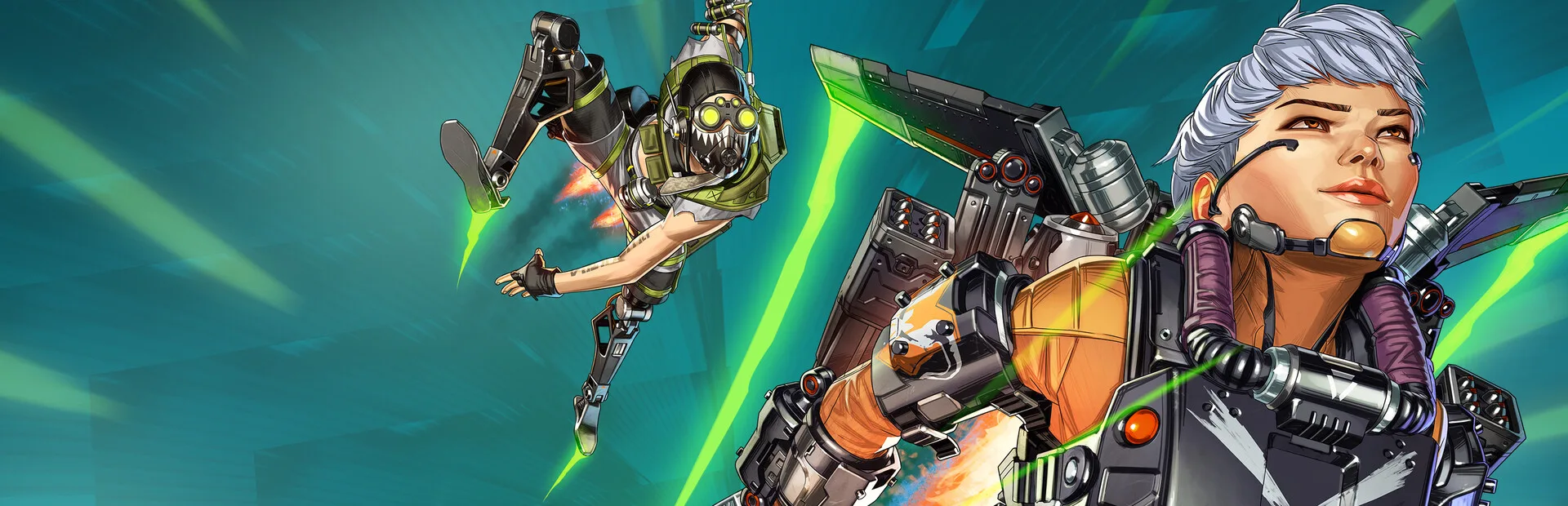
Movement is the message, and seven years later, nobody has written a better one. Apex Legends is the best battle royale ever made because it solved the genre’s core problem: downtime. In PUBG, you loot for 15 minutes and die in 3 seconds. In Fortnite, you build for 10 seconds and the fight’s over. In Apex, the fight starts when you land and doesn’t stop until one squad is left, because the movement system turns every rotation, every loot run, and every third-party approach into a mechanical skill check.
Slide-canceling off a ledge into a wall bounce that puts you on a roof your opponent didn’t think was reachable — that’s emergent from a physics engine that rewards deep understanding of momentum. The legend system layers hero abilities on top without replacing the gunplay loop. Pathfinder’s grapple has a higher skill ceiling than entire other games. Every legend is a different vocabulary for the same language: move better than the other guy.
The criticism is real: the matchmaking has been inconsistent for years, and the monetization is aggressive even by free-to-play standards. Ranked splits have been contentious. But none of that changes the fact that an Apex firefight — with armor swaps, cooldown trading, and repositioning happening simultaneously — is the highest-APM experience in any battle royale. Nothing else is close.
Who it’s for: Players who want mechanical depth that keeps revealing itself after 2,000 hours. Players who think movement is more interesting than aim.
2. Fortnite
Status: Live | Platform: PC, Console, Mobile | Price: Free-to-play
Fortnite’s building system changed PVP forever, and whether you love it or hate it, there’s no denying it created something genuinely new. No other game has ever given players the ability to reshape the battlefield in real time during a gunfight. A build fight between two skilled players is closer to a chess match than a shootout — every wall placement is a prediction, every edit is a read, and the speed at which top players execute these sequences is genuinely inhuman.
Then Epic did something nobody expected: they added Zero Build, splitting Fortnite into two functionally different games. Zero Build is a tight movement-focused shooter. Build Mode is the mechanical expression playground. Both are good. Both have massive audiences.
The criticism: Fortnite’s identity crisis is real. The game pivots every season, crossover content flies at a dizzying rate, and the competitive scene has always been secondary to the cultural moment. If you want a stable competitive environment, Fortnite will frustrate you. If you want constant reinvention that somehow keeps being fun, nothing else does it at this scale.
Who it’s for: Everyone, literally. Build Mode for mechanical expression junkies. Zero Build for shooter fans who want clean gunplay. Creative mode for people who want to build their own game inside a game.
3. PUBG: Battlegrounds
Status: Live | Platform: PC, Console, Mobile | Price: Free-to-play
PUBG invented the modern battle royale — the shrinking circle, the loot-and-fight loop, the plane drop, the late-game tension. Everything that came after is a response to what PUBG did first.
But PUBG’s real legacy is the gunfeel. The best ballistic model in any battle royale, period. Bullet drop, travel time, weapon sway, recoil patterns that demand actual spray control. A 400-meter Kar98k headshot feels like a genuine accomplishment because the bullet took a full second to get there. Every other BR uses hitscan or simplified ballistics. PUBG makes you earn every kill at range.
The criticism: pacing is brutal by modern standards. Erangel matches can involve 20 minutes of looting before you see another player. The movement feels heavy compared to Apex or Fortnite. The game has improved enormously since early access, but it still asks for patience many players won’t give.
Who it’s for: Tactical shooter fans who want their gunfights to feel weighty and consequential. Players who think a single well-placed shot should matter more than mechanical APM.

4. Naraka: Bladepoint
Status: Live | Platform: PC, Console | Price: Free-to-play
The melee battle royale that actually works. Every other BR assumed battle royale meant guns. Naraka looked at that assumption, threw it out, and built a martial arts combat system with a rock-paper-scissors triangle — normal attacks beat focus strikes, focus strikes beat parries, parries beat normal attacks — that creates more read-based depth than most shooters achieve with entire arsenals.
The grappling hook changes everything. Naraka’s movement is vertical, fast, and expressive in ways ground-based BRs can’t touch. Hook onto a temple rooftop, drop on someone mid-air, parry their opening swing, combo them into the ground. It looks like an action movie. It plays like a fighting game. And it’s happening in a 60-player BR with a shrinking zone.
The problem: the Western audience never fully showed up. Naraka is massive in Asia but has a smaller community in NA/EU. The learning curve is steep — if you don’t understand the parry triangle, you’ll get destroyed for your first 50 hours. But for players willing to invest, the combat depth is extraordinary.
Who it’s for: Fighting game players who want their reads and reactions to matter in a BR context. Anyone bored of “point gun, click head” as the only PVP paradigm.
5. Hunt: Showdown 1896
Status: Live | Platform: PC, Console | Price: $40
The most tense PVP experience in gaming isn’t technically a battle royale. It’s an extraction shooter with battle royale DNA pumping through every vein. Twelve players enter a map, hunt AI bosses for bounties, and then try to extract with the loot while other players hunt them. The shrinking circle is replaced by bounty tokens that reveal your location to everyone on the map. The result is the same: converging players, escalating stakes, and final circles that make your hands shake.
Hunt’s gunplay is deliberately slow and punishing. Most weapons are single-action. You fire, work the lever, and pray your shot landed because you’re not getting a second one before the other guy fires back. Every engagement is a high-stakes poker hand — do you take the shot from 80 meters and reveal your position, or push the compound and risk a shotgun trap? Death means losing your hunter and their gear permanently.
The sound design carries the tension. Every surface has a distinct audio profile — broken glass, water, crows, chains. Hunt’s maps are acoustic minefields. The best players navigate by sound as much as sight, triangulating shooter positions from gunshot reports at 150 meters.
Who it’s for: Players who want their PVP encounters to feel genuinely dangerous. Fans of tactical, methodical gameplay where patience and map knowledge beat twitch reflexes.
The Strong Contenders
6. Call of Duty: Warzone
Status: Live (Warzone 2.0 / Area 99) | Platform: PC, Console | Price: Free-to-play
Warzone is the most accessible battle royale ever made, and that’s both its greatest strength and the source of all its problems. The gunplay is Call of Duty — fast TTK, smooth aim assist on controller, satisfying hit markers. The loadout system means you’re not stuck with floor loot for the entire match. The Gulag gives you a second chance. Everything is designed to minimize friction and maximize the number of fights you get into per game.
At its best — Verdansk in 2020-2021 — Warzone was genuine magic. A map that rewarded both aggressive pushers and patient rotators, with enough verticality and interior spaces to support wildly different playstyles. A coordinated squad pushing a bounty contract through downtown Verdansk was peak casual-competitive PVP.
At its worst, Warzone is a mess. Annual CoD integrations create persistent weapon balance chaos. Meta weapons dominate until nerfed, then the next broken gun takes over. Caldera was rejected by the community. Al Mazrah lacked Verdansk’s personality. The matchmaking SBMM debate never ends. Anti-cheat has been an ongoing war.
Who it’s for: Call of Duty fans who want a BR that feels like CoD. Groups of friends who want a low-barrier-to-entry squad game with fast action and constant engagement.
7. Tetris 99
Status: Live | Platform: Switch | Price: Free (with NSO)
The most conceptually brilliant battle royale ever made. Take Tetris — 40 years of competitive depth — and make 99 people play simultaneously. Clearing lines sends garbage blocks to other players. Last person standing wins. That’s the entire pitch. It’s perfect.
Tetris 99 proves the battle royale format isn’t about guns or loot — it’s about escalating pressure in a multiplayer elimination context. The late game, when you’re one of the final 10 and every misplaced piece could end your run, is as tense as any top-5 situation in Apex or PUBG.
The targeting system adds genuine strategy. Target attackers, badge leaders, or near-death players. Switching targets at the right moment — stacking garbage on someone already struggling — is a layer of depth most people never engage with.
Who it’s for: Anyone who thinks they’re good at Tetris and wants to find out they’re not. Players who appreciate elegant game design over production spectacle.
8. Fall Guys
Status: Live | Platform: PC, Console, Mobile | Price: Free-to-play
Fall Guys is the battle royale for people who hate battle royales, and that’s exactly why it matters. Mediatonic looked at the genre’s core loop — many players enter, one player wins — and replaced gunfights with obstacle courses, physics chaos, and bean-shaped characters bouncing off each other. It shouldn’t work as a competitive game. It absolutely does.
Each round eliminates players through different game types: races, survival, team games, logic puzzles. No single skill set dominates. A player who’s incredible at race stages might choke on hex-a-gone. Someone who barely qualifies through team rounds might clutch jump showdown with perfect timing.
And yes, it’s competitive. Watch a top player navigate Slime Climb and tell me that’s not skill expression. The physics manipulation has a genuine ceiling that casual players don’t see. The criticism is that team rounds add too much variance, and the game leans heavily into cosmetics over competitive features. But as a party BR, nothing touches it.
Who it’s for: Groups who want a competitive party game. Players who are tired of getting headshot by someone they never saw.

9. Super People 2
Status: Live | Platform: PC | Price: Free-to-play
Wonder People took the PUBG formula and injected it with hero shooter DNA. Super People 2 gives every player a randomly assigned class with unique abilities — a sniper with wall-hack vision, a shotgunner with a charge move, a driver who buffs vehicle speed. The result is a BR where no two matches play identically because your kit changes every game.
You can’t default to your favorite playstyle. Roll Nuclear and you’re playing aggressive close-range whether you like it or not. Roll Sniper and you’re hunting long sightlines. It forces adaptation that most BRs don’t, because the standard meta elsewhere is to find one loadout and run it every game.
The criticism: player base struggles outside Asia, and class balance is uneven — some classes are clearly stronger in final circles. Getting a weak roll feels bad in a way that losing a fair fight doesn’t. But the core concept is sound and the PUBG-derived gunplay is excellent.
Who it’s for: PUBG fans who want randomized class variety to break up the monotony. Players who enjoy adapting to different kits rather than perfecting one.
10. Spellbreak
Status: Shut down (2023) | Platform: Was PC, Console
Spellbreak is the best battle royale that nobody played, and its shutdown is one of the genre’s biggest losses. Proletariat built a magic-based BR where you combined elemental gauntlets — fire, ice, lightning, wind, earth, toxic — to create devastating spell combos. A tornado that pulls in a fireball creates a flaming vortex. A toxic cloud ignited by lightning becomes an electric poison field. The emergent spell interactions created a skill ceiling that most BRs achieve through aim alone.
The movement was equally inspired — levitation, wind jumps, ice trails, teleportation. Every fight was a three-dimensional chess match. The best players combined spell-based movement with combat combos that looked like a fantasy anime fight scene.
It died because the new player experience was punishing. Spell combos weren’t explained, the class system was confusing, and the TTK was long enough that fights against experienced players felt hopeless. Was it a competitive BR or a casual party? Proletariat never committed to either, and the audience fragmented until neither side could sustain the game.
Who it would have been for: Players who wanted ability-based combat over gunplay. Arena brawler fans who wanted that cooldown trading philosophy in a BR context.
The Innovators
11. Rumbleverse
Status: Shut down (2023) | Platform: Was PC, Console
Iron Galaxy made a wrestling battle royale with Smash Bros. sensibilities, and it was significantly better than that pitch suggests. Rumbleverse dropped 40 players into a city where the only weapons were your fists, random special moves you found on the ground, and the buildings themselves. You could suplex someone off a skyscraper. You could elbow drop from a water tower. You could find a Javelin Tackle move and spend the rest of the match launching people through walls.
The combat had genuine depth — lights, heavies, blocks, dodges, grabs that beat blocks, strikes that beat grab startup. A simplified fighting game triangle that worked beautifully in a 40-player context. The special moves you picked up created real loadout decisions mid-match.
Rumbleverse died because it launched into a brutal market with minimal marketing. Servers were empty within months. It deserved better — the melee BR space that Naraka occupies could have had a Western counterpart if Rumbleverse had gotten more time.
Who it would have been for: Fighting game fans, Smash Bros. players, and anyone who’s ever wanted to powerslam someone off a building.
12. Ring of Elysium
Status: Live (limited regions) | Platform: PC | Price: Free-to-play
Tencent’s battle royale was genuinely underrated and introduced several ideas that the genre should have stolen. The escape mechanic — instead of being the last person alive, you raced to board a rescue helicopter with limited seats — created a fundamentally different late-game dynamic. You didn’t have to kill everyone. You just had to reach the helicopter before the other survivors. This turned the final minutes into a frantic scramble where combat and traversal were equally important.
The traversal equipment was the real innovation. Hang glider, climbing pack, or snowboard — each one completely changed how you navigated the map. Snowboard players raced through valleys. Hang glider players launched from cliffs. Climbers scaled buildings inaccessible to others. The map was designed around these tools.
Ring of Elysium launched during peak PUBG/Fortnite dominance and couldn’t carve out an audience. The gunplay felt too similar to PUBG to pull players who already had a BR home, and the unique mechanics weren’t marketed well enough to stand out.
Who it’s for: Players who want a PUBG-adjacent experience with smarter extraction mechanics. Anyone who thinks the “last man standing” format could use a more interesting win condition.
13. The Cycle: Frontier
Status: Shut down (2023) | Platform: Was PC
YAGER’s extraction BR hybrid tried to merge Tarkov’s extraction loop with a sci-fi setting and PvPvE combat. You dropped onto an alien planet, gathered resources, fought creatures and other players, and tried to extract with your loot. Dying meant losing everything you brought in. The risk-reward loop was excellent on paper.
The atmosphere was excellent. Fortuna III felt dangerous and alien, with weather systems affecting visibility and creature spawns interrupting PVP encounters at the worst possible moment. The PvPvE tension — hearing gunfire and not knowing if it’s players fighting creatures or a squad ambushing another squad — created the same paranoid tension that makes Hunt and Tarkov compelling.
It died because geared players stomped fresh spawns so consistently that new players couldn’t gain a foothold. Matchmaking didn’t separate by gear level, and cheating was rampant in the final months. YAGER shut it down and pivoted, which was probably the right call even though the core loop had real potential.
Who it would have been for: Tarkov fans who wanted a less punishing extraction experience. Sci-fi PVP fans who wanted something beyond the typical military aesthetic.
14. Vampire: The Masquerade - Bloodhunt
Status: Shut down (2024) | Platform: Was PC, PS5
Sharkmob built a vampire battle royale in Prague, and the concept was significantly cooler than the execution. Wall-climbing, supernatural jumping, and rooftop traversal made Prague feel like a genuine vampire playground. Feeding on NPCs for buffs created a PvPvE layer where managing your powers was as important as your aim.
The archetype system gave each vampire clan different abilities — Brujah brawlers, Nosferatu stealth trappers, Toreador ranged healers — creating genuine rock-paper-scissors dynamics in encounters.
Bloodhunt’s fatal flaw was polish. The game ran poorly at launch, the shooting felt floaty compared to dedicated shooters, and the Masquerade system (killing civilians in front of witnesses reveals your position) was a fascinating idea that mostly just punished new players. It shut down with a small but passionate community that mourned its loss.
Who it would have been for: World of Darkness fans. Players who wanted a BR with supernatural movement and a gothic aesthetic.
15. CRSED: F.O.A.D. (Formerly Cuisine Royale)
Status: Live | Platform: PC, Console | Price: Free-to-play
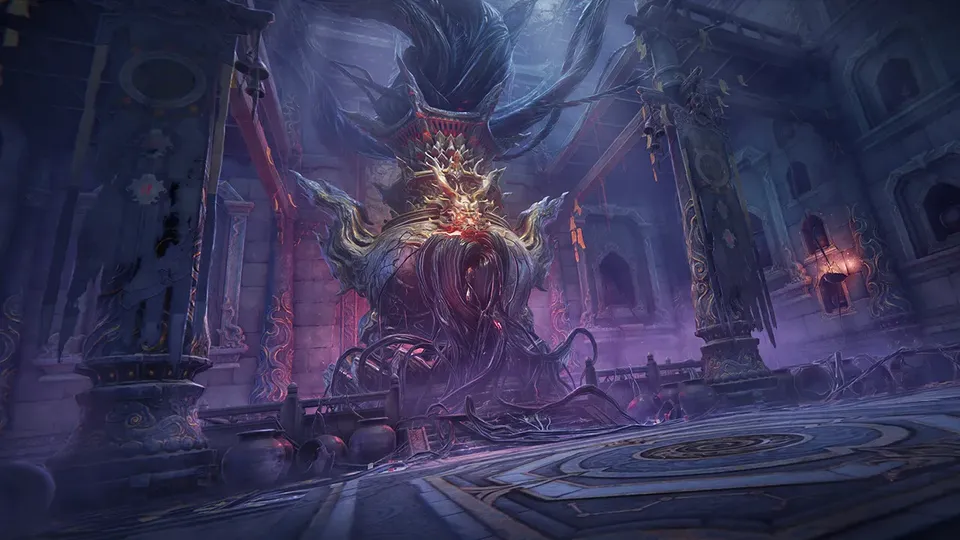
This game started as an April Fool’s joke — a battle royale where kitchen equipment was your armor (colanders for helmets, waffle irons for chest plates) — and somehow evolved into one of the weirdest, most charming BRs ever made. Darkflow Studios leaned into the absurdity, adding supernatural powers, ritual circles, and paranormal abilities while keeping the core gunplay surprisingly competent.
Champions have abilities ranging from summoning zombie hordes to calling down orbital strikes. The tonal whiplash between realistic WWII-era gunplay and teleporting demons is somehow the game’s greatest asset. You’ll be in a tense sniper duel and then someone summons a spectral bear. That’s just Tuesday in CRSED.
The criticism: it’s janky. Clunky movement, stiff animations, inconsistent servers. But CRSED has survived where dozens of polished, well-funded BRs have died, and that resilience says something about the value of having a weird, memorable identity.
Who it’s for: Players who want their BR with a side of surreal Eastern European humor. Anyone who’s tired of BRs that take themselves too seriously.
The Departed
16. Darwin Project
Status: Shut down (2020) | Platform: Was PC, Xbox
Scavengers Studio made the most innovative battle royale nobody played. Darwin Project was a 10-player BR with a twist: an 11th player acted as the Show Director, a god-like spectator who could close zones, drop nukes, heal players, or grant buffs in real time. The Director turned every match into a curated experience — a reality TV show where the audience had a hand in the outcome.
The survival mechanics were equally creative — cold exposure management, gear crafting, and tracking other players through footprints in the snow. The map was small enough that fights happened constantly, and the axe-and-bow combat had a satisfying skill curve.
Darwin Project died because the Show Director role required a skilled human to make it work. Bad Directors ruined matches. Good Directors were rare. The player base was never large enough, and queue times killed the experience before the gameplay could hook people.
Who it would have been for: Players who wanted a short, intense BR with survival elements. Streamers who would have thrived in the Director role.
17. Realm Royale
Status: Live (minimal updates) | Platform: PC, Console | Price: Free-to-play
Hi-Rez Studios looked at Fortnite’s success and thought “what if battle royale but with classes and abilities?” The answer was Realm Royale, which had one genuinely brilliant idea buried under a mountain of identity confusion. That idea: the Forge system. Instead of random loot, you collected shards from killing players and breaking gear, then brought those shards to forges scattered across the map to craft the specific weapons and abilities you wanted.
The Forge created guaranteed hotspots. Using a forge announced your position to nearby players, so crafting your legendary weapon was a calculated risk. Do you forge early when fewer players are nearby, or wait until late game when the gear matters most but everyone is watching? That risk-reward decision was better than any loot system in any other BR.
Realm Royale’s problem was that Hi-Rez couldn’t stop changing it. Classes removed, then re-added. TTK overhauled. Movement reworked. Every patch felt like a different game, and the audience that showed up for the original vision left when that vision kept shifting. Servers technically still run, but meaningful updates stopped years ago.
Who it’s for: Honestly, nobody anymore. But the Forge concept deserved a better game around it.
18. Hyper Scape
Status: Shut down (2022) | Platform: Was PC, Console
Ubisoft’s vertical movement BR in a futuristic city had exactly one problem: it wasn’t fun to play. The movement was fast, the hacks (abilities) were creative, the visual design was striking. On paper it should have competed with Apex. In practice, the gunplay felt weightless, the TTK was too long, and the city map was so vertically complex that fights devolved into chasing people through buildings forever.
The fusion system was interesting — picking up duplicates upgraded your weapons, forcing a choice between variety and power. The Twitch integration, where viewers voted on in-match events, was ahead of its time but felt gimmicky.
Hyper Scape is the clearest example of a BR that had AAA resources but missed the fundamental requirement: the second-to-second gameplay has to feel good. Ubisoft pulled the plug less than two years after launch. The speed-run from AAA launch to server shutdown is a cautionary tale about throwing money at a genre you don’t understand.
Who it would have been for: Apex players who wanted even faster movement. It never found them.
19. Surviv.io
Status: Live (community servers) | Platform: Browser | Price: Free
A top-down 2D battle royale that runs in a web browser, and it has no business being this good. Surviv.io strips the genre to its mechanical core: drop in, find guns, fight in a shrinking circle, win or die. No abilities, no building, no classes. Just aim and positioning in a 2D plane where you see everything around you — except what’s behind walls.
Line-of-sight management in top-down is fundamentally different from 3D shooters. You’re constantly reading building geometry to determine who can see you. Peeking corners in Surviv.io requires the same angle management that makes CS2 interesting, just in a different spatial dimension.
Surviv.io proves the battle royale formula works independent of production value. No 3D engine, no voice chat, no cosmetics worth mentioning — just clean game design that’s immediately accessible with enough depth to sustain a competitive community for years. The original developer sold it, and the current version runs on community servers, but it’s still playable.
Who it’s for: Players who want a BR they can play at work during lunch. Anyone who appreciates elegant design over spectacle.
20. Battlerite Royale
Status: Shut down (2021) | Platform: Was PC
And here’s the cautionary tale. Stunlock Studios had one of the best competitive PVP games ever made in Battlerite — a top-down arena brawler with deep cooldown trading, precise skillshot combat, and a mechanical skill ceiling that rivaled fighting games. Then they looked at the battle royale gold rush and thought: “What if we made Battlerite, but battle royale?”
The result was a disaster, and not because the idea was inherently bad. The problems were structural. Battlerite’s combat was designed for 2v2 and 3v3 arenas where every cooldown mattered and engagements lasted 30-60 seconds. Dropping that combat system into a large map with looting, running, and random encounters broke the pacing completely. You’d spend two minutes looting abilities off the ground, then run for another three minutes, then have a 15-second fight that ended before the combat system’s depth could emerge. The genre demanded long stretches of nothing punctuated by brief violence. Battlerite’s combat demanded sustained engagement.
Worse, it split Stunlock’s already-small team and player base. Resources that should have gone into Battlerite’s ranked mode and new champions went into a BR mode that fragmented the community. The arena game suffered, the BR never found its audience, and both shut down. The combat was stellar. The decision to put it in a battle royale was the wrong call, and it cost us one of the best PVP games of its era.
Who it would have been for: Battlerite players, who never asked for it in the first place.
The Big Picture
Looking at all 20 entries, a few patterns emerge.
The survivors figured out pacing. Apex uses movement to collapse downtime. Fortnite uses building to create engagement anywhere. PUBG leans into the tension of quiet moments. Naraka’s grappling hook ensures you’re never far from a fight. The games that died — Hyper Scape, Realm Royale, Battlerite Royale — mostly failed at pacing before anything else.
Innovation without execution is worthless. Darwin Project’s Show Director, Spellbreak’s elemental combos, Ring of Elysium’s escape helicopter — brilliant ideas that died because the surrounding game didn’t retain players. One great idea isn’t enough.
The genre is more flexible than anyone expected. Tetris 99 and Fall Guys prove that “battle royale” is a format, not a genre. The BR pressure structure can be applied to almost anything.
Dead games still matter. Half of this list is shutdown titles. Spellbreak’s combo system deserves to exist in another game. Rumbleverse’s melee BR was better than it had any right to be. These games failed commercially but succeeded at design innovation, and the ideas they pioneered will resurface.
If you want the best BR you can play right now, the top five are clear: Apex for movement, Fortnite for versatility, PUBG for gunfeel, Naraka for melee depth, and Hunt for tension. Everything below that is either niche, dead, or both — but worth knowing about if you care about where the genre has been and where it’s going.
For our full ranked list across all PVP genres, check out The Best PVP Games to Play in 2026.


Discussion