

If you’ve played League of Legends, Overwatch, or any competitive multiplayer game and thought “I wish I could skip the boring parts and just fight,” arena brawlers are the genre you’re looking for.
No laning phase. No item builds. No 30-minute commitment before the game actually starts. Arena brawlers strip competitive PVP down to its core: two small teams, a compact arena, and pure combat. The better team wins. That’s it.
This guide covers what the genre is, how it works, and why the people who play these games tend to never fully move on.
What Is an Arena Brawler?
An arena brawler is a team-based PVP game played from a top-down or isometric perspective, where every player controls a hero with unique abilities, and all combat is skillshot-based.
The key ingredients:
- Small teams — usually 2v2 or 3v3
- Short rounds — 60 to 180 seconds each, best of several
- All skillshots — no tab-targeting, no auto-lock abilities, you aim everything yourself
- Compact arenas — small maps that force constant engagement
- No progression within a match — no levels, no items, no farming
Think of it as a fighting game’s depth combined with a MOBA’s team dynamics, minus everything that isn’t direct combat.
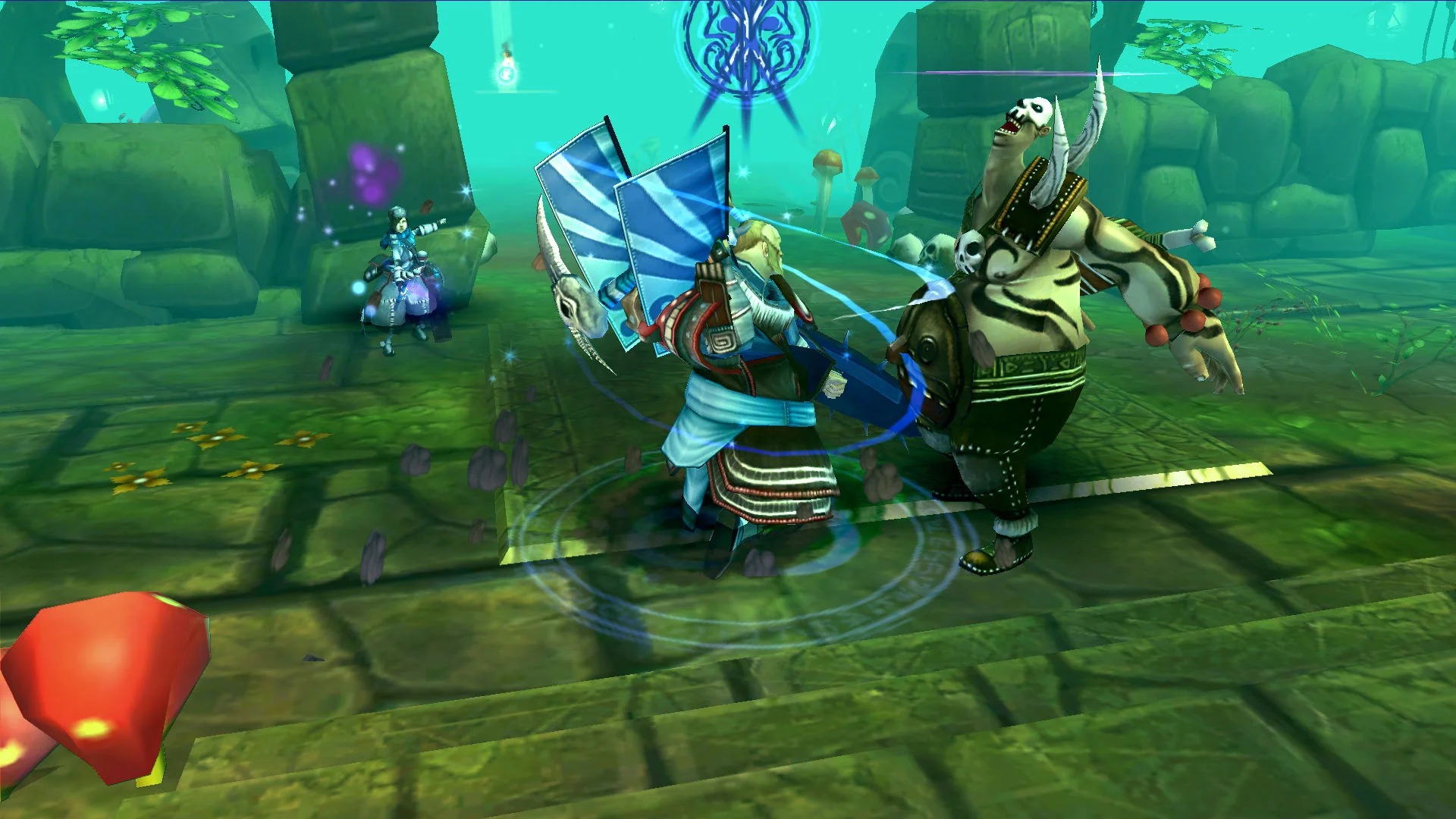
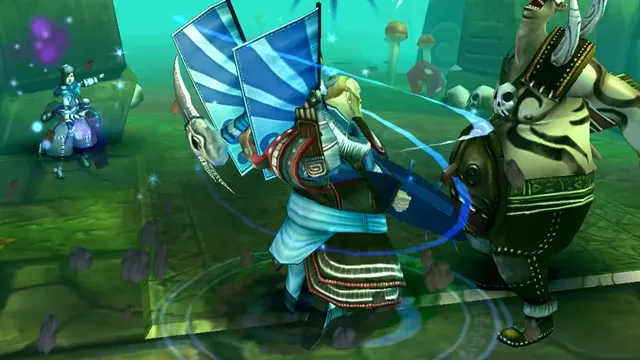
The genre was born with Bloodline Champions in 2011, developed by Stunlock Studios. BLC proved that you could take MOBA-style abilities, remove auto-attacks and targeting, and create something that felt more like a team-based fighting game than anything else on the market.
Core Mechanics
These concepts are universal across arena brawlers. Learn them once and they’ll apply to every game in the genre.
Cooldown Trading
This is the single most important concept in arena PVP, and it’s the thing that separates someone who “gets it” from someone who doesn’t.
Every ability in these games has a cooldown. Your dodge, your shield, your big damage combo — all of it goes on cooldown after you use it. The entire game revolves around tracking what your opponent has used and exploiting the windows when their key abilities are unavailable.
Here’s a concrete example. Your opponent has a counter ability — if you attack into it, they get a free response (bonus damage, a stun, a heal). So you throw a fake. You cancel your ability, or aim it to the side. They pop their counter on nothing. Now you have a 10-second window where you know they can’t counter. That’s when you go in.
This is what “cooldown trading” means: you’re constantly trading the availability of your abilities against theirs, looking for moments where you have more options than they do. Good players in this genre have an internal clock running for every important enemy cooldown.
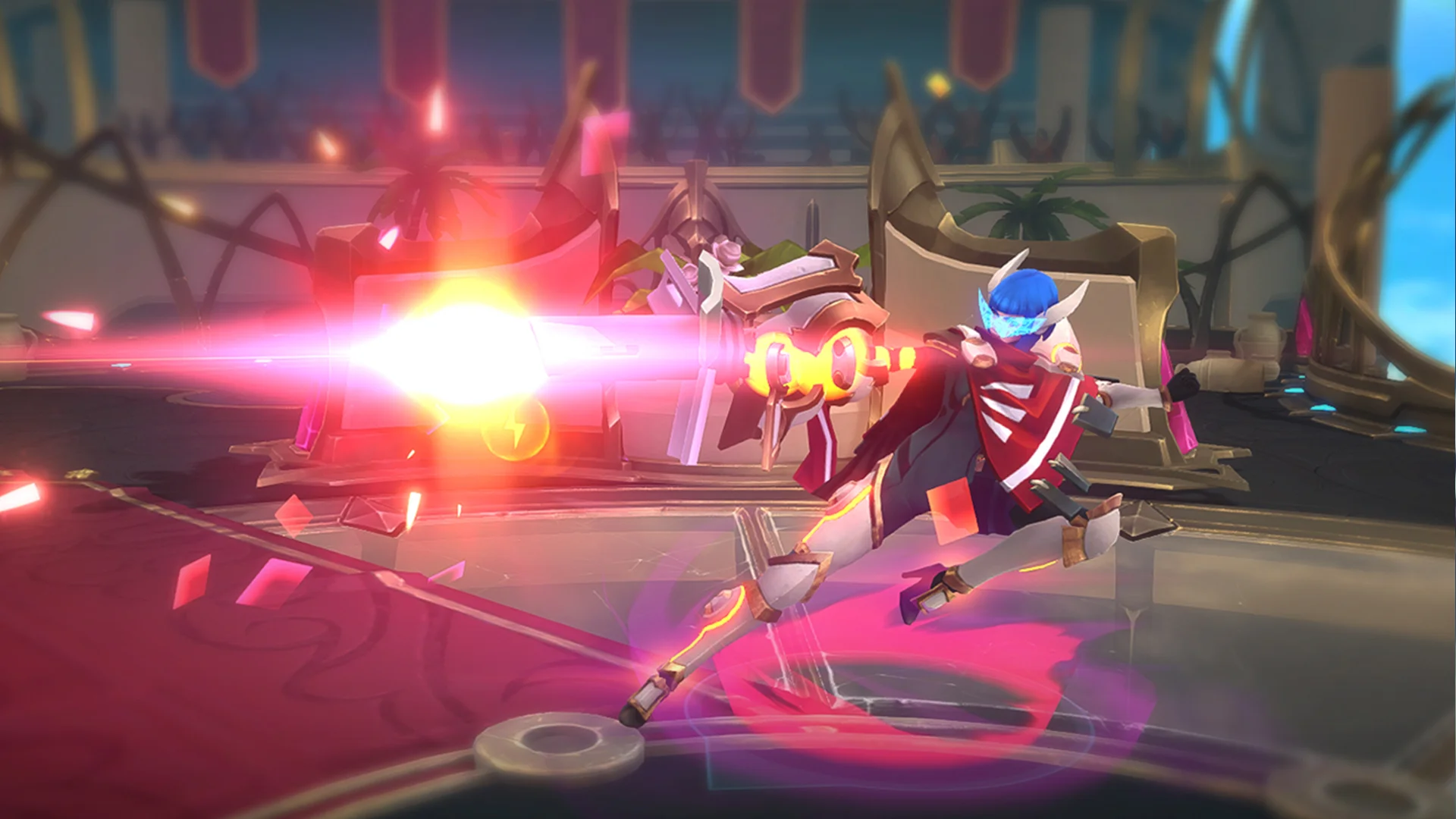
Orb Control
Most arena brawlers place a neutral objective in the center of the map — usually an orb or rune that spawns at set intervals. Destroying or capturing it grants your team a resource advantage: health, energy, or both.
This objective does two things. First, it gives teams a reason to fight over a specific location instead of running away and playing passive. Second, it creates a strategic layer on top of pure combat: do you commit your burst to the orb (guaranteeing the resource but leaving you vulnerable), or do you pressure the enemy team and try to get the orb afterward?
In high-level play, orb control is often the deciding factor. The team that consistently secures orbs has a compounding resource advantage that gets harder and harder to overcome.
Energy and EX Abilities
Most games in the genre have an energy or meter system that builds through combat. You earn energy by dealing damage, taking damage, or securing objectives. When you’ve accumulated enough, you can spend it on EX abilities — enhanced versions of your base kit.
An EX ability might turn a basic fireball into one that also stuns, or upgrade your shield to reflect damage back. The strategic layer is deciding when to spend energy versus when to save it. Blowing your energy on a strong play that doesn’t result in a kill can leave you without options when you really need them.
Counters and I-Frames
Many arena brawlers include some form of counter or invulnerability mechanic — abilities that, when triggered at the right moment, negate incoming damage and punish the attacker.
Counters create the mind games that give the genre its depth. If your opponent has a counter ready, you have three options: bait it with a fake, wait it out, or attack a different target. If you blindly throw abilities into someone who’s ready to counter, you’re giving them free value.
This creates a rock-paper-scissors layer that runs beneath every exchange. And unlike actual rock-paper-scissors, you can read your opponent’s tendencies, track their counter cooldown, and make informed decisions rather than guessing.
Positioning and Spacing
Because arena maps are small and abilities have defined ranges, where you stand matters enormously. Being too close to a melee hero gives them free damage. Being too far from your support means they can’t heal you. Standing near a wall limits your dodge options.
Good positioning is often invisible — you don’t notice when someone is doing it well because they simply never end up in bad situations. But you absolutely notice when someone positions poorly, because they’re the one who’s constantly getting caught, stunned, and killed.
The History
Bloodline Champions (2011)
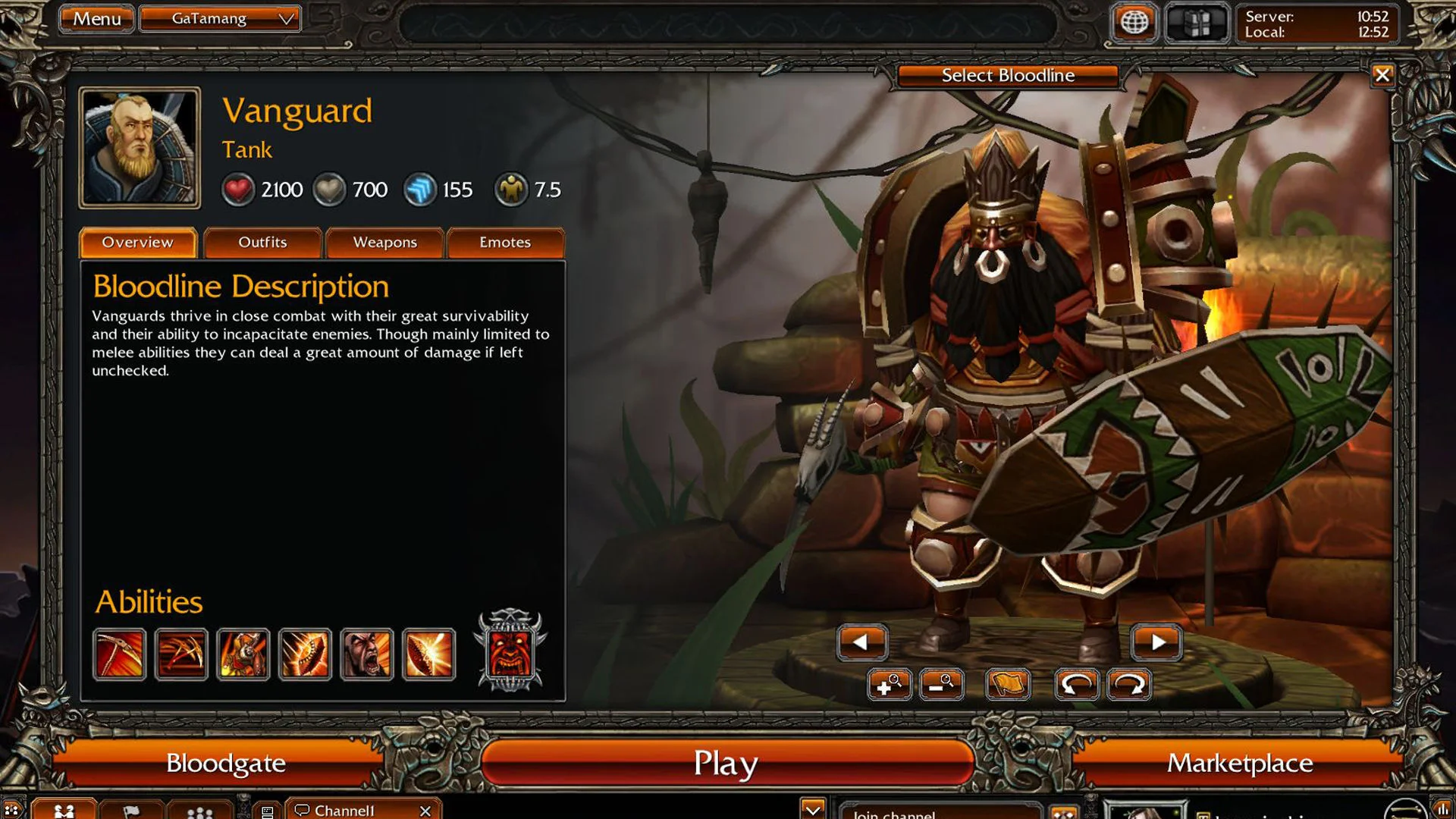
The game that started it all. Developed by Stunlock Studios, BLC was a 3v3 top-down arena game where every ability was a skillshot. It launched on Steam in 2011 and immediately found a dedicated competitive community.
BLC proved the core design worked, but it struggled commercially. The free-to-play model was rough, server issues plagued launch, and the game never achieved the player count it needed. It was ahead of its time in the worst way — the streaming ecosystem that could have sustained its community didn’t exist yet.
Battlerite (2017)
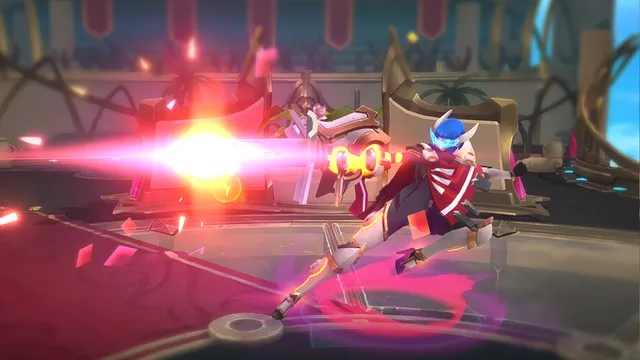
Stunlock’s second attempt was Battlerite, a spiritual successor to BLC with modernized graphics, a refined ability system, and a better presentation layer.
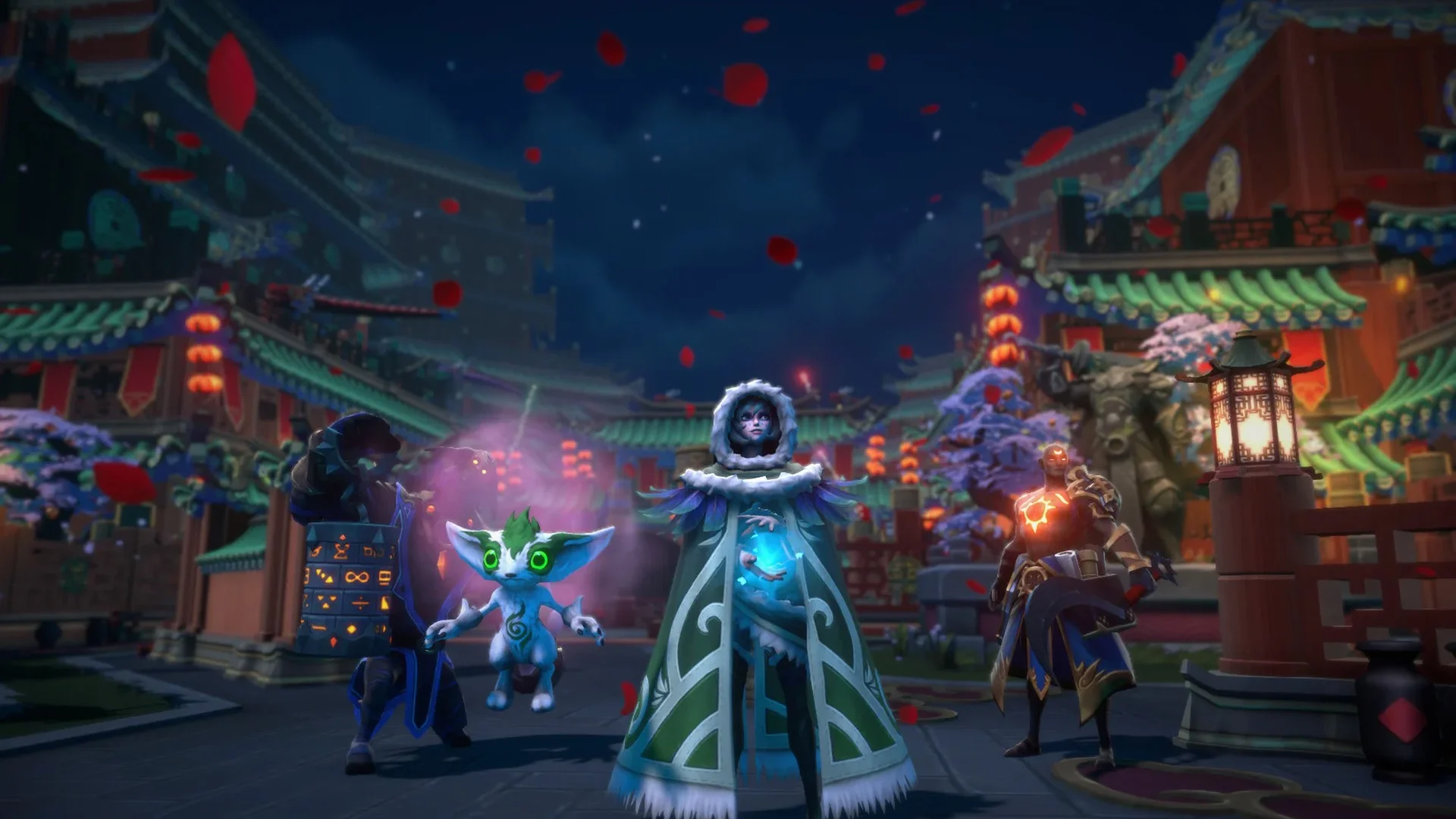
Battlerite was genuinely great. The combat was tighter than BLC’s, the champion design was excellent, and the round-based structure gave matches a rhythm that kept you engaged. It hit 44,000 concurrent players during its free-to-play launch.
But the game ultimately failed due to poor new player retention, a misguided battle royale pivot, and the fundamental challenge of sustaining a niche PVP game with a small indie team. The servers still technically exist but the game is functionally dead.
What’s Next
The genre is in an interesting place. There’s no active arena brawler with a significant player count right now. But the communities that formed around BLC and Battlerite are still active, still discussing design, still waiting for someone to take another shot.
A few projects are in development — Nebulagon being one of the more promising ones, taking the Battlerite formula into a 2D art style with 8 heroes. Whether any of these projects succeed will depend on solving the problems that killed Battlerite, particularly the new player experience and the reliance on large concurrent player counts.
Getting Started: Practical Advice
If you’re picking up your first arena brawler, here’s what I wish someone had told me when I started playing BLC in 2011.
Pick one hero and play them for at least 20 matches. Every hero in the genre has enough depth for hundreds of hours. Jumping between characters before you understand one of them means you’re never learning the actual game — you’re just learning buttons.
Focus on not dying, not on getting kills. New players fixate on damage output. Good players know that staying alive is worth more than any single ability you could land. If you’re dead, you can’t do anything. If you’re alive with low health, you’re still a threat.
Watch your cooldowns before every engagement. Before you go in, ask yourself: do I have my escape? Does my opponent have their counter? If you can’t answer those questions, you don’t have enough information to commit.
Play with a friend. Arena brawlers are team games. Having a partner you can communicate with — even just through Discord callouts like “he used his dodge” — transforms the experience. Solo queue is viable, but the genre is designed around coordination.
Accept the learning curve. These games have a steep initial skill gap. You will lose your first 20 matches. That’s normal. The depth is what makes the genre compelling long-term, and the people who push through the early frustration tend to become the most passionate players in gaming.
Watch high-level play. Even though the active games are limited right now, there’s a wealth of old Battlerite tournament footage and BLC competitive matches on YouTube. Watching good players helps you understand what’s possible and gives you a framework for what you should be trying to do.

Discussion