
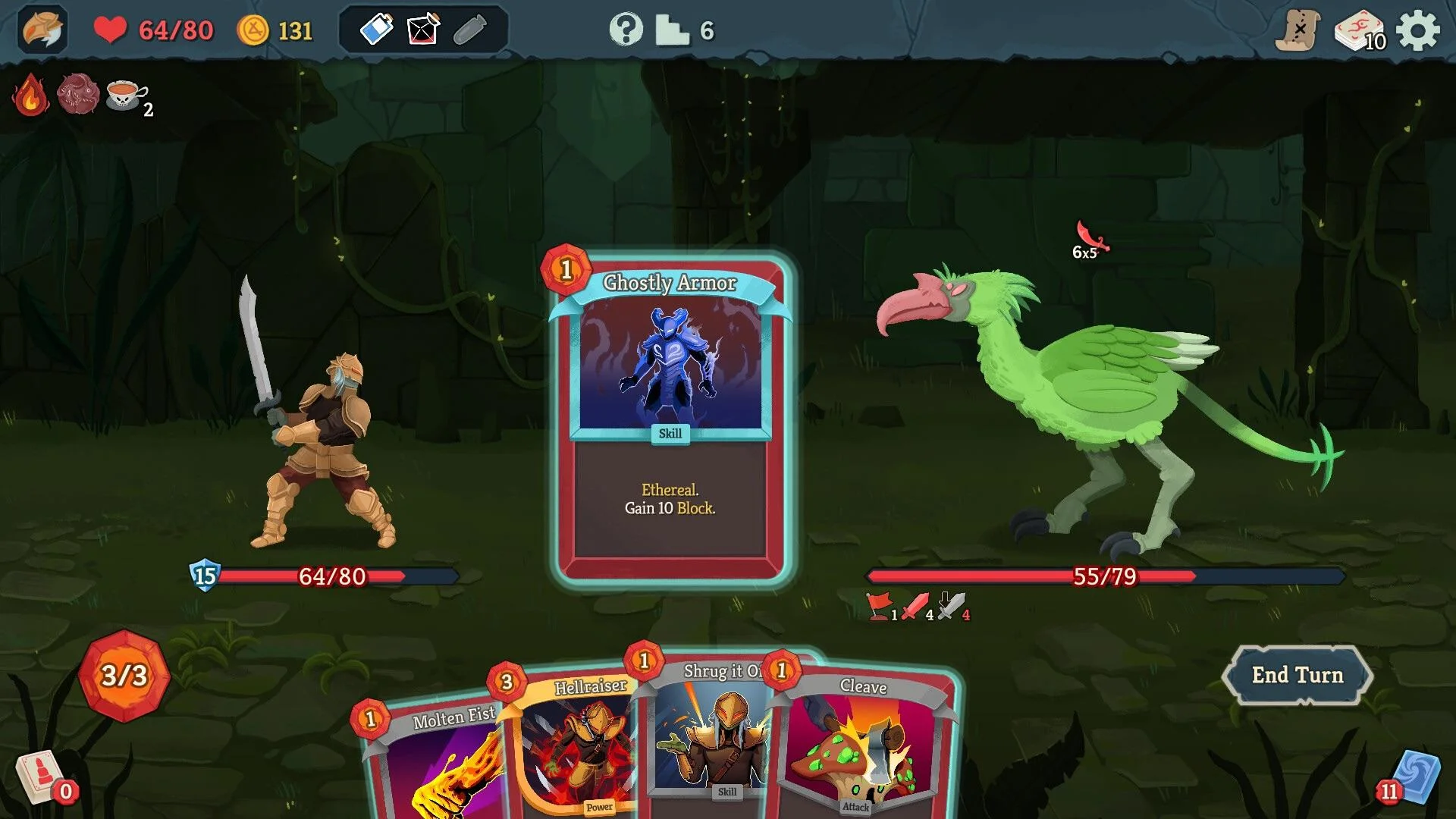
Let me make sure you understand the timeline here. MegaCrit — the small indie studio behind one of the most beloved games of the last decade — announced a card nerf for Slay the Spire 2. Not pushed it live. Not patched it in. Announced it. And within 24 hours, roughly 9,000 players marched to the Steam store page and left negative reviews for a change they have never actually played against.
The card still works fine. Right now. As you read this. And the game’s review score is in freefall anyway.
Welcome to 2026.
What Actually Happened
Slay the Spire 2 has been in Early Access since early 2025, riding an absurd wave of goodwill from the original game’s 97% positive rating across 100,000+ reviews. MegaCrit had, by all accounts, one of the most loyal and patient fanbases in gaming.
Then they posted balance notes — likely through a dev blog, patch preview, or Discord announcement — detailing a nerf to a powerful card or mechanic that the community had built entire strategies around. The specifics matter less than the principle: a core piece of the optimization puzzle was being weakened, and the high-ascension grinders, speedrunners, and theorycrafters who live and breathe this game took it personally.
Within hours, the Steam review page turned into a warzone. Negative reviews piled up at a rate that would make a live-service flop jealous. Roughly 9,000 thumbs-down in a single day — a number that puts this in the conversation for one of the most aggressive indie review bombs in Steam history.
And again: the nerf wasn’t live yet.
Why Single-Player Balance Changes Hit This Hard
“It’s a single-player game, who cares about nerfs?” If you’re thinking that, you don’t understand what Slay the Spire actually is to its community.
Yes, there’s no ranked ladder. No head-to-head matchmaking. But the competitive infrastructure around this game is massive:
- Ascension 20 win streaks are tracked religiously across community sites and leaderboards. A nerf to a key card can obliterate an entire archetype overnight.
- Speedrunning relies on optimized routes and busted interactions. When you nerf the ceiling, you invalidate hundreds of hours of routing work.
- Content creators like Jorbs, Baalorlord, and Lifecoach have built entire audiences around specific synergies and strategies. A major nerf doesn’t just change the game — it disrupts livelihoods.
- Mastery is the competition. When the enemy is the system itself, changing the system feels like the game cheated.
The line between “single-player balance change” and “competitive meta shift” dissolved years ago. The industry just hasn’t caught up.
The Early Access Powder Keg
This didn’t happen in a vacuum. The review bomb sits at the intersection of several pressure points that have been building across gaming for years.
The Early Access social contract is broken — or at least, nobody agrees on what it says. One camp argues that Early Access exists specifically for bold balance experiments. You’re paying for an unfinished product, you accepted that deal, and developers need room to iterate. The other camp says they paid real money for a real product, and having their favorite strategies nuked by announcement feels like a bait-and-switch.
Both sides have a point. Neither side is handling it well.
The Helldivers 2 precedent looms large. When Arrowhead faced backlash over weapon nerfs in 2024, they eventually pivoted to a “we will never nerf fun” philosophy that the community celebrated. That moment taught millions of players a simple lesson: if you scream loud enough, developers cave. Whether or not that’s a healthy dynamic, it’s the reality MegaCrit is now operating in.
“Nerf culture” backlash is at an all-time high. Destiny 2. Warframe. Path of Exile 2. Across live-service games, there’s a growing player sentiment that developers are too eager to pull things down rather than lift weak options up. Slay the Spire 2 got swept into that cultural current even though it’s a fundamentally different type of game with fundamentally different design constraints.
9,000 People Don’t Coordinate by Accident
Let’s talk about the mechanics of this review bomb, because the scale is telling.
9,000 negative reviews in 24 hours doesn’t happen organically. This required amplification — a viral Reddit thread, a Twitter/X post with tens of thousands of impressions, a streamer reaction that sent their audience to the store page with pitchforks. The mob assembled, and it assembled fast.
Valve has review bomb detection systems in place. They’ve dealt with this before — GTA modding disputes, Wukong political controversies, Hogwarts Legacy culture wars. But this might be the most extreme case of preemptive review bombing over a change that hasn’t even shipped. Players aren’t reacting to how the nerf feels. They’re reacting to what it represents.
And that’s the part MegaCrit should pay attention to.
The Review Bomb Is Wrong. MegaCrit Should Still Listen.
Here’s where I plant my flag: weaponizing Steam reviews over an unimplemented change is objectively terrible behavior. Full stop.
Steam reviews exist to inform consumers about whether a product is worth buying. They are not a petition system. They are not a bargaining chip. When you leave a negative review for a game you have hundreds of hours in because you’re mad about something that hasn’t happened yet, you’re not providing useful consumer information — you’re holding a storefront hostage.
But.
9,000 people don’t independently decide to tank a game’s rating because they’re bored. This is a symptom, not the disease. The disease is a communication gap.
MegaCrit created one of the greatest games of the last decade. The people review-bombing aren’t haters. They’re zealots. They’re the players who’ve poured thousands of hours into mastering every interaction, every synergy, every edge case. When you tell those players “we’re nerfing the thing you optimized around,” you’re not tweaking a number. You’re invalidating expertise. And in a culture where gaming skill is identity, that feels deeply personal.
The fix isn’t to never nerf anything. The fix is to sell the nerf before you announce it.
- Show the data. What win rates are you seeing? At what ascension levels?
- Explain the philosophy. Are you trying to open up build diversity? Reduce auto-pick rates? Create more meaningful decisions?
- Acknowledge the loss. “We know this card is core to strategies many of you love. Here’s what we’re doing to make sure those playstyles still have powerful options.”
Live-service studios learned this lesson the hard way over the last decade. If you’re making a game with a competitive meta — even a single-player one — you need to communicate balance changes with the same care as a studio running a ranked ladder. The audience demands it, and they have the tools to punish you if you don’t deliver.
The Bigger Picture
This story matters beyond Slay the Spire 2 because it represents an escalation. We’ve gone from:
- Players review-bombing games over bad updates (reasonable, if blunt)
- Players review-bombing games over political controversies (debatable)
- Players review-bombing games over changes that haven’t even been implemented (genuinely unhinged)
The progression is clear, and it’s accelerating. Every time a review bomb works — every time a developer reverses course under pressure — it reinforces the tactic. And as Early Access becomes the default launch model for anticipated sequels (Baldur’s Gate 3, Hades 2, Path of Exile 2, now STS2), the tension between “developer needs room to iterate” and “player feels ownership over the product” is only going to intensify.
MegaCrit now has three options:
- Walk it back. Easiest path. Community celebrates. But it sets the precedent that 9,000 angry reviews can override design decisions, which is a terrible foundation for an Early Access game that needs years of iteration.
- Push it through and explain themselves. Harder. Requires excellent communication and probably some compromises. But it preserves their authority as designers.
- Modify the nerf. The middle ground. Adjust the numbers, keep the philosophy, show the community they were heard without capitulating entirely.
My money’s on option three. My preference is option two.
What This Means for You
If you’re a Slay the Spire 2 player: relax. Play the game as it is right now. The card works fine today. If the nerf goes live and it sucks, provide feedback through proper channels. Leaving a negative review on a game you clearly love because of a hypothetical future state is cutting off your nose to spite your face.
If you’re a developer watching this unfold: learn from it. The days of dropping patch notes and hoping for the best are over. Every balance change in a game with a dedicated community needs a communication strategy. Not a blog post. A strategy.
And if you’re MegaCrit: you built something incredible. Twice. The people losing their minds right now are losing their minds because they love what you made. That’s not a problem to solve — it’s an asset to manage. But you have to manage it. Because 9,000 negative reviews in a day is what happens when trust erodes faster than you can type patch notes.
The nerf isn’t even live yet, and the damage is already done. That’s the real balance problem.


Discussion