

Every PvP game you’ve ever played — every ranked grind, every clutch round, every controller-breaking loss — traces its DNA back to a room full of MIT engineers in 1962 who decided that the most interesting thing you could do with a computer was try to blow up your friend.
This is the story of how human beings took the most advanced technology on Earth and, at every single stage of its evolution, immediately used it to compete against each other. From oscilloscopes to arenas filling 80,000 seats, PvP gaming didn’t just evolve alongside technology. It drove it.
Before the Screen: The Primordial Soup
The desire to compete is older than electricity. Chess, Go, fencing — humans have always invented systems just to fight each other within them. But the story of digital PvP starts with two specific moments that most gamers have heard of but few truly appreciate.
Tennis for Two (1958) was built by physicist William Higinbotham at Brookhaven National Laboratory. It used an analog computer and an oscilloscope to simulate a tennis court viewed from the side. Two players, two controllers, one ball. It was a tech demo for a public open house. Visitors lined up around the block. Higinbotham never patented it — he considered it trivial.
It was the first time two humans played a video game against each other. Nothing about gaming would exist without that moment.
Four years later, Spacewar! (1962) took the concept and weaponized it. Steve Russell and a group of MIT hackers built it on a PDP-1 computer — a machine that cost $120,000 (about $1.2 million today). Two ships. Gravity from a central star. Missiles. Hyperspace. It had mechanical depth, risk-reward decisions, and the kind of emergent mindgames that still define PvP today.
Spacewar! spread across university computer labs like a virus. People modified it, added features, argued about balance. Sound familiar? The first modding community and the first balance debates happened before most of our parents were born.
The Arcade Era: PvP Goes Public
The 1970s turned gaming from an academic curiosity into a cultural force, and PvP was at the center of it.
Pong (1972) was literally a two-player competitive game. Atari didn’t ship it with an AI opponent — the first Pong cabinets required two humans. Nolan Bushnell understood something fundamental: people don’t just want to play games. They want to beat someone.
Arcades became the first PvP arenas. Street Fighter (1987) and its legendary sequel Street Fighter II (1991) created the fighting game genre essentially overnight. SFII didn’t just add competitive multiplayer to arcades — it created an entire competitive culture. Players developed techniques the developers never intended. Tick throws. Option selects. Frame traps. The FGC (fighting game community) was born in smoky arcades, and its grassroots ethos still defines it today.
Meanwhile, the high score itself was a form of asynchronous PvP. You weren’t just playing Pac-Man — you were playing against everyone who’d stood at that cabinet before you. Leaderboards are older than online multiplayer.
Key games from this era that shaped PvP:
- Pong (1972) — Proved two-player competition was commercially viable
- Space Invaders (1978) — Popularized score-chasing as competitive motivation
- Street Fighter II (1991) — Created the fighting game genre and its community
- Mortal Kombat (1992) — Proved that violence and spectacle drive competitive engagement
- NBA Jam (1993) — Showed PvP could be accessible, chaotic, and still deeply competitive
LAN Parties and the PC Revolution
The early-to-mid 1990s changed everything. PCs got powerful enough to run real-time 3D graphics, and someone at id Software decided the best use of that technology was to let you shoot your coworkers.
Doom (1993) introduced networked deathmatch over LAN. The term “deathmatch” literally comes from Doom. John Romero and John Carmack understood that AI enemies were just practice for the real thing — another human trying to outthink you. Doom’s multiplayer was so disruptive that it reportedly caused network issues at workplaces and universities across the country.
Quake (1996) took it further. True 3D. Mouse-look. And critically, online multiplayer via QuakeWorld. This was the inflection point. You no longer needed to be in the same room as your opponent. Quake created the first real online competitive scene, produced the first esports celebrities (Dennis “Thresh” Fong won John Carmack’s Ferrari at a Quake tournament in 1997), and introduced concepts like strafe-jumping and rocket prediction that echo through every competitive shooter made since.
The LAN party era was peak PvP culture in many ways. Hauling your 50-pound CRT monitor to a friend’s house, spending an hour configuring IPX/SPX networking, and then playing StarCraft or Counter-Strike until 4 AM — that was a ritual. It was uncomfortable, inconvenient, and some of the most fun any of us have ever had.
StarCraft: Brood War (1998) deserves its own monument. In South Korea, it didn’t just become popular — it became a national sport. Professional leagues, televised matches, players with celebrity status. Brood War proved that competitive gaming could sustain a professional ecosystem. It was esports before the word “esports” existed.
The Online Explosion: Shooters, MMOs, and the Birth of Ranked
The early 2000s were a gold rush. Broadband internet made online gaming viable for millions, and developers rushed to fill the space.
Counter-Strike (1999/2000) started as a Half-Life mod and became the defining competitive shooter of a generation. Its round-based economy system, one-life stakes, and team coordination requirements created a competitive depth that casual players could appreciate but never truly master. CS created the template that VALORANT and Rainbow Six Siege still iterate on today.
Halo 2 (2004) brought competitive FPS to consoles through Xbox Live and, crucially, introduced a skill-based matchmaking system with visible ranks. The 1-50 ranking system in Halo 2 was addictive, aspirational, and occasionally soul-crushing. It proved that ranked play wasn’t just for PC elitists — console players wanted to grind just as badly.
Meanwhile, MMOs introduced a completely different flavor of PvP. Ultima Online (1997) had open-world PvP where players could loot your corpse. EverQuest had PvP servers. But it was World of Warcraft (2004) that brought MMO PvP to the mainstream with its Arena system. WoW Arena created a structured competitive format within an RPG — 2v2, 3v3, and 5v5 brackets with seasons, ratings, and exclusive rewards. It spawned its own esports scene and proved that PvP could thrive even in games not designed primarily around it.
WoW Arena also introduced millions of players to concepts like crowd control chains, cooldown trading, and composition theory — PvP ideas that had existed in fighting games and RTS but were now wrapped in RPG progression. The Arena Junkies forums became a university for competitive thinking.
Other pivotal PvP moments from this era:
- Unreal Tournament (1999) — Pushed arena FPS speed and weapon variety to new heights
- Warcraft III (2002) — Blended RTS with hero-based RPG elements, directly spawning the MOBA genre
- Guild Wars (2005) — Built PvP into its core design from day one with GvG and structured PvP modes
- Shadowbane (2003) — Full player-run cities with siege PvP; janky as hell, ambitious beyond its time
The MOBA Revolution
In 2003, a Warcraft III custom map called Defense of the Ancients (DotA) quietly began reshaping competitive gaming. It took Warcraft III’s hero system and built a full competitive game around it — lanes, creeps, items, team fights. It was free, endlessly deep, and brutally punishing.
By the late 2000s, two games formalized the MOBA and turned it into the most popular competitive genre on the planet.
League of Legends (2009) made MOBAs accessible. Free-to-play, lower mechanical barrier, constant updates, a champion roster designed for variety. Riot Games didn’t just make a game — they built a competitive ecosystem from scratch, with franchised leagues, salaried players, and production quality that rivaled traditional sports broadcasting. The 2024 League of Legends World Championship drew peak viewership numbers that would make most TV networks jealous.
Dota 2 (2013) went the other direction — deeper, more complex, with a business model (cosmetic-only) that became the industry standard. The International’s crowdfunded prize pools regularly exceeded $30 million, proving that players would literally pay for the privilege of watching the best compete.
MOBAs introduced a generation to concepts that now define PvP game design: team composition, draft strategy, objective control, power spikes, and macro decision-making. They also introduced everyone to the most toxic player behavior the internet has ever produced, but that’s a different article.
Fighting Games Find Their Footing (Again)
While MOBAs dominated the 2010s, the FGC was having its own renaissance.
Street Fighter IV (2008) revived the genre after a dark period in the mid-2000s where fighting games were considered niche to the point of irrelevance. SFIV brought back lapsed players, recruited new ones, and gave the competitive scene a flagship title. EVO, the world’s largest fighting game tournament, grew from a niche gathering to a massive event covered by mainstream media.
The FGC’s trajectory since then has been remarkable:
- Marvel vs. Capcom 3 (2011) — Chaotic, hype-generating, stream-friendly
- Guilty Gear Strive (2021) — Made anime fighters accessible without gutting depth
- Street Fighter 6 (2023) — Arguably the best fighting game ever made at launch, with modern controls that welcomed new players while preserving competitive integrity
- Tekken 8 (2024) — Pushed 3D fighters forward with its aggressive heat system
The FGC remains unique in PvP culture. It’s the only major competitive scene where you can’t blame your teammates. Every loss is yours. That purity is why fighting game players are a different breed.
Battle Royale: PvP at Scale
PlayerUnknown’s Battlegrounds (2017) didn’t invent the battle royale concept — that credit goes to mods for ARMA and Minecraft — but it proved the format could be a standalone product. 100 players, one map, last one standing. The tension of a shrinking circle combined with the randomness of loot created something that felt genuinely new.
Fortnite (2017/2018) took that template, added building, went free-to-play, and became the biggest game on the planet. The Fortnite World Cup (2019) awarded $30 million in prizes, with 16-year-old Bugha winning $3 million for the solo championship.
Battle royale added a new dimension to PvP: variance as a feature, not a bug. Unlike CS or League, where the best team wins most of the time, battle royale embraces chaos. You might drop on a shotgun or a bandage. The circle might favor you or screw you. This made battle royale endlessly watchable and replayable — but also harder to accept as a “pure” competitive format.
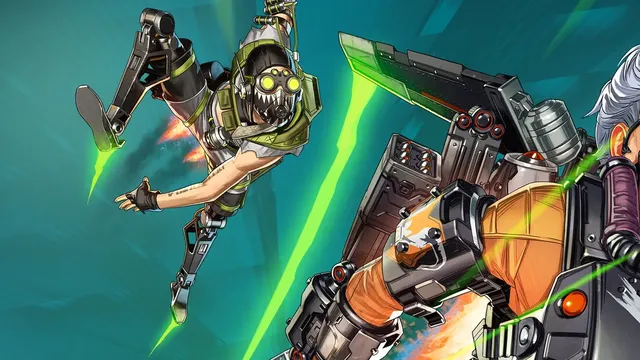
Apex Legends (2019) refined the genre with movement mechanics and team play that felt genuinely skill-expressive. PUBG continued iterating. Warzone came and went and came back. The genre stabilized rather than collapsed, which surprised a lot of people.
The Live Service Era: Where PvP Lives Now
We’re in a strange, fascinating period for PvP gaming. The dominant competitive titles are almost all live service games — constantly updated, constantly evolving, designed to be played for years.
VALORANT (2020) took Counter-Strike’s tactical shooter framework, added hero abilities, and built the most polished competitive infrastructure in FPS history. Riot applied everything they learned from League — ranked systems, anti-cheat, spectator tools, franchised esports — and created a game that’s arguably dethroned CS as the premier tactical shooter for a new generation.
Counter-Strike 2 (2023) answered with a Source 2 upgrade, proving that the 25-year-old formula still has legs. The CS vs. VALORANT debate is the defining competitive FPS rivalry of the decade.
Marvel Rivals (2024) crashed into the hero shooter space and immediately started pulling players from Overwatch 2, proving there’s still appetite for team-based hero PvP when the execution is right.
Deadlock, Valve’s MOBA-shooter hybrid, represents the bleeding edge — what happens when you smash two genres together and let competitive players figure out the meta.
The current landscape features several key trends:
- Hero/agent-based design dominates. Unique characters with distinct kits are now expected, not novel.
- Free-to-play is the standard. The barrier to entry is zero dollars. Monetization is cosmetic.
- Ranked play is non-negotiable. Every competitive game needs a ladder. Players demand visible progression and skill measurement.
- Esports is professionalized but fragile. Franchised leagues are expensive to run and not always profitable. Many scenes depend on publisher funding.
- Content cadence is relentless. New characters, maps, and balance patches every few weeks. Stop updating and your game dies.
The Arena Brawler: PvP’s Purest Form
There’s a subgenre that deserves special mention because it strips PvP down to its absolute essence: arena brawlers.
Bloodline Champions (2011) pioneered the format — small teams, skillshot-based combat, no creeps, no items, no randomness. Just you, your abilities, and your reads. Battlerite (2017) refined it with better production but struggled to sustain a playerbase.
The arena brawler represents something important about PvP: the version where nothing gets between you and the competition. No loot RNG, no 40-minute macro games, no kill-feed chaos of 100 players. Just mechanical skill and decision-making, distilled.
Games like Omega Strikers, Gigantic, and newer entries in the space prove the appetite is there — the genre just hasn’t found its breakout moment yet. But it will.
What 60 Years of PvP Tells Us
Look at the through-line from Spacewar! to VALORANT. The technology changes — oscilloscopes to CRTs to LCDs to 240hz monitors. The platforms change — mainframes to arcades to PCs to consoles to phones. The business models change — quarters to box prices to subscriptions to free-to-play.
But the core loop never changes: two humans trying to outplay each other.
Every single innovation in PvP gaming has been in service of making that interaction more expressive, more readable, more fair, or more accessible. Better netcode so your inputs feel honest. Better matchmaking so your opponent is your equal. Better spectator tools so the rest of us can appreciate what the best players do.
The history of PvP gaming isn’t really about games at all. It’s about a fundamental human drive — the need to test yourself against someone else and know, without ambiguity, whether you’re better. No narrative can give you that. No AI can fake it. That’s why PvP has survived every industry trend, every crash, every pivot to casual. It’s the one thing games can do that nothing else can.
Sixty-four years after two digital spaceships first shot at each other on a PDP-1, we’re filling stadiums to watch people do essentially the same thing. The machines got better. The humans didn’t change at all.
And that’s exactly why PvP gaming will outlive every trend that tries to replace it.


Discussion