
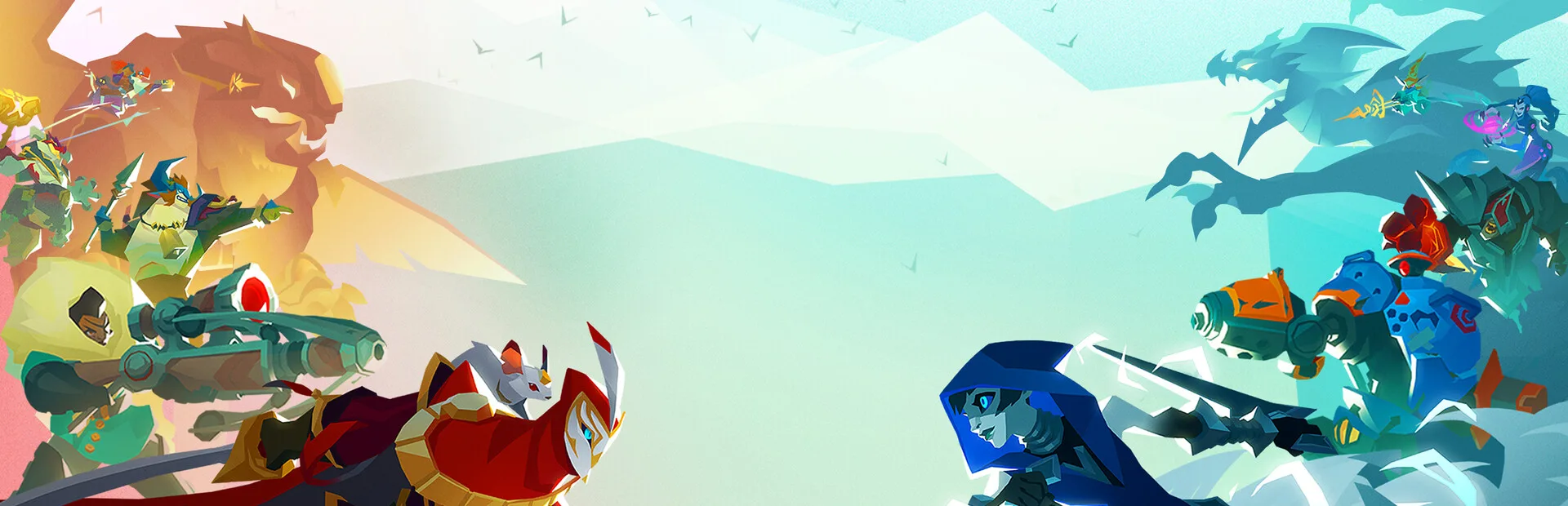
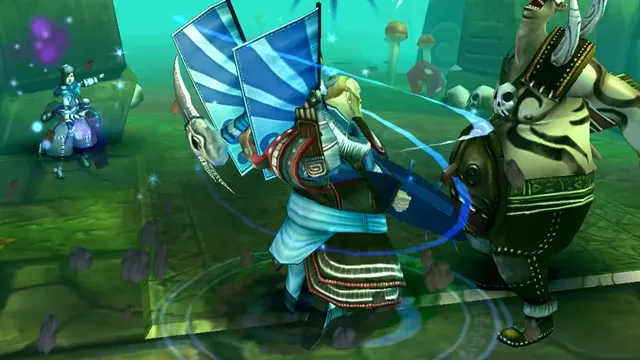
Gigantic is one of the greatest PVP games most people never played. A third-person hero shooter/MOBA hybrid with gorgeous art, deep combat, and a mechanical ceiling that rewarded hundreds of hours of investment. It launched in 2017, shut down in 2018, and was resurrected as Gigantic: Rampage Edition in 2024 before Abstraction Games stepped away from active development.
The game lives on through its community. Whether you’re picking it up for the first time or returning after years — this is the only guide you’ll need. Every hero, every ability, every mechanic, documented in full.
For fans of the arena brawler lineage, Gigantic sits alongside Battlerite and Bloodline Champions as one of the genre’s defining works.
How Gigantic Works
Gigantic is a 5v5 third-person hero brawler with MOBA-inspired objectives. Two teams fight to power up their Guardian — a massive creature at each team’s base. You power it by killing enemies, collecting power orbs, and summoning creatures at control points. When your Guardian reaches full power, it pins the enemy Guardian, exposing a wound. Your team rushes in to deal damage to the wound. First team to deal 3 wounds wins.
It’s MOBA strategy with arena shooter combat. No lanes, no creep waves, no item shops. Just team fights, map control, and skill.
The Ability System
Every hero has a standardized control scheme:
| Key | Slot | Role |
|---|---|---|
| LMB | Primary Attack | Main damage. Melee combos, projectiles, or beams. Low/no cooldown. |
| RMB | Secondary Attack | Stronger attack with a cooldown. Often defines the hero’s playstyle. |
| Q | Ability 1 | Utility, crowd control, or defensive tool. |
| E | Ability 2 | Often the hero’s signature move — mobility, CC, or major damage. |
| F | Focus Ability | Costs full Focus meter. Powerful finisher or game-changer. |
Every ability can be upgraded mid-match through branching skill trees. When you level up during the match (through kills, assists, creature kills, and objective contributions), you choose between two upgrade paths for each ability. This lets you adapt your build in real-time based on the enemy composition and match flow.
Stamina System
Key Concept: Stamina management is the mechanical divider between good and great Gigantic players. Every dodge, every sprint, every escape costs stamina. Blowing it at the wrong time leaves you defenseless. Conserving it gives you options nobody expects.
Every hero has a stamina bar that fuels two critical actions:
- Dodge (direction + jump while sprinting) — A quick directional burst that makes you briefly invulnerable. Costs significant stamina.
- Sprint — Faster movement that drains stamina over time. No combat actions while sprinting.
Stamina regenerates passively when not sprinting or dodging. Heroes with larger stamina pools or faster regen have a significant advantage in extended fights. Managing stamina — knowing when to dodge, when to sprint away, when to conserve for a clutch escape — is the deepest mechanical layer in Gigantic.
Focus System
Focus is Gigantic’s ultimate resource. It builds through combat — dealing damage, taking damage, killing enemies, assisting kills, and collecting power orbs. When your Focus bar is full, you can activate your Focus ability (F) — each hero’s most powerful move.
Focus abilities range from massive AoE damage to team-wide buffs to devastating crowd control. Timing your Focus correctly — or baiting an enemy’s Focus before committing yours — is a core part of high-level play.
Creature System
Key Concept: Creature placement is the strategic layer that separates Gigantic from every other hero brawler. Controlling creatures means controlling the map, and controlling the map means controlling the pace of the entire match. Every team fight starts with creature positioning.
At designated points on each map, players can summon creatures — NPC allies that provide buffs, vision, and Guardian power. Creatures come in several types:
| Creature | Role | Benefit |
|---|---|---|
| Bloomer | Healing | Creates a healing zone around itself. Essential for sustain-heavy teams. |
| Cerberus | Damage | Attacks nearby enemies. Controls contested areas and grants power on kills. |
| Cyclops | Vision | Reveals a wide area. Invaluable for tracking enemy rotations and preventing flanks. |
| Drake | Area Denial | Creates a wall/barrier that blocks movement. Controls choke points. |
| Shadow Cerberus | Stealth/Ambush | Reveals invisible enemies and provides stealth to nearby allies. |
| Obelisk | Defense | Provides a damage-absorbing shield to nearby allies. Protects pushes. |
Creatures can be upgraded by spending power at their location, making them stronger and harder to kill. Upgraded creatures are significantly more valuable — an upgraded Bloomer heals far more than a basic one, and an upgraded Cerberus can zone entire teams.
Killing enemy creatures grants power toward your own Guardian, creating a tug-of-war for creature control that drives map rotations.
Wound Mechanics
When a Guardian reaches full power, it flies across the map and pins the enemy Guardian, exposing a glowing wound. The attacking team has a limited window to deal damage to the wound. The defending team must protect their Guardian.
- Wound health increases with each successive wound (the third wound takes the most damage to finish)
- Clashing — both Guardians can reach full power simultaneously, creating a mutual wound opportunity where both teams attack and defend at the same time
- The Guardian itself fights during wound phases, using AoE attacks that force attackers to dodge while dealing damage
Wound phases are Gigantic’s equivalent of boss fights — chaotic, high-stakes moments where positioning, Focus usage, and survival determine the match.
Hero Roles
Gigantic classifies heroes into five roles. Each role has a clear identity and expected contribution to the team.
Assassin
High damage, high mobility, low health. Assassins excel at picking off isolated targets and escaping before the enemy can retaliate. They struggle in sustained brawls and against grouped teams.
Fighter
Melee brawlers who mix damage with durability. Fighters are the frontline presence in team fights — they initiate, disrupt, and threaten kills while being harder to remove than assassins.
Ranged
Backline damage dealers who control space with projectiles, zones, and sustained fire. Ranged heroes provide consistent damage output but are vulnerable to dive.
Support
Healers and enablers who amplify their team’s effectiveness. Supports either heal directly, buff allies, or debuff enemies. They’re the highest-value targets in team fights.
Tank
Crowd control specialists who absorb damage and create space. Tanks initiate fights, peel for backliners, and disrupt enemy formations.
The Heroes: Assassins
Assassins are the playmakers. They find isolated targets, burst them, and escape. In coordinated play, assassins capitalize on the openings that tanks and fighters create.
 Tripp
Tripp
Identity: Lightning blade dancer. The stealth assassin who tilts people into uninstalling.
Core mechanic: Permanent stealth when out of combat for 3 seconds. Sprinting doesn’t break stealth. Taking damage, attacking, or using abilities breaks stealth.
| Ability | Key | Description |
|---|---|---|
 Lightning Strikes Lightning Strikes | LMB | Fast melee combo chain. 3-hit sequence, with the third strike dealing bonus damage. Low individual damage but high sustained DPS when committed. |
 Electric Slide Electric Slide | RMB | Forward dash that damages enemies in its path. 8s cooldown. Your primary engage AND escape — using it wrong means death. |
 Plasma Blades Plasma Blades | Q | Ranged energy projectiles that mark enemies, increasing all damage they take by 10% for 4 seconds. Use before engaging to maximize burst. |
 Bladestorm Bladestorm | E | Spinning AoE attack that hits all enemies within melee range. 12s cooldown. Your main burst tool — combo with Plasma Blades mark for devastating damage. |
 Laughing Stalk Laughing Stalk | F | AoE burst around Tripp with a powerful slow. Useful for finishing wounded enemies who try to escape or for turning a 1v2. |
Upgrade paths:
- Bladestorm splits between burst damage (more upfront) and bleed (DoT after hit). Burst is better for assassination, bleed is better for extended fights.
- Electric Slide can upgrade for reset on kill (extra dash after killing a target) or longer range (better engage distance). Reset on kill enables multi-kill plays and is the standard competitive choice.
- Plasma Blades upgrades to either increased debuff duration or AoE on impact (marks multiple enemies). AoE is better in team fights, duration is better for picks.
Playstyle: Pure hit-and-run assassination. The game plan is stealth approach → Plasma Blades mark → Electric Slide through the target → Bladestorm → LMB combo to finish. If the target survives, you’ve overcommitted. If they die, sprint out and re-stealth for the next pick. In team fights, Tripp waits for the chaos to start, then executes the lowest-health backline target. Never engage first — always punish mistakes.
In competitive: The most banned hero in coordinated play. A Tripp with voice comms and a team creating distractions was nearly unstoppable against compositions without reveals. Her presence alone forced enemy teams to group, which sacrificed map control. Top Tripp players averaged 12+ kills per game in competitive settings.
Matchup notes: Destroys isolated backline heroes — supports and ranged DPS caught alone are dead in under 2 seconds. Struggles against heroes with reveals (Aisling’s ghost provides vision), AoE that breaks stealth (Charnok’s fire zones, HK-206’s Bullet Barrage), and teams that group tightly.
Tier: S | Difficulty: Medium | Ceiling: Very High
 Tyto the Swift
Identity: Masked swordfighter with owl companion. The skillful assassin with the highest reset potential.
Core mechanic: Swoop (RMB) resets on kill/assist — this single mechanic defines Tyto. A successful kill lets him immediately dash to the next target, enabling chain kills that no other hero can match.
| Ability | Key | Description |
|---|---|---|
 Talon Talon | LMB | 4-hit melee combo. Each successive hit deals slightly more damage, with the 4th hit being a powerful finisher. |
 Swoop Swoop | RMB | Directional dash that damages enemies along the path. 7s cooldown. Resets on kill/assist — Tyto’s defining mechanic. |
 Blade Dance Blade Dance | Q | Spinning slash that hits all enemies in melee range. Brief damage reduction during the spin. |
 Fang Fang | E | Commands Tyto’s owl companion to attack a target. Deals moderate damage over time and provides vision of the target for 4 seconds. |
 Blur Blur | F | Tyto becomes a blur of movement, dashing between all nearby enemies and dealing heavy damage to each. Devastating in clustered team fights. |
Passive — Fang (Owl): Tyto’s owl Fang is always present, perched on Tyto’s arm. Using E sends Fang to attack, providing vision and damage. Fang returns automatically after a duration.
Upgrade paths:
- Swoop upgrades to either increased damage on reset (snowball potential) or longer dash range (safer engage). Damage on reset is the competitive standard — a good Tyto can chain 3-4 Swoops across an entire team during cleanup.
- Blade Dance splits between damage (higher burst) and healing (lifesteal during spin). Healing is surprisingly viable against DOT-heavy compositions.
- Fang upgrades to either increased damage or slow on hit. Slow is generally better — it sets up your own Swoop follow-up.
Playstyle: The cleanup assassin. Unlike Tripp who initiates picks, Tyto waits for enemies to drop below half health, then chains Swoop resets to wipe the entire team. Opening with Fang (E) for vision and slow, then Swooping in for the kill, then immediately Swooping to the next target — this sequence is the reason Tyto has the highest multi-kill ceiling in Gigantic. Blade Dance provides sustain when caught in melee, and the owl provides tracking on fleeing targets.
In competitive: Less banned than Tripp but more feared in the hands of a specialist. Tyto’s reset chains in cleanup situations produced the most highlight-reel moments in competitive Gigantic. The best Tyto players could turn a 5v3 advantage into an ace in under 6 seconds.
Matchup notes: Excels against fragile backliners and wins most 1v1s against other assassins due to sustain through Blade Dance healing. Struggles against tanky heroes (Pakko and Margrave) who survive his burst and punish his long cooldowns.
Tier: A | Difficulty: High | Ceiling: Extreme
 Wu
Wu
Identity: Martial arts monk with the highest mechanical ceiling in Gigantic. A frog-themed brawler whose tongue is deadlier than any sword.
Core mechanic: Tongue Grab (Q) — a medium-range skillshot that pulls enemies toward Wu. If it lands, Wu gets a guaranteed combo that deletes most heroes. If it misses, Wu has no engage and is vulnerable. The hero lives and dies by this one ability’s accuracy.
| Ability | Key | Description |
|---|---|---|
 Tongue Lash Tongue Lash | LMB | Fast melee combo with the tongue as a mid-range whip. Moderate damage, good speed. |
 Flowing Fist Flowing Fist | RMB | Charged heavy punch. Damage increases with charge time. At full charge, applies knockback. |
 Tongue Grab Tongue Grab | Q | Extends tongue to grab an enemy at medium range, pulling them toward Wu. If it misses, long cooldown. If it lands, devastating combo potential. |
 Crack Crack | E | Leap attack that slams the ground, dealing AoE damage where Wu lands. Gap-closer and damage in one. |
 Typhoon Typhoon | F | Massive AoE around Wu — a tornado of tongue attacks that damages and knocks back all nearby enemies. |
Upgrade paths:
- Tongue Grab is the defining choice: upgrade for damage on pull (assassination setup) or reduced cooldown on miss (safer play). High-level Wu players take the damage upgrade because they don’t miss.
- Crack upgrades for increased range (better engage) or slow on landing (better setup). Range is standard for assassin play, slow is better in team fight compositions.
Playstyle: All-or-nothing pick artist. The optimal Wu sequence is Tongue Grab → pull target into melee → Flowing Fist (charged) → Crack → LMB combo. This chain deletes any non-tank hero. The difficulty is that Tongue Grab is a narrow, medium-range skillshot that requires prediction, not just aim. Against mobile heroes, you’re threading a needle. Against grouped enemies, you’re pulling someone into a 1v3. Wu demands exceptional positioning — you need to be in Tongue Grab range without being in enemy focus fire range.
In competitive: A niche pick that dominated in the hands of specialists. Wu’s skill floor was too high for most players, but a dedicated Wu one-trick was one of the scariest things in competitive Gigantic. The grab-into-deletion combo had no counterplay besides dodging the initial tongue — and at the highest level, Wu players had 60%+ grab accuracy.
Matchup notes: Wins almost every 1v1 if Tongue Grab lands. Loses almost every 1v1 if it doesn’t. Against mobile heroes (Tripp, Tyto), landing Tongue Grab is extremely difficult. Against slower heroes (HK-206, Vadasi), it’s nearly guaranteed.
Tier: B | Difficulty: Very High | Ceiling: Extreme
The Heroes: Fighters
Fighters are Gigantic’s frontline. They have enough health to survive focus fire, enough damage to threaten kills, and enough utility to disrupt enemy formations.
 Knossos
Identity: Minotaur berserker. Pure aggression incarnate — the most terrifying engage in the game with absolutely no escape.
Core mechanic: Bull Rush (Q) — a long-range charge that knocks back the first enemy hit. This ability defines Gigantic’s most famous engage: a Knossos appearing from fog of war at full sprint, smashing through the enemy backline. The trade-off is absolute — once you go in, you’re committed.
| Ability | Key | Description |
|---|---|---|
 Gore Gore | LMB | Melee horn attacks. 3-hit combo with the third strike dealing bonus damage and applying a brief slow. |
 Skewer Skewer | RMB | Lunging horn stab that pins the target briefly, dealing heavy damage. Your assassination setup tool. |
 Bull Rush Bull Rush | Q | Charges forward at high speed, damaging and knocking back the first enemy hit. Long charge range, moderate cooldown. The most terrifying engage in the game. |
 Labyrinth Labyrinth | E | Creates a maze of stone walls around Knossos that blocks enemy movement and line of sight for 6 seconds. Traps enemies with you — or blocks enemy retreats. |
 Raging Bull Raging Bull | F | Knossos enters a frenzy, gaining massive damage boost and movement speed for 8 seconds. All attacks apply bleed. Terrifying when combined with Bull Rush. |
Upgrade paths:
- Bull Rush upgrades to increased range (engage from further) or stun on impact (CC setup). Stun is almost always better — a stunned target eats a full Gore combo into Skewer.
- Labyrinth upgrades to damage walls (enemies touching walls take damage) or longer duration. Damage walls turn Labyrinth from utility into a kill tool in tight corridors.
Playstyle: Commit fighter. You charge in with Bull Rush, lock down the priority target with Skewer, drop Labyrinth to trap them, and LMB them to death. There is no plan B. If the target dies, you win the trade. If they survive and their team collapses on you, you die. This all-in playstyle means Knossos is entirely team-dependent — he needs his team to follow up on his engages. A solo Knossos charging into five enemies is feeding. A Knossos charging in with his team behind him is winning.
In competitive: A staple in brawl compositions that wanted to force 5v5 fights. Knossos’s engage was the signal for his team to commit, and the stun-upgraded Bull Rush was one of the most reliable CC setups in the game. Teams running Knossos typically drafted heavy follow-up damage (Charnok, Beckett) to capitalize on his lockdown.
Matchup notes: Destroys anyone he catches. Struggles against mobile heroes (Tripp, Tyto, Beckett) who can kite him. His biggest counter is being kited — if you can stay outside Bull Rush range, Knossos has no way to reach you.
Tier: B | Difficulty: Low | Ceiling: Medium
 Aisling
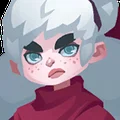
Identity: Girl with a ghostly knight companion. The most mechanically unique hero in Gigantic — effectively controls two characters at once.
Core mechanic: Sir Cador — an independent spectral knight that Aisling commands. Cador attacks autonomously, provides vision, and can be directed with RMB. When Cador is “killed,” he respawns near Aisling after a cooldown. Losing Cador is a significant power loss, making Cador management the core skill expression.
| Ability | Key | Description |
|---|---|---|
 Spectral Slash Spectral Slash | LMB | Melee sword combo. Standard 3-hit chain with moderate damage. |
 Cador’s Command Cador’s Command | RMB | Directs Sir Cador to attack a specific target or move to a location. Cador acts independently, dealing his own damage and providing vision in a radius around him. |
 Terrify Terrify | Q | Ghostly scream that fears nearby enemies for 1.5s, causing them to run away uncontrollably. Primary peel and setup tool. |
 Cador’s Charge Cador’s Charge | E | Sir Cador charges to a location, damaging and knocking back enemies in his path. Can be used while Aisling is doing something else, enabling split-pressure plays. |
 Cador’s Wrath Cador’s Wrath | F | Sir Cador grows to massive size and performs a devastating AoE attack. Enormous damage in a large area. |
Upgrade paths:
- Cador’s Command upgrades for increased Cador damage or Cador heals Aisling when attacking. The healing upgrade makes Aisling deceptively tanky in extended fights.
- Terrify upgrades to longer fear duration or damage on fear. Duration is better for setup, damage is better for burst combos.
Playstyle: Dual-entity pressure. High-level Aisling play means controlling two units simultaneously — directing Cador to flank or zone while Aisling engages from a different angle. Cador’s independent vision catches stealth heroes, his charge disrupts enemy backlines, and his autonomous attacks add DPS to every fight. The micro-management is demanding but rewarding — an Aisling who can split her attention between herself and Cador effectively fights every engagement with a numbers advantage.
In competitive: Aisling was a sleeper pick that specialists dominated with. Her reveal counter to Tripp alone made her worth considering, and the dual-entity playstyle in coordinated hands created pressure that was impossible to address — you couldn’t ignore Cador, but focusing Cador meant Aisling was free. Top Aisling players had some of the highest KDA ratios in competitive Gigantic.
Matchup notes: Excels in 1v1 and small skirmishes where Cador’s independent damage gives her an effective 2v1 advantage. Reveals Tripp’s stealth through Cador’s vision. Struggles against heavy AoE that kills Cador quickly (Charnok, HK-206) and against teams that focus Cador before engaging Aisling.
Tier: A | Difficulty: Very High | Ceiling: Extreme
 Ramsay
Identity: Pirate chef with twin cleavers. A fighter who plays like an assassin — all about bleed and speed.
Core mechanic: Bleed stacking — Carve (LMB) applies bleed on the third hit, and Tenderize (RMB) deals bonus damage against bleeding targets. The loop is apply bleed → burst with Tenderize → dash out with Slice and Dice → re-engage when bleed ticks finish.
| Ability | Key | Description |
|---|---|---|
 Carve Carve | LMB | Fast cleaver combo. Applies bleed on the third hit, dealing damage over time for 4 seconds. |
 Tenderize Tenderize | RMB | Heavy overhead strike. Extra damage against bleeding targets. Your burst finisher. |
 Slice and Dice Slice and Dice | Q | Quick forward dash that slashes enemies along the path. Brief invulnerability during the dash. Primary escape and engage tool. |
 Skullsplitter Skullsplitter | E | Throws a cleaver at range. If it hits, applies bleed and slows the target. Sets up melee combos from a distance. |
 Rampage Rampage | F | Ramsay enters a frenzy — increased attack speed, movement speed, and all attacks apply heavy bleed. |
Upgrade paths:
- Slice and Dice upgrades for reset on kill (chase potential) or heal on hit (sustain). Reset enables the assassin playstyle, heal enables the brawler playstyle.
- Skullsplitter upgrades for bounce to nearby enemy (AoE) or increased slow duration (setup). Bounce is better in team fights.
Playstyle: Hit-and-run brawler. Ramsay darts in for burst trades — Skullsplitter to apply bleed from range, Slice and Dice to close, Tenderize for the burst — then retreats before the enemy can respond. His speed lets him dictate engagement distance, choosing when to commit and when to bail. In extended fights, the bleed damage adds up significantly, making Ramsay deceptively high-DPS despite his fighter classification.
In competitive: A versatile flex pick that fit into multiple compositions. Ramsay’s low commitment fighting style made him safe, and the bleed damage added pressure without requiring full commitment. Less flashy than Tyto or Tripp but more consistent.
Matchup notes: Strong against slow, tanky targets where bleed stacks have time to tick. Weak against burst assassins who can delete him during Slice and Dice cooldown. His invulnerability frames on Slice and Dice make him surprisingly good at dodging Focus abilities.
Tier: B | Difficulty: Medium | Ceiling: High
The Heroes: Ranged
Ranged heroes provide damage from the backline. They control space with projectiles and zones, and they’re the primary damage dealers in team fights.
 Beckett
Identity: Aerial gunner with jetpack. The best all-around ranged DPS in Gigantic — consistent damage from any angle with unmatched vertical mobility.
Core mechanic: Jetpack (E) — grants vertical mobility and hovering, giving Beckett access to angles that no other hero can reach. While airborne, she has unique aerial attacks and can see over cover that blocks ground-level heroes. Fuel management is the skill expression — running out of fuel at the wrong time is death.
| Ability | Key | Description |
|---|---|---|
 Dual Pistols Dual Pistols | LMB | Twin pistol shots. High fire rate, moderate damage per shot. Bread-and-butter damage that adds up fast. |
 Cannon Cannon | RMB | Charged single shot with splash damage. Damage and blast radius scale with charge time. Your poke and burst tool. |
 Grenade Grenade | Q | Throws a grenade that bounces once before detonating. Area denial with damage over time in the blast zone. |
 Jetpack Jetpack | E | Activates jetpack, gaining vertical mobility and the ability to hover. Drains fuel over time. While airborne, Beckett has access to unique aerial attacks and angles. |
 Air Strike Air Strike | F | Beckett flies upward and calls down a massive bombardment on a target area. Heavy damage in a large AoE. |
Upgrade paths:
- Cannon is the critical upgrade: increased damage (raw burst, stronger poke) or burning rounds (DoT on impact). Increased damage is the standard pick — charged Cannon shots from elevation deal devastating burst that forces enemies off objectives.
- Jetpack upgrades for increased fuel (longer flight) or speed boost on activation (better escape). Fuel is standard for sustained aerial play.
Playstyle: Death from above. Beckett’s jetpack fundamentally changes how engagements play out — she attacks from angles that ground-level heroes can’t contest, repositions vertically when threatened, and rains down Cannon shots and Grenades from safety. On the ground, Dual Pistols provide consistent DPS that wins attrition fights. The combination of aerial dominance and ground-level consistency makes Beckett the safest ranged DPS pick in any composition.
In competitive: The most picked ranged hero. Beckett’s consistency and safety made her the default DPS choice in virtually every composition. Her vertical play on maps with elevation created angles that teams had to specifically plan around, and Air Strike was one of the most impactful Focus abilities during wound phases.
Matchup notes: Beats most heroes at range and escapes most heroes up close via jetpack. Struggles against Tripp (stealth bypasses sightlines and burst kills in the air), Xenobia (debuffs reduce her damage significantly), and Wu (Tongue Grab can pull her out of the air).
Tier: S | Difficulty: Medium | Ceiling: Very High
 Charnok
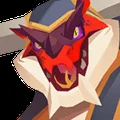
Identity: Dragon sorcerer with fire magic. The zone-control king who makes choke points unpassable and team fights hellish for melee-heavy compositions.
Core mechanic: Burn stacking and Detonate (E). Fire abilities apply burn stacks; Detonate consumes all stacks for burst damage that scales with the number of stacks. The loop is apply burns through LMB/RMB/Q → wait for stacks → Detonate for massive burst. This create-then-cash-in pattern rewards patience and punishes enemies who stand in fire.
| Ability | Key | Description |
|---|---|---|
 Fire Breath Fire Breath | LMB | Short-range flamethrower cone. Deals continuous damage to all enemies in the cone. Burns through stamina and health alike. |
 Fireball Fireball | RMB | Charged fire projectile. Damage scales with charge. At full charge, creates a burning zone on impact that persists for 4 seconds. |
 Hot Hail Hot Hail | Q | Rains fire on a target area for 3 seconds. Heavy damage to anyone standing in the zone. Your primary area denial tool. |
 Detonate Detonate | E | Causes all burning enemies to explode, dealing burst damage. The more burn stacks on the target, the more damage. Your combo finisher. |
 Dragon’s Fury Dragon’s Fury | F | Charnok transforms into a dragon, gaining flight, increased fire damage, and replacing LMB with a devastating fire beam. |
Upgrade paths:
- Hot Hail splits between increased area (wider zone) and slow on enemies (CC). Slow is better for team fight control, area is better for denying objectives.
- Detonate upgrades for increased damage per burn stack (assassination potential) or AoE on detonation (team fight damage). AoE is the standard competitive pick.
Playstyle: Area denial mage. Charnok doesn’t chase kills — he makes areas of the map lethal and punishes anyone standing in them. Hot Hail on a choke point, Fireball into the zone to add burn stacks, Fire Breath on anyone who pushes through, Detonate to finish. In team fights, Charnok’s fire zones split the battlefield, preventing melee heroes from engaging on their terms. Dragon’s Fury turns Charnok into a terrifying aerial fire beam that melts anything in its path.
In competitive: The premier counter to melee-heavy compositions. When teams drafted Knossos/Ramsay/Wu, Charnok was the answer — fire zones stopped Bull Rush approaches dead, and the AoE burn broke Tripp’s stealth. Charnok + Xenobia was one of the most oppressive support-DPS duos in competitive play.
Matchup notes: Excels against melee-heavy compositions that have to walk through fire zones. Best answer to Knossos. AoE breaks Tripp’s stealth. Struggles against long-range poke (Imani, HK-206) that damages him from outside his effective range.
Tier: A | Difficulty: Medium | Ceiling: High
 HK-206
Identity: Mech suit gunner with turret mode. The highest sustained damage in the game at the cost of all mobility — a stationary fortress that melts anything in its sightlines.
Core mechanic: Bullet Barrage (RMB) — toggles turret mode. While deployed: massively increased fire rate, range, and damage. While deployed: cannot move at all. This binary state defines every HK-206 decision — choosing when and where to deploy is the entire skill expression.
| Ability | Key | Description |
|---|---|---|
 Rail Gun Rail Gun | LMB | Single-shot ranged projectile. Moderate damage, moderate fire rate. Your mobile combat tool. |
 Bullet Barrage Bullet Barrage | RMB | Deploys into turret mode. While deployed: massively increased fire rate, range, and damage. Cannot move. Press RMB again to undeploy. |
 Fortify Fortify | Q | Grants damage resistance and CC immunity while deployed. 15s cooldown. Your survival tool during turret mode. |
 Mortar Mortar | E | Fires a long-range mortar that arcs over obstacles and deals AoE damage on impact. Usable in both modes. |
 S.W.A.R.M. S.W.A.R.M. | F | Deploys a swarm of missiles that track nearby enemies. Devastating in turret mode — combines with Bullet Barrage for area saturation. |
Upgrade paths:
- Bullet Barrage upgrades for increased range (sniper turret) or armor piercing (ignores damage resistance). Range is standard for holding long sight lines.
- Fortify upgrades for healing during Fortify (sustain) or reflect damage (punishment for attacking you). Healing is almost always better — it lets you survive focus fire during turret mode.
Playstyle: Positional fortress. HK-206’s entire game plan revolves around finding the perfect deployment spot — good sightlines, near allied creatures for sustain, with teammates nearby for peel. Once deployed with Fortify active, HK-206 has the highest sustained DPS in the game and is nearly unkillable. The challenge is surviving the transition between positions. Mortar provides ranged pressure while undeployed, and Rail Gun gives basic self-defense during relocation.
In competitive: Map-dependent but devastating on the right map. On maps with long sightlines and elevated deployment positions, HK-206 controlled entire lanes. Teams running HK-206 played around his deployment spot, essentially creating a fortress that the enemy had to flank or die to. On short-corridor maps, HK-206 was a throw pick.
Matchup notes: Deployed on a good position with Fortify active is nearly unkillable. The counter is dive — Tripp, Tyto, and Wu can flank behind HK and attack from outside turret arc. Always have a teammate peeling during turret mode.
Tier: A | Difficulty: Low | Ceiling: Medium
 Imani
Imani
Identity: Sniper with beast companion. The true long-range specialist — devastating from across the map, map-dependent and vulnerable up close.
Core mechanic: Kill Shot (RMB) + Silent Scope (Q) — scoped charged sniper shot combined with stealth while aiming. This combination creates the most lethal single-shot potential in the game: an invisible sniper lining up a full-charge headshot that deletes squishies before they know she’s there.
| Ability | Key | Description |
|---|---|---|
 Autobolts Autobolts | LMB | Rapid-fire crossbow bolts. Low damage per shot, high fire rate. Your close-range self-defense tool. |
 Kill Shot Kill Shot | RMB | Scoped, charged sniper shot. Full charge deals massive single-target damage. Zoom increases with charge. |
 Silent Scope Silent Scope | Q | Activates stealth while scoped. Become invisible for up to 6 seconds while aiming Kill Shot. Breaks on firing. |
 Boom Bolts Boom Bolts | E | Fires explosive bolts that detonate on impact. Area damage that zones melee fighters away from you. |
 Marked for Death Marked for Death | F | All enemies are revealed globally for 8 seconds and take increased damage from all sources. A team-wide utility ultimate. |
Upgrade paths:
- Kill Shot upgrades for piercing (shot passes through first target) or headshot bonus (critical damage zone). Piercing is niche but devastating in clustered fights. Headshot bonus is the standard for assassination.
- Silent Scope upgrades for longer stealth or movement while scoped. Movement is almost always better — it lets you reposition between shots.
Playstyle: Patient marksman. Imani finds a high-ground position, activates Silent Scope, charges Kill Shot, and waits for the perfect target. A full-charge Kill Shot on a squishy hero is often lethal or close to it. Between shots, Boom Bolts provide zone denial against divers, and Autobolts serve as panic self-defense. Marked for Death is the most team-oriented Focus ability from a damage hero — revealing all enemies is massive for coordinated teams.
In competitive: Highly map-dependent. On maps like Canyon (with long open sightlines), Imani was S-tier. On maps with short corridors and lots of cover, she was unplayable. Teams that picked Imani built their entire strategy around protecting her sightlines, which made her a polarizing pick.
Matchup notes: Dominates open sightlines. Hard-countered by dive assassins (Tripp especially — stealth vs stealth, and Tripp wins in melee). Weak on maps with short corridors and lots of cover.
Tier: B | Difficulty: Medium | Ceiling: High
 Mozu
Mozu
Identity: Magical girl with arcane orb. The technical ranged hero with the best escape in the game and exceptional team fight AoE through bouncing projectiles.
Core mechanic: Arcane Vortex (RMB) — a charged projectile that bounces between nearby enemies on hit. Full charge bounces up to 3 times (upgradeable to 5). Against grouped enemies, a single Vortex can hit the entire team, making Mozu’s team fight DPS scale exponentially with enemy density.
| Ability | Key | Description |
|---|---|---|
 Magic Bolt Magic Bolt | LMB | Single arcane projectile. Moderate damage, moderate speed. Accurate and reliable. |
 Arcane Vortex Arcane Vortex | RMB | Charged projectile that bounces between nearby enemies on hit. Full charge bounces up to 3 times. Devastating against grouped enemies. |
 Dimension Door Dimension Door | Q | Instant teleport in the aimed direction. Long range, moderate cooldown. One of the best escapes in the game. |
 Attractor Beam Attractor Beam | E | Channels a beam that slows and damages a single target. Useful for setting up kills or peeling for allies. |
 Arcane Cataclysm Arcane Cataclysm | F | Massive AoE explosion centered on Mozu. Huge damage in a large radius. Surprise finisher from a ranged hero. |
Upgrade paths:
- Arcane Vortex upgrades for more bounces (up to 5 — devastating in team fights) or increased damage per bounce (scaling burst). More bounces is the standard for team-fight-heavy compositions.
- Dimension Door upgrades for reduced cooldown (more escapes) or damage at arrival (offensive blink). Reduced cooldown is almost always correct.
Playstyle: Team fight specialist with unmatched escape. Mozu positions at mid-range, fires Arcane Vortex into grouped enemies for chain damage, uses Attractor Beam to slow priority targets, and Dimension Doors away when threatened. Her damage output scales with how grouped the enemy is — against a spread composition she’s mediocre, against a brawl composition she’s devastating. Arcane Cataclysm provides a surprise burst finisher that enemies rarely expect from a backline mage.
In competitive: A counter-pick into brawl compositions. When enemy teams drafted tight grouping strategies (Knossos/Margrave + supports), Mozu’s bouncing Vortex punished them for staying close. Dimension Door made her nearly impossible to assassinate, giving her the highest survival rate among ranged heroes.
Matchup notes: Strong against grouped compositions. Weak against spread compositions where Vortex can’t chain. Dimension Door makes her surprisingly safe against dive — teleporting out of Tripp’s burst or Wu’s Tongue Grab range.
Tier: B | Difficulty: High | Ceiling: Very High
 Rutger
Identity: Pirate with cannon and grapple hook. The creative trickster who attacks from impossible angles using terrain in ways no other hero can.
Core mechanic: Grappling Hook (Q) — fires a hook that pulls Rutger to the first surface or enemy hit. This gives Rutger access to any elevation on any map, enabling attack angles that no other ranged hero can reach. The skill expression is in finding and exploiting unexpected positions.
| Ability | Key | Description |
|---|---|---|
 Pepperbox Pepperbox | LMB | Short-range spread shot from a pepperbox pistol. High damage up close, falls off at range. |
 Cannonball Cannonball | RMB | Fires a heavy cannonball that arcs and deals heavy AoE damage on impact. Slow projectile but huge payoff. |
 Grappling Hook Grappling Hook | Q | Fires a hook that pulls Rutger to the first surface or enemy hit. Massive mobility — reach any elevation, escape any situation. |
 Land Mine Land Mine | E | Places a proximity mine that detonates when an enemy walks over it. Moderate damage and knockback. Area denial and trap tool. |
 Broadside Broadside | F | Rutger fires a massive broadside of cannonballs in a wide arc. Devastating area damage. |
Upgrade paths:
- Cannonball upgrades for faster projectile (harder to dodge) or bigger AoE (splash zone). Bigger AoE is better for team fights and objective denial.
- Grappling Hook upgrades for pull enemies (hook pulls enemies toward Rutger instead — completely changes the ability) or reduced cooldown (more mobility). Enemy pull is devastating for isolating targets but risky.
Playstyle: Elevation abuser. The optimal Rutger play pattern is grapple to an unexpected high-ground position, drop cannonballs from above, place mines on approach routes, and grapple away when threatened. His Pepperbox rewards close-range accuracy but his kit is designed for mid-range surprise attacks. Rutger rewards creativity and map knowledge more than any other hero — a player who knows every grapple spot on every map will consistently surprise enemies with angles they didn’t know existed.
In competitive: A situational pick on maps with strong elevation. Creative Rutger players could dominate by controlling vertical space that other heroes couldn’t contest, dropping Cannonballs onto wound sites and objectives. Less effective on flat maps where his grapple lost its primary advantage.
Matchup notes: Excels in creative hands — grappling to unexpected positions and dropping cannonballs from above is his best play pattern. Struggles against dive assassins who can close distance. Map-dependent — great on maps with elevation and verticality, mediocre on flat ground.
Tier: B | Difficulty: Medium | Ceiling: High
 Voden
Voden
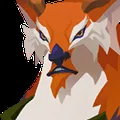
Identity: Fox trickster with poison arrows. Half sniper, half support, all deception — the hybrid that doesn’t do any one thing as well as a specialist but wins through versatility and trickery.
Core mechanic: Deception toolkit — Hidden Spring (stealth), Green Man (decoy clone), and Poison Spore (area denial) combine to create the most evasive, annoying hero in Gigantic. Enemies waste abilities on clones, lose track of the real Voden, and eat poison arrows from unexpected angles.
| Ability | Key | Description |
|---|---|---|
 Arrowed Arrowed | LMB | Charged bow shot. Damage scales with charge time. At full charge, applies poison (DoT for 3 seconds). Long range, rewarding accuracy. |
 Poison Spore Poison Spore | RMB | Launches a spore pod that creates a poison cloud on impact. Enemies in the cloud take damage over time and are slowed. Area denial and zoning. |
 Hidden Spring Hidden Spring | Q | Enters stealth for up to 5 seconds. While stealthed, movement speed is increased. Can still charge arrows during stealth. Escape, reposition, and ambush tool. |
 Green Man Green Man | E | Creates a decoy clone that runs forward and attacks enemies. The clone looks identical to Voden and dies in one hit. Forces enemies to waste abilities on the wrong target. |
 Kudzoo Kudzoo | F | Summons a massive tangle of vines that roots all enemies in a large area for 3 seconds. Devastating setup for team followup. |
Passive — Healing Spring: Voden’s basic attacks heal nearby allies for a small amount when they land. This passive sustain is minor but adds up in extended fights, making Voden a legitimate off-support.
Upgrade paths:
- Arrowed upgrades for piercing shots (arrows pass through first target) or stronger poison (increased DoT). Piercing is devastating in team fights; poison is better for picks.
- Hidden Spring upgrades for longer stealth or leave a decoy behind (creates a Green Man when entering stealth). The decoy-on-stealth upgrade is incredible — enemies attack the clone while you reposition invisibly.
- Green Man upgrades for exploding clone (detonates on death, dealing AoE) or clone shoots arrows (fires weak arrows at nearby enemies). Exploding clone punishes enemies for attacking the decoy.
Playstyle: Trickster support. Voden’s game plan is never where you think he is. He drops Poison Spore to zone, sends Green Man in one direction, goes Hidden Spring in another, and fires fully-charged poison arrows from a completely unexpected angle. His healing passive means he’s contributing to team sustain just by hitting enemies. In team fights, Kudzoo into team follow-up is devastating — a 3-second root on the entire enemy team is one of the best setups in the game.
In competitive: A versatile flex pick that filled both DPS and off-support roles. Voden’s deception toolkit made him surprisingly hard to focus in team fights, and his utility through Kudzoo made him valuable in compositions that already had enough raw damage.
Matchup notes: Excels against aggressive melee heroes who have to commit to engaging. Struggles against heroes with reveals (Aisling’s Cador negates stealth) and long-range specialists (Imani outranges him). His hybrid nature means he doesn’t out-damage dedicated DPS or out-heal dedicated supports — he wins by being too annoying to catch and too dangerous to ignore.
Tier: A | Difficulty: Medium | Ceiling: Very High
The Heroes: Supports
Supports are the highest-value targets in Gigantic. They keep teams alive, amplify damage, and provide the sustain that wins extended fights. Killing the enemy support is almost always the correct priority.
 Vadasi
Identity: Fire priestess and dedicated healer. The only true healer in Gigantic — sacrifices her own health to heal allies, creating a unique risk/reward dynamic.
Core mechanic: Devotion (RMB) — channels a heal on an ally that costs Vadasi’s own health to cast. This self-damage mechanic means Vadasi’s healing output is directly tied to her survival. Heal too aggressively and you kill yourself. Heal too conservatively and your team dies. The balance point is where skill expression lives.
| Ability | Key | Description |
|---|---|---|
 Smite Smite | LMB | Ranged fire projectile. Moderate damage. Your self-defense and poke tool when not healing. |
 Devotion Devotion | RMB | Channels a heal on an ally. Heals significant HP per second but costs Vadasi’s own health to cast. You are literally giving your life for your team. |
 Divine Wind Divine Wind | Q | AoE burst centered on Vadasi that deals damage to nearby enemies and heals Vadasi for each enemy hit. Your self-sustain tool — the more enemies nearby, the more you heal. |
 Sanctuary Sanctuary | E | Creates a shield around an ally that absorbs incoming damage for 3 seconds. Strong against burst damage. |
 Hand of Purity Hand of Purity | F | Massive AoE heal that restores all allies within range to full health and cleanses debuffs. The most impactful Focus ability in the game when timed correctly. |
Upgrade paths:
- Devotion upgrades for reduced self-damage (safer healing) or increased healing output (more throughput). With good tank peel, increased output is better.
- Divine Wind upgrades for increased damage (offensive healer) or increased self-healing (survivability). Self-healing is standard because a dead Vadasi heals nobody.
Playstyle: Selfless healer with clutch potential. Vadasi stays at mid-range behind her frontline, healing the most pressured ally with Devotion, using Sanctuary to block burst damage on dive targets, and timing Divine Wind to both self-sustain and deal damage when enemies commit to melee range. Hand of Purity is the ultimate fight reset — a well-timed full-team heal turns lost fights into won fights. The constant health management — balancing self-damage from healing against self-sustain from Divine Wind — is what separates good Vadasi players from great ones.
In competitive: The default support pick. Vadasi’s raw healing output was unmatched, and Hand of Purity was the single most impactful Focus ability in the game. Teams without Vadasi had to win through burst before attrition set in, because in sustained fights, Vadasi’s team always won. The self-damage mechanic was a vulnerability that skilled assassins exploited — Tripp diving a Vadasi who had Devotion-taxed her own health was a guaranteed kill.
Matchup notes: Essential in any brawl composition. Countered by assassin dive during Devotion self-damage. Only self-defense is landing Divine Wind. Always position near teammates.
Tier: A | Difficulty: High | Ceiling: Very High
 Xenobia
Identity: Naga sorceress and debuffer. Doesn’t heal — instead makes enemies weaker. Her impact doesn’t show on the scoreboard, but the team with Xenobia wins more fights through math.
Core mechanic: Curse stacking — Words of Spite (LMB) applies curse stacks that deal DoT and reduce the target’s damage dealt by 5% per stack (max 25%). This damage reduction compounds across an entire team fight, making enemy carries effectively useless. Xenobia wins fights by making the enemy team’s damage output drop below the threshold needed to kill anyone.
| Ability | Key | Description |
|---|---|---|
 Words of Spite Words of Spite | LMB | Ranged projectile that applies curse — a stacking DoT that also reduces the target’s damage dealt by 5% per stack (up to 25%). |
 Mark of Despair Mark of Despair | RMB | Targeted debuff beam that reduces a single enemy’s damage dealt by 30% for 4 seconds. Your anti-carry tool. |
 Tongue Lashing Tongue Lashing | Q | Beam that slows and damages a single target. Excellent peel — stops divers in their tracks. |
 Wave of Sorrow Wave of Sorrow | E | AoE wave that damages all enemies in a cone and applies curse stacks. Your team fight tool. |
 Gaze of Envy Gaze of Envy | F | Massive AoE that slows all enemies and reduces their damage by 40% for 6 seconds. Turns team fights into unwinnable math for the enemy. |
Upgrade paths:
- Words of Spite upgrades for increased curse stacks (more damage reduction) or curse spread (stacks bounce to nearby enemies). Spread is devastating in team fights — a single LMB can curse an entire group.
- Mark of Despair upgrades for increased duration or damage amplification (enemies take more damage from all sources). Damage amp is the competitive choice — it turns Mark into an offensive tool.
Playstyle: Mathematical warfare. Xenobia wins fights through numbers, not mechanics. The game plan is apply curses to as many enemies as possible, Mark of Despair the enemy carry, Tongue Lash anyone diving your backline, and Wave of Sorrow during team fights to stack curses on the whole team. By the time Gaze of Envy drops, the enemy team’s damage is reduced by 50-60% across the board, making it mathematically impossible for them to win the trade. Xenobia doesn’t carry through kills — she carries through making the enemy team unable to kill anyone.
In competitive: The most underrated hero in Gigantic. Teams that understood Xenobia’s math dominated — her damage reduction was effectively the same as healing her entire team, but it couldn’t be reduced by anti-heal. Xenobia + Charnok was the premier support-DPS duo: Xenobia’s Mark increased all damage taken, Charnok’s fire zones dealt it.
Matchup notes: Excels against brawl compositions that want extended fights — debuffs compound over time. Struggles against burst assassins (Tripp, Tyto) who kill before debuffs matter, and against poke compositions outside her range.
Tier: S | Difficulty: Medium | Ceiling: High
 Uncle Sven
Identity: Alchemist with potions. The hybrid support — decent healing, decent damage, decent utility, exceptional at nothing but useful at everything.
Core mechanic: Dual-purpose potions — Throw Potion (LMB) heals allies AND damages enemies in the splash zone simultaneously. This means Uncle Sven is always contributing regardless of what he aims at, making him the easiest support to play but also the hardest to maximize.
| Ability | Key | Description |
|---|---|---|
 Throw Potion Throw Potion | LMB | Throws a potion that heals allies and damages enemies in the splash zone. Dual-purpose — you’re always contributing regardless of target. |
 Elastic Ooze Elastic Ooze | RMB | Throws a potion that creates a puddle. Allies gain speed boost; enemies are slowed. Zone control. |
 Acid Flask Acid Flask | Q | Throws an acid potion that creates a burning zone on impact. Pure damage — your offensive contribution. |
 Healing Waters Healing Waters | E | Throws a healing potion at an ally, healing them over time. Direct single-target heal with moderate throughput. |
 Chaos Quaff Chaos Quaff | F | Sven drinks an experimental potion and transforms into a rampaging beast with heavily increased damage and health for 8 seconds. |
Upgrade paths:
- Throw Potion upgrades for increased healing or increased damage. This defines your role — heal-focused Sven supports the team, damage-focused Sven supplements DPS.
- Elastic Ooze upgrades for increased slow or increased speed boost. Slow is better for peeling, speed is better for chase.
Playstyle: Jack-of-all-trades support. Uncle Sven contributes to everything without excelling at anything. Throw Potion into clustered fights heals allies and damages enemies simultaneously. Elastic Ooze controls movement. Acid Flask zones. Healing Waters spot-heals. Chaos Quaff turns him into a surprise frontliner. He’s the support you pick when you’re not sure what support you need — he’ll be useful regardless of what happens.
In competitive: A safe pick that never lost you the game but rarely won it either. Sven’s jack-of-all-trades nature meant he was never the wrong choice but also never the optimal one. Teams that knew exactly what they needed picked Vadasi or Xenobia; teams that wanted flexibility picked Sven.
Matchup notes: No particularly strong or weak matchups — Sven’s generalist nature means he’s equally mediocre against everything. His best asset is Chaos Quaff surprising enemies who expect a passive support.
Tier: B | Difficulty: Low | Ceiling: Medium
 Griselma
Identity: Summoner witch with portal beasts. Controls space through summon pressure — the most team-dependent support, devastating with coordination, useless without it.
Core mechanic: Portal Beasts — Griselma summons independent creature companions (up to 2) that attack enemies, provide vision, and enable Portal Grab (Q) roots. Her power is entirely tied to beast survival and positioning. Losing both beasts leaves Griselma with nothing but a weak ranged attack.
| Ability | Key | Description |
|---|---|---|
 Portal Blast Portal Blast | LMB | Ranged energy projectile. Low damage but passes through enemies. |
 Summon Portal Beast Summon Portal Beast | RMB | Places a portal that spawns a beast companion. The beast attacks nearby enemies and provides vision. Can have up to 2 active beasts. |
 Portal Grab Portal Grab | Q | One of Griselma’s portal beasts lunges at a target and roots them for 1.5s. Requires an active beast near the target. |
 Rallying Cry Rallying Cry | E | Buffs all nearby allies and portal beasts, increasing their damage and attack speed for 4 seconds. |
 Portal Overcharge Portal Overcharge | F | All active portal beasts grow to massive size, gaining increased health, damage, and AoE attacks for 10 seconds. |
Upgrade paths:
- Summon Portal Beast upgrades for tankier beasts or faster spawn time. Tankier beasts are better against teams that focus-fire summons.
- Portal Grab upgrades for longer root or damage on grab. Longer root is almost always better — 2.5s root is a death sentence for squishies.
Playstyle: Area control through summons. Griselma places portal beasts at strategic locations — near objectives, in choke points, guarding flanks — and uses them as remote-control CC bots. Portal Grab through a beast creates ranged roots that catch enemies off guard. Rallying Cry during team fights buffs everyone including the beasts. Portal Overcharge turns her beast army into a crushing force. The key is beast positioning — beasts placed well control entire areas, beasts placed poorly die instantly.
In competitive: A niche pick that worked in specific compositions on specific maps. Griselma with coordinated teammates who played around her beasts was surprisingly effective, especially on maps with narrow choke points where beasts controlled limited space. Without coordination, she was the worst support in the game.
Matchup notes: Most team-dependent support. With coordination, surprisingly effective. Without it, beasts die instantly and she’s helpless. Countered by AoE damage (Charnok burns through beasts in seconds) and assassins who ignore beasts and dive Griselma directly. Strongest on maps with narrow choke points.
Tier: C | Difficulty: Medium | Ceiling: Medium
 Zandora
Identity: Shield knight and divine protector. The anti-dive support who physically blocks projectiles for allies — the closest thing Gigantic has to a paladin.
Core mechanic: Aegis (RMB) — raises a frontal barrier that blocks ALL incoming projectiles for allies standing behind it. Unlike shields in other games that absorb a flat amount of damage, Aegis physically stops projectiles from existing, making it infinitely effective against ranged compositions. The limitation is stamina drain and the requirement to face the right direction.
| Ability | Key | Description |
|---|---|---|
 Radiant Blade Radiant Blade | LMB | Melee sword strikes. Moderate damage, moderate speed. Standard melee combo that serves as your contribution between cooldowns. |
 Aegis Aegis | RMB | Raises her shield, creating a frontal barrier that blocks all incoming projectiles for allies behind it. Can move slowly while shielding. Drains stamina. |
 Shield Charge Shield Charge | Q | Charges forward with shield raised, knocking back and damaging enemies in her path. Engage, peel, and repositioning tool. Brief frontal damage immunity during charge. |
 Divine Light Divine Light | E | Creates a healing pulse around Zandora that heals all nearby allies over 3 seconds. Less than Vadasi but doesn’t cost your own health. |
 Phalanx Phalanx | F | Plants an immovable barrier in a line. Blocks all projectiles and movement for 6 seconds. Splits the battlefield — devastating during wound phases. |
Upgrade paths:
- Aegis upgrades for reflected projectiles (projectiles bounce back toward attacker) or increased shield health (more durability). Reflection is the high-skill choice — actively punishes ranged heroes.
- Shield Charge upgrades for stun on impact (brief stun instead of knockback) or increased range (longer charge). Stun is almost always better.
- Divine Light upgrades for increased healing or cleanse debuffs (removes curse, burn, slow). Cleanse is invaluable against Xenobia and Charnok compositions.
Playstyle: Bodyguard support. Zandora’s game plan is simple: stand between your ranged carries and the enemy, Aegis to block incoming fire, Shield Charge to peel divers, Divine Light to keep everyone topped up. Her Focus — Phalanx — is the most tactically impactful ability in wound phases, physically splitting the battlefield to isolate enemies from their Guardian. Zandora doesn’t heal as much as Vadasi or debuff as well as Xenobia, but she prevents damage from landing at all, which is mathematically superior to healing it after the fact.
In competitive: The premier counter to poke compositions. Aegis physically negated ranged damage, making Zandora essential against Beckett/Imani/HK-206 heavy teams. Phalanx during wound phases was game-winning — splitting 3 defenders from 2 meant an easy wound.
Matchup notes: Excels against ranged compositions — Aegis physically blocks damage. Struggles against melee brawlers (Knossos, Wu) who get behind her shield. Lower healing than Vadasi, so better in burst-protection compositions than sustained healing ones.
Tier: A | Difficulty: Medium | Ceiling: High
The Heroes: Tanks
Tanks initiate, disrupt, and absorb. They create the space that damage dealers need to operate.
 Margrave
Identity: Demonic knight with massive sword. The quintessential frontliner — charge in, stun, tank damage, peel for the team. Simple, effective, reliable.
Core mechanic: Charge (RMB) + Doom’s Embrace (F) — the most reliable CC chain in the game. Charge stuns the target, team follows up, and Doom’s Embrace is a single-target deletion that removes someone from the fight entirely. Margrave doesn’t have the highest ceiling, but his floor is high enough that a decent Margrave always contributes.
| Ability | Key | Description |
|---|---|---|
 Demon Blade Demon Blade | LMB | Heavy sword swings. Slow but high damage per hit. 3-hit combo with knockback on the third strike. |
 Charge Charge | RMB | Forward charge that stuns the first enemy hit for 1.5 seconds. Long range, moderate cooldown. Your engage tool and primary CC. |
 Hellburst Hellburst | Q | Slams the ground, creating a shockwave that damages and knocks up nearby enemies. AoE interrupt. |
 Demon Shield Demon Shield | E | Raises a shield that blocks frontal damage for 3 seconds. Absorbs a percentage of incoming damage. Your survival tool. |
 Doom’s Embrace Doom’s Embrace | F | Grabs a single enemy and slams them into the ground repeatedly, dealing massive damage. Target is stunned for the full duration. Single-target deletion. |
Upgrade paths:
- Charge upgrades for increased stun duration (longer CC chain) or AoE on impact (damages nearby enemies). Stun duration is standard for setting up kills.
- Demon Shield upgrades for damage reflection (punishment) or increased duration (more tanking). Duration is safer, reflection is better against predictable damage.
Playstyle: Straightforward tank. Charge into the priority target → Hellburst to knock up nearby enemies → Demon Blade combo while they’re stunned → Demon Shield when you start taking focus fire → repeat when Charge comes off cooldown. Doom’s Embrace is the ultimate punishment for overextension — any enemy caught alone near Margrave is dead. The simplicity is Margrave’s strength — there are no complex combos to learn, just good engage timing and target selection.
In competitive: The default tank pick. Margrave’s reliability made him the safe choice in virtually every composition. His Charge + team follow-up was the most consistent kill setup in the game, and Doom’s Embrace punished positioning mistakes instantly.
Matchup notes: Effective against everyone in melee range. Struggles against kiting and ranged poke. His biggest weakness is being focused by multiple ranged heroes who stay outside Charge range.
Tier: B | Difficulty: Low | Ceiling: Medium
 Pakko
Pakko
Identity: Ice yeti creature. The peeler — the best hero in the game at protecting backline allies from dive, with enough CC to make melee heroes regret engaging.
Core mechanic: Frost stacking — Ice Claws (LMB) apply frost stacks. At 3 stacks, the target is frozen for 1 second (cannot move or act). This passive CC from basic attacks means any melee hero fighting Pakko is on a timer — stay too long and you’re frozen, then dead.
| Ability | Key | Description |
|---|---|---|
 Ice Claws Ice Claws | LMB | Melee swipes that apply frost stacks. At 3 stacks, the target is frozen for 1 second (cannot move or act). |
 Snowball Snowball | RMB | Throws a snowball that grows larger the further it travels. Small = low damage + brief slow. Full-size = heavy damage + long slow + knockback. |
 Frost Path Frost Path | Q | Creates a trail of ice. Allies gain speed boost; enemies are slowed. Lasts 5 seconds. |
 Belly Bump Belly Bump | E | Short-range body slam that knocks back the target and deals moderate damage. Your peel tool — bumps divers away from allies. |
 Frozen Fury Frozen Fury | F | Pakko becomes a rolling snowball, gaining massive speed and dealing heavy damage to everything in his path. Can change direction while rolling. |
Upgrade paths:
- Snowball upgrades for faster growth (reaches full size sooner) or explosion on impact (AoE). Faster growth is the standard — a mid-range snowball that’s already full-size is terrifying.
- Frost Path upgrades for longer duration or enemies in path take damage. Duration is standard for sustained zone control.
Playstyle: Defensive tank. Unlike Margrave who charges in, Pakko sits near his backline and makes it impossible for enemies to dive. Assassins who engage into Pakko’s zone eat frost stacks, Snowball slow, Belly Bump knockback, and Frost Path — the entire CC toolkit keeps enemies away from your carries. Frozen Fury provides the one offensive tool — a rolling engagement that disrupts enemy formations and catches retreating targets.
In competitive: The premier peeling tank. Teams running Beckett or Imani paired them with Pakko specifically because his CC toolkit made dive assassins unable to reach the backline. Pakko + Beckett was one of the safest DPS-tank pairings in competitive play.
Matchup notes: Frost freeze passive makes him the bane of melee heroes. Knossos, Tyto, and Wu all suffer against Pakko because they have to stay in melee range. Ranged heroes can kite Pakko and avoid freeze stacks entirely.
Tier: A | Difficulty: Low | Ceiling: Medium
 Ezren Ghal
Identity: Necromancer who feeds on death. The most unusual tank in Gigantic — grows stronger as things die around him, creating a scaling monster in long fights near creature points.
Core mechanic: Soul Harvest — when any unit dies near Ezren (hero, creature, minion), he gains soul energy that passively regenerates his health and fuels Dark Resurrection (E). This means Ezren’s power level fluctuates wildly — in fights with lots of deaths nearby, he’s a monster. In clean 1v1s with nothing to harvest, he’s one of the weakest tanks.
| Ability | Key | Description |
|---|---|---|
 Soul Feast Soul Feast | LMB | Mid-range dark energy projectile. Moderate damage. Hitting enemies generates soul energy. |
 Spectral Grasp Spectral Grasp | RMB | Launches a spectral hand that pulls the first enemy hit toward Ezren. Medium range. Your engagement tool and pick potential. |
 Soul Drain Soul Drain | Q | Channels a beam on a nearby enemy or corpse. On enemies: deals damage and heals Ezren. On corpses: generates massive soul energy. |
 Dark Resurrection Dark Resurrection | E | Consumes soul energy to create a spectral minion from a nearby corpse. The minion fights for Ezren. Stronger with more soul energy invested. |
 Abyssal Grasp Abyssal Grasp | F | Opens a portal beneath an enemy, pulling them underground for 2 seconds (stun) and dealing heavy damage. They emerge weakened with reduced damage and speed. |
Upgrade paths:
- Spectral Grasp upgrades for longer range (safer pulls) or pull through walls (ignores terrain). Pull through walls is incredibly powerful on maps with tight corridors.
- Soul Drain upgrades for increased drain rate (faster healing and energy) or AoE drain (hits all enemies in area). AoE is better in team fights but requires dangerous positioning.
- Dark Resurrection upgrades for stronger minions (more HP and damage) or exploding minions (minions detonate when killed, dealing AoE). Exploding minions create a lose-lose — killing them punishes, ignoring them hurts.
Playstyle: Escalating necromancer. Ezren wants to fight near creature points where deaths generate soul energy. The optimal pattern is engage with Spectral Grasp → Soul Drain to heal → Dark Resurrection when corpses are available → fight with minion army. In long team fights with lots of casualties, Ezren becomes unkillable — soul energy regenerates his health faster than most heroes can damage it. Abyssal Grasp is a devastating single-target removal that takes a hero completely out of the fight.
In competitive: A niche but terrifying pick in sustained siege compositions. Teams running Ezren fought exclusively near creature points, feeding his soul economy. In these prolonged fights, Ezren was effectively the tankiest hero in the game. Less effective in burst-oriented compositions where fights ended before soul energy accumulated.
Matchup notes: Thrives in compositions that fight near creature points. Struggles against burst compositions that kill him before soul energy accumulates. Weak against Charnok/Beckett who kite at range. His power fluctuates wildly — in death-heavy fights he’s S-tier, in clean 1v1s he’s one of the weakest tanks.
Tier: B | Difficulty: High | Ceiling: Very High
Team Composition Guide
The Standard Comp (Recommended)
1 Assassin + 1 Ranged + 1 Fighter + 1 Support + 1 Tank
Covers all bases: assassination threat, backline damage, frontline presence, healing/debuffs, and disruption. This is the default in competitive play because it has no exploitable weaknesses.
Example: Tripp / Beckett / Aisling / Vadasi / Margrave
The Dive Comp
2 Assassins + 1 Ranged + 1 Support + 1 Fighter
All-in on killing the enemy backline. Win by deleting their damage dealers and support before they can contribute. High-risk, high-reward. Falls apart if the enemy has strong peel (Pakko, Xenobia).
Example: Tripp / Tyto / Charnok / Xenobia / Aisling
The Poke Comp
2 Ranged + 1 Fighter + 1 Support + 1 Tank
Control space, deal damage from safety, and grind the enemy down through attrition. Excels on maps with long sight lines. Weak against coordinated dive that closes the gap.
Example: Beckett / Imani / Ramsay / Vadasi / Pakko
The Brawl Comp
2 Fighters + 1 Ranged + 1 Support + 1 Tank
Group up and fight on the objective. Force 5v5 brawls where your superior sustain and frontline presence outlast the enemy. Xenobia is incredible here — her debuffs compound in extended fights.
Example: Knossos / Aisling / HK-206 / Xenobia / Margrave
Creature Strategy Guide
Creature placement wins games. The difference between a team that controls creatures and a team that ignores them is often the difference between winning and losing — creatures provide Guardian power, map control, and team-wide buffs.
General principles:
- Bloomer near your team’s default rotation path — the healing zone sustains between fights
- Cerberus at contested power circles — the damage zones enemies and grants power on kills
- Cyclops watching flank routes — vision prevents assassin ambushes
- Drake blocking key choke points — wall creatures force enemies through predictable paths
- Always upgrade before team fights — upgraded creatures swing fights more than one hero’s damage
- Kill enemy creatures aggressively — each creature kill grants significant Guardian power
Why Gigantic Deserved Better
Gigantic failed commercially because of bad timing (2017 was hero shooter saturation — Overwatch had launched the previous year), bad platform decisions (Windows Store exclusive at launch, which gutted discoverability), and publisher issues (Perfect World pulled funding as the game grew its audience).
The game itself was brilliant. The combat had depth that rivaled the Battlerite lineage — stamina management, dodge timing, ability cancels, and positional play created a skill ceiling that the best players never reached. The art direction was stunning — Gigantic had more visual personality in one hero than most games have in their entire roster. The Guardian system created strategic layers that no other game has replicated.
Rampage Edition gave it a second chance, and while active development has wound down, the community keeps it alive. If you’ve never tried it, it’s worth your time. If you have, you already know what was lost.
This guide will be here when you need it.


Discussion