
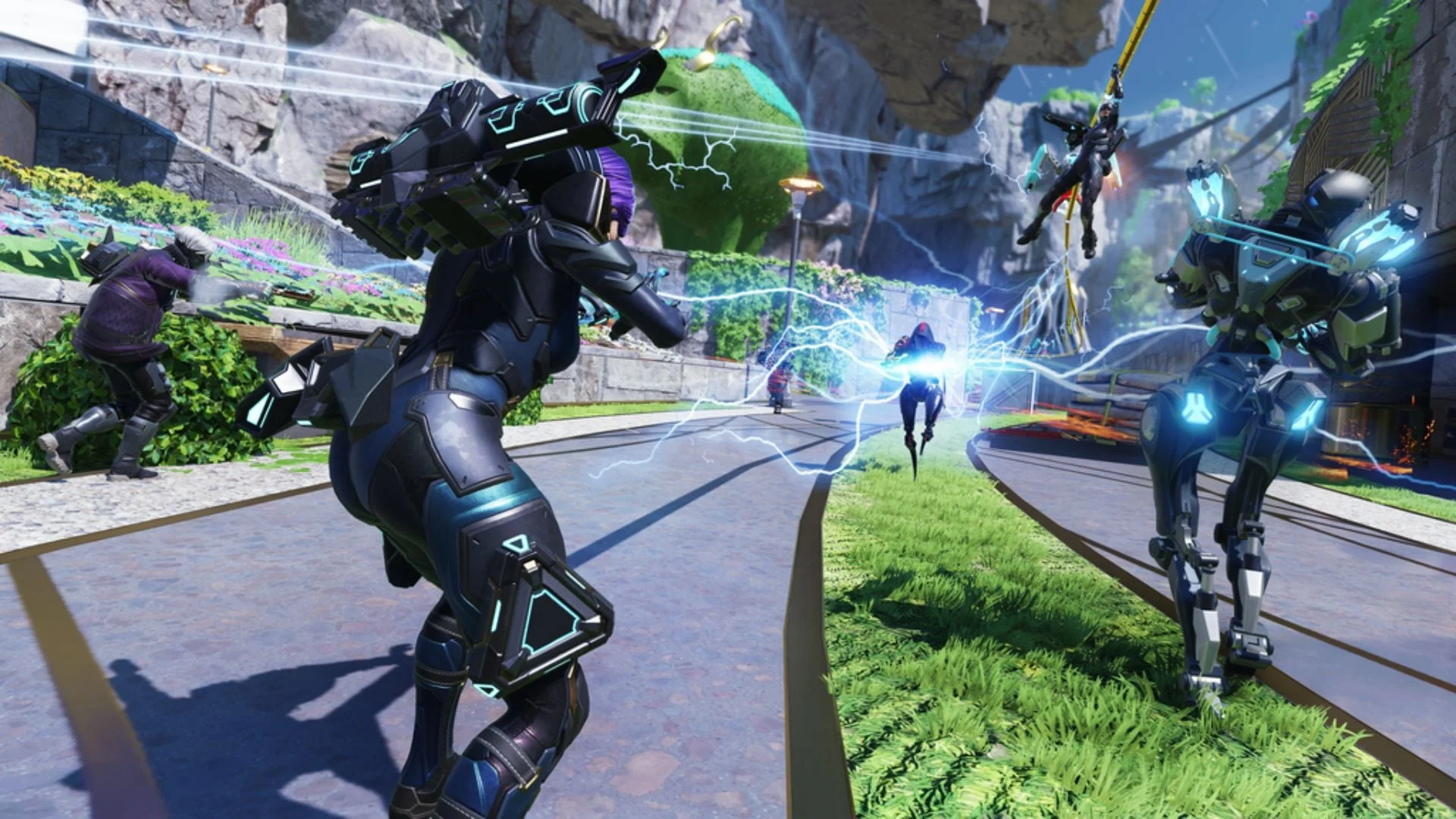
Six years. That’s how long the Apex Legends community has been begging Respawn to fix footstep audio. And for almost as long, Gibraltar and Wraith — two of the game’s original eight legends — have been stuck in a balance purgatory that no amount of number tuning could fix.
The Season 28 mid-season patch is Respawn’s answer to all three problems at once. Gibby gets rebuilt. Wraith gets rebuilt. And the entire footstep audio system gets overhauled from the ground up. It’s either the most ambitious single patch in Apex history or the most reckless. Probably both.
Gibby’s Rework: From Must-Pick to Forgotten to… What Exactly?
Let’s set the stage. Gibraltar went from a 90%+ pick rate in ALGS during the bubble meta era of 2021-2022 to virtually nonexistent in competitive play. His design has always been a balancing nightmare — a massive hitbox character whose survivability depends entirely on two abilities (Gun Shield and Dome of Protection) that are either oppressively strong or completely irrelevant depending on the numbers.
Respawn tried tuning the knobs for years. Dome duration changes. Gun Shield HP adjustments. Fortified passive tweaks. None of it worked. The fundamental problem was always the same: Gibby’s kit was designed around a defensive playstyle that the game itself has evolved away from.
The rework signals that Respawn has finally accepted what the community figured out two years ago — you can’t fix Gibraltar with number changes. You have to change what he does.
Details on the specific ability changes are still being parsed as the patch rolls out, but the direction is clear: Respawn is trying to make Gibby relevant in a game that rewards aggression and rotation speed without returning to the era where every competitive team was forced to run him. That’s a razor-thin design needle to thread.
For competitive teams: If you’ve been running a Gibby specialist on your roster, this is either your redemption arc or your retirement party. Either way, scrims this week are going to be chaotic.
Wraith’s Rework: Touching the Untouchable
Wraith is Apex’s most iconic legend. She’s also been nerfed in virtually every major patch since Season 5 — hitbox enlarged, tactical slowed to a crawl, portal range shortened, animation tells added to Into the Void. At this point, the Wraith that exists in Season 28 barely resembles the S0 version that made her the most popular character in the game.
And yet she’s still picked in competitive. Not because her kit is strong, but because Dimensional Rift is fundamentally irreplaceable. No other legend offers the same team rotation utility. Pro teams don’t pick Wraith because she’s good — they pick her because the alternative is not having a portal.
That’s a design failure, and Respawn knows it. A rework here suggests they’re done trying to balance a legend whose entire competitive value lives in a single ability while the rest of her kit feels like deadweight.
Here’s the thing Wraith mains need to hear: If this rework makes her tactical actually useful again at the cost of portal adjustments, that’s a net positive for the character’s health. A legend shouldn’t be defined by one ability that’s mandatory and two that are irrelevant.
Expect the Wraith main community to melt down regardless. They could give her a tactical that grants invincibility and triple damage, and r/apexlegends would still have a front-page post titled “they ruined Wraith” within fifteen minutes of the patch notes going live. That’s just how it works with the most one-tricked legend in the game.
The Footstep Overhaul: The Change That Actually Matters Most
I’m going to say something that might sound dismissive of two major legend reworks: the footstep audio overhaul is more important than both of them combined, and it’s not close.
Here’s why.
Every competitive shooter lives and dies by audio fidelity. VALORANT nailed spatial audio from day one — you can pinpoint exactly where an enemy is based on footsteps, and that information is consistent and reliable. Counter-Strike 2 has decades of refined audio design. Even Deadlock, still in active development, has cleaner directional audio than a game that’s been live for six years.
Apex Legends has never gotten this right. Silent footsteps have decided ranked games, tournament matches, and casual pub stomps since February 2019. The community has documented it exhaustively. Pros have screamed about it on stream. Content creators have made entire video series cataloging the inconsistencies.
And Respawn has “fixed” it before. Multiple times.
- Season 7: “We’ve improved footstep audio.” Community verdict: marginal.
- Season 12: “Major audio pass.” Community verdict: different problems, same frustration.
- Season 18: “Significant audio improvements.” Community verdict: still broken.
- Season 22: “Audio overhaul.” Community verdict: are you serious right now?
So why should anyone believe this time is different?
The honest answer is: maybe you shouldn’t. Trust is earned, and Respawn’s audio team has an extensive track record of over-promising and under-delivering on this specific issue. The community’s “believe it when I hear it” stance is completely justified.
But the framing of this patch is different. Previous audio fixes were presented as incremental improvements — tweaks to occlusion, distance falloff adjustments, priority system changes. This is being positioned as an overhaul, which implies foundational changes to how the audio engine processes and spatializes footstep sounds.
If it works — genuinely works, with consistent directional audio, reliable distance-based volume scaling, and no more phantom silent pushes — it’s the single most important change Respawn has ever shipped. It raises the skill ceiling for every player at every level. It rewards game sense and positioning. It makes information gathering a skill rather than a dice roll.
If it doesn’t work, it’s proof that Apex’s audio engine is fundamentally broken at an architectural level and no amount of patching will fix it. And that’s a conclusion that should terrify Respawn, because it means the game will continue bleeding players to competitors who got the basics right.
The Bigger Picture: Why This Patch Exists
Let’s zoom out for a second. Respawn isn’t shipping a patch this aggressive because everything is going great.
Apex’s playerbase has been declining. Steam charts tell a consistent story of downward trends across multiple seasons. The battle royale genre is mature, competition is fierce, and player attention is fragmenting across VALORANT, Marvel Rivals, The Finals, and a dozen other titles fighting for the same audience.
A mid-season patch that simultaneously reworks two original legends and overhauls the game’s most complained-about system isn’t routine maintenance. It’s a re-engagement play. Respawn needs a moment — a reason for lapsed players to reinstall, a reason for current players to feel like the devs are listening, a reason for content creators to make videos with shocked-face thumbnails.
Reworking Gibby and Wraith simultaneously is also an implicit admission: the original legend design philosophy was flawed. And honestly? That’s a good thing. Admitting that a 2019 design doesn’t work in a 2026 game isn’t weakness — it’s the kind of honest self-assessment that keeps live-service games alive.
The question is whether this patch delivers on the promise or becomes another entry in the “Respawn said they’d fix it” hall of fame.
What This Means for Ranked and ALGS
If you’re grinding ranked, buckle up. Mid-season reworks to meta-relevant legends always cause a volatile adjustment period in Diamond+ lobbies. Players who’ve built their entire ranked identity around Wraith’s current kit will be lost for a week. Gibby specialists will either surge back into relevance or discover that the rework doesn’t solve his fundamental problems.
Expect two weeks of chaos before the meta stabilizes. Use that window. Players who adapt fastest to reworked kits always gain rating during transition periods while everyone else is figuring things out.
For ALGS, the implications are massive. Competitive teams with established compositions built around Wraith’s portal utility need contingency plans now. If the rework fundamentally changes how Dimensional Rift functions, every team’s endgame rotation playbook gets rewritten overnight. And if Gibby becomes competitively viable again, the entire meta conversation shifts from “which aggressive comp do we run” to “do we need a defensive anchor.”
Pro player discourse is going to be loud this week. Watch scrims closely — that’s where you’ll see the real impact before it filters into ranked.
The Verdict Before the Verdict
It’s too early to know if this patch saves Apex Legends from its slow decline or becomes another “they tried” footnote. The legend reworks need time to evaluate in practice, not just in patch notes. The footstep overhaul needs weeks of real-world testing across different maps, legends, and scenarios before anyone can declare it fixed.
But the ambition is undeniable. Respawn is swinging big — two OG legend reworks and an audio overhaul in a single patch is the kind of move you make when you know the status quo isn’t working. That self-awareness, at minimum, deserves acknowledgment.
Now they just have to ship it and have it actually work. Which, if you’ve been playing Apex for six years, you know is the hard part.
Drop into the patch. Test the audio. Break the new kits. And for the love of god, clip it when someone’s footsteps are still silent — because Respawn needs to see the receipts.


Discussion