
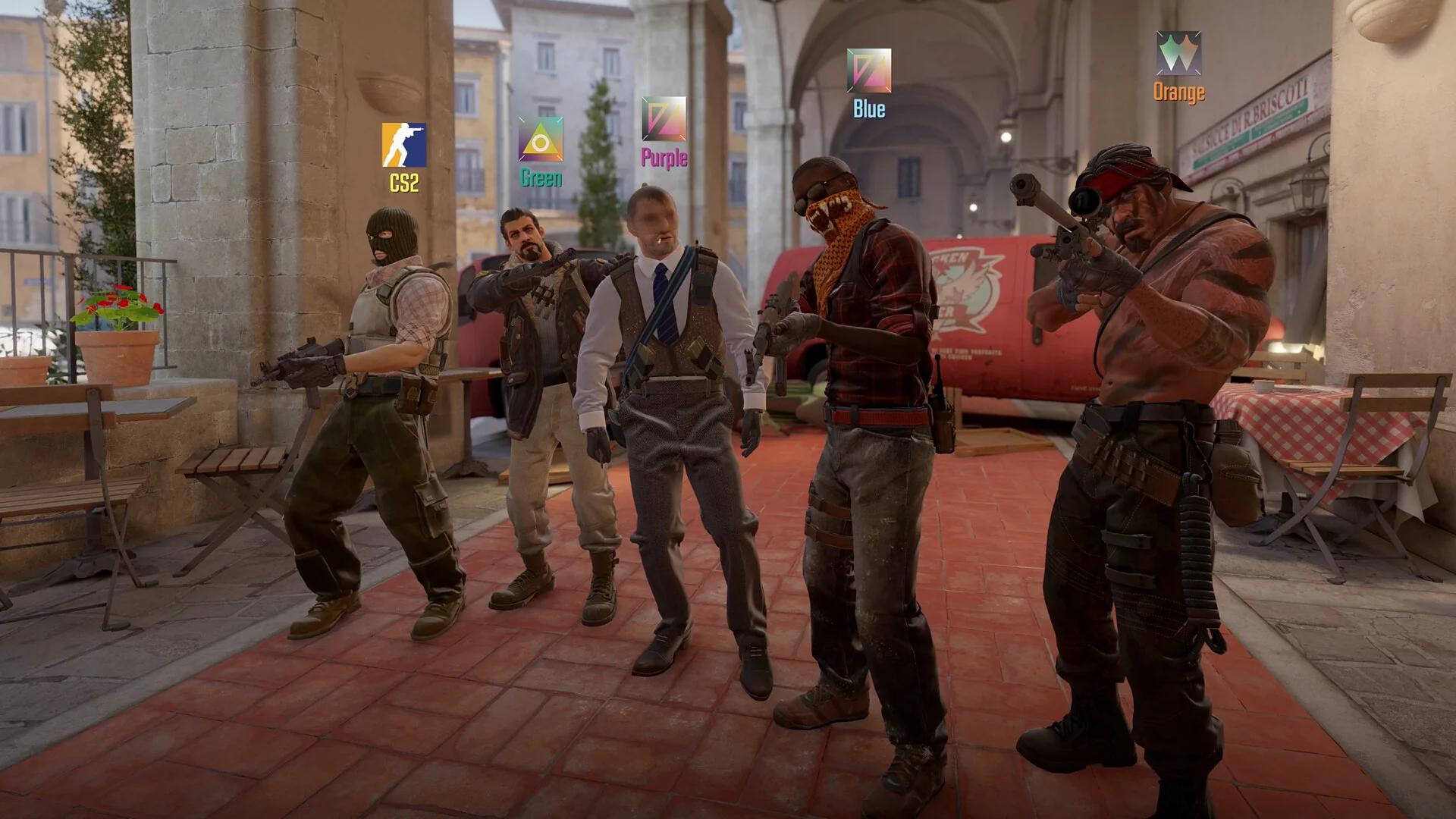
Stop what you’re doing and unlearn twenty-plus years of muscle memory. Valve just changed how reloading works in Counter-Strike 2, and it’s not a minor tweak — it’s a fundamental shift in how you’ll manage every single gunfight from here on out.
If you reload early, the remaining rounds in your magazine are gone. Not magically preserved in your total ammo pool. Gone. Dumped. You fire 10 rounds from your AK’s 30-round mag, panic reload behind a box, and congratulations — you just threw 20 bullets on the ground.
This is the biggest mechanical shakeup CS has seen in years, and the competitive implications are enormous.
What Actually Changed
Valve’s reasoning, per their own words, is that reloading “needed higher stakes.” Previously, Counter-Strike used the same reload logic as basically every other FPS on the planet: you reload, the remaining rounds in your magazine merge back into your reserve ammo, and you get a fresh mag. No penalty. No decision. Just a brief animation and you’re back to full.
That’s dead now. Here’s the new system:
- Early reload = lost ammo. Any rounds left in your current magazine when you hit R are discarded.
- Empty magazine reloads are unaffected. If you burn through all 30 rounds and then reload, you lose nothing extra — your reserve feeds you a fresh mag as normal.
- This applies to all weapons with magazine-based reloading.
The change turns every reload into a genuine risk-reward decision. Do you top off before peeking a corner, sacrificing those 12 remaining rounds? Or do you hold and play with a partial magazine, knowing that if the fight goes long you might come up dry at the worst possible moment?
Why This Is a Bigger Deal Than It Sounds
If you’re a casual player who reloads after every single kill — and be honest, you do — this change is going to eat you alive until you adapt. But let’s talk about why this matters at the highest level.
Ammo Economy Is Now Real
Counter-Strike has always had an economy system, but it was about money. Buy armor, buy rifles, buy utility. Ammo was basically infinite for practical purposes. Nobody ran out of AK rounds in a competitive match unless something went catastrophically wrong.
Now ammo is a resource you can mismanage. A player who nervously reloads three times during a round has burned through significantly more reserve ammo than someone with disciplined trigger and reload habits. In long rounds with lots of repositioning, this adds up. In extended post-plant situations where you’re holding multiple angles and taking chip fights, your ammo pool could actually become a factor.
This is a layer of resource management that CS has never had before, and it rewards players who stay calm under pressure.
The Reload Cancel Meta Is Dead
One of the most common micro-habits in CS — at every level from Silver to pro — is the reload cancel. You start a reload, hear a footstep, and quick-switch or move to cancel it. Under the old system, this was essentially free. You kept your partial mag, no harm done.
Now? If the reload animation has progressed far enough to dump your mag, you’re screwed. You’ve lost those rounds and you don’t have a fresh magazine either. The timing window for safely canceling a reload just became one of the most important pieces of mechanical knowledge in the game.
Expect to see a lot of clips in the coming weeks of players dying with zero rounds in the chamber because they panic-canceled a reload at the wrong time.
Spray Transfer Discipline Gets Rewarded
Good players already knew to stop spraying and reposition rather than dumping an entire magazine at a wall. But plenty of intermediate players would spray 20 rounds, whiff most of them, reload, and try again with zero consequence beyond the time lost.
Now, whiffing a 20-round spray and reloading costs you those 10 remaining bullets. Over the course of a half, undisciplined sprayers are going to find themselves hurting for ammo in ways that simply didn’t happen before.
Burst firing and tap shooting just got a significant indirect buff. Not because the mechanics changed, but because the punishment for poor spray discipline now compounds across a round.
What This Means for Weapon Balance
This change doesn’t hit all weapons equally, and that’s where things get really interesting from a meta perspective.
Winners
- The SG 553 and AUG — Scoped rifles encourage more disciplined, accurate shooting. Players using these guns are less likely to panic-spray and waste ammo.
- Pistols in general — Small magazine sizes mean you were already playing around ammo scarcity. The mental model doesn’t change much.
- The M4A1-S — Its 20-round magazine already forced careful ammo management. Players who’ve been running the M4A1-S for years are pre-adapted to this change.
- Deagle — You were already counting every shot. Nothing changes.
Losers
- The M4A4 — 30-round magazine means there’s more ammo to waste on every early reload. The gap between M4A4 and M4A1-S might actually close in an unexpected way.
- SMGs during eco/force rounds — Spray-heavy guns like the MAC-10 and MP9 burn through ammo fast, and players tend to reload these constantly. The ammo tax on SMG play just went up.
- The Negev — Okay, nobody cares about the Negev. But technically this gun suffers the most from early reloads. Dumping 100+ rounds because you hit R is genuinely painful.
The AWP Stays the AWP
With 5 rounds per magazine and a playstyle built around single shots, this change is basically irrelevant for AWPers. You were already firing 1-2 shots and repositioning. The AWP remains untouched as the king of CS.
How Pro Play Will Adapt
The immediate impact on professional Counter-Strike is going to be subtle but real. Here’s what to watch for:
Post-plant ammo tracking becomes a thing. Casters and analysts will start paying attention to remaining ammo pools during clutch situations. A player on 40 total rounds versus one on 80 is a meaningful difference in a 1vX scenario where you might need to spam smokes or wallbang common positions.
Reload timing will become a team communication point. “I’m reloading” callouts aren’t new, but the stakes are higher now. If your teammate is covering your reload and the enemy pushes, you can’t just cancel and fight — you might be stuck with an empty gun.
Lurkers and solo players suffer the most. Players operating alone can’t afford to burn ammo on early reloads because they have no one to cover them while they’re vulnerable. This subtly favors coordinated team play over solo aggression.
The Tactical Shooter Philosophy Shift
This change fits into a broader pattern of Valve making Counter-Strike 2 more punishing and more deliberate than its predecessors. The sub-tick system, the smoke grenade rework, the buy menu changes — all of these push in the direction of higher-consequence decisions.
Compare this to VALORANT, where reloading is as free as it’s always been and the mechanical skill expression comes from ability usage. Valve is doubling down on gunplay depth as CS2’s differentiator, and honestly? It’s the right call.
This is the kind of change that separates Counter-Strike from every other tactical shooter on the market. It’s a small mechanical tweak with cascading strategic consequences, and that’s exactly what great competitive game design looks like.
The Adaptation Period Is Going to Be Brutal
Let’s be real — the first few weeks of this are going to be a disaster. Ranked matchmaking is going to be full of players running out of ammo in situations where they never would have before. Muscle memory built over decades of FPS gaming is going to betray millions of players simultaneously.
But that’s the point. The best players will adapt fastest. The ones who already had disciplined reload habits will barely notice. And the ones who’ve been hitting R after every single kill like it’s a nervous tic? They’re going to learn the hard way.
The skill ceiling for basic gunplay in CS2 just went up. And if you’re the kind of player who reads sites like this, that should make you very, very happy.
Start counting your bullets. The era of free reloads is over.
Discussion